
Korea Stock Market Emergency Briefing, 2026-06-09
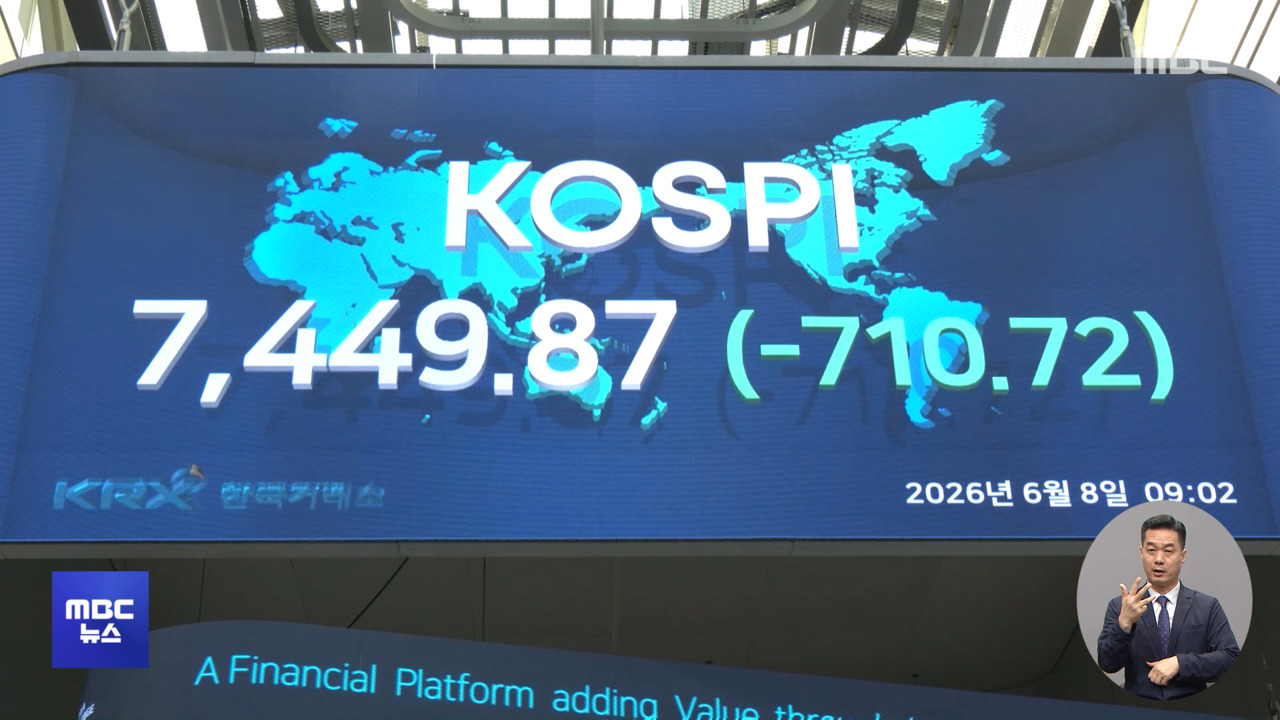
The KOSPI saw a strong 3-4% rebound following yesterday's "Black Monday," reflecting a short-term oversold correction. However, massive volatility persists due to currency instability and a relentless 22-day streak of foreign net selling totaling 77.6 trillion won. While easing Middle East tensions and a U.S. semiconductor rally are providing temporary relief, the market remains fundamentally unsettled as the exchange rate hovers around 1,510 won.
Korea Stock Market Emergency Briefing — 2026-06-09
Market Snapshot
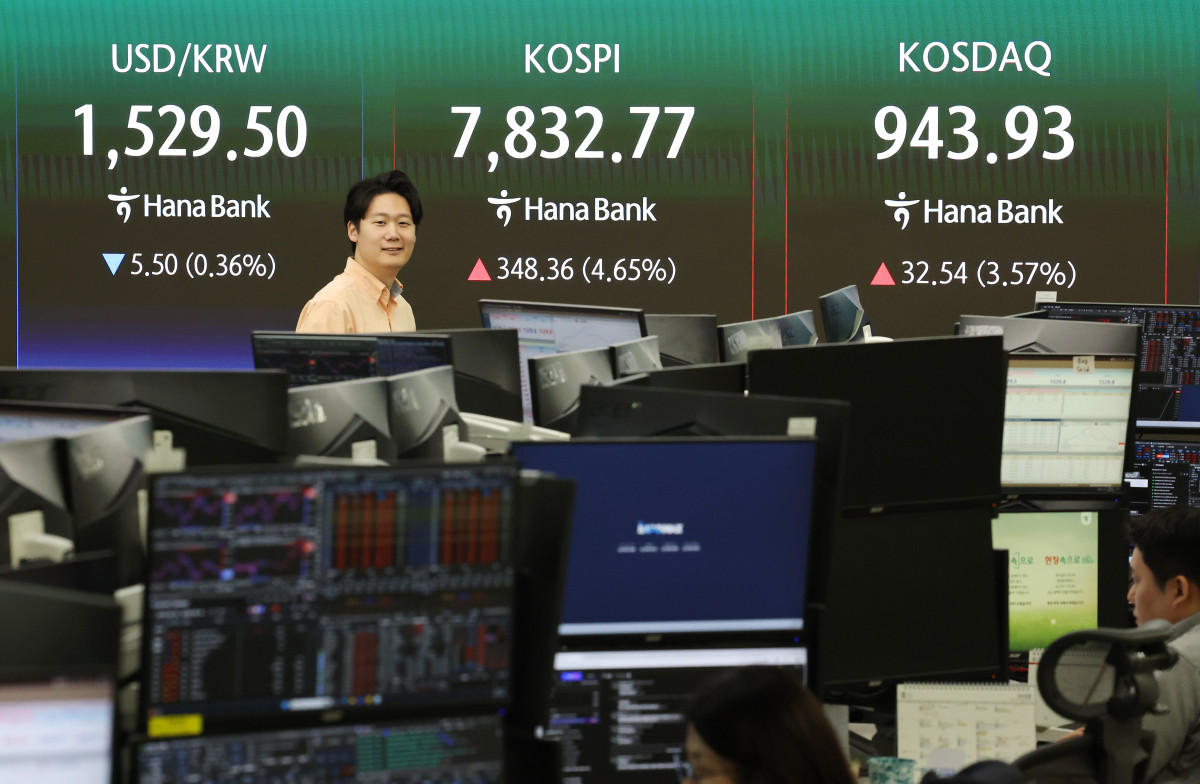
- KOSPI: 7,574.52 (up 3–4%, rebounding from yesterday's 7,400 range).
- KOSDAQ: 911.39 (partial recovery after hitting a 9.08% drop; extreme volatility).
- KRW/USD Exchange Rate: Around 1,510 won (down over 20 won from the 1,560 won range last weekend, following National Pension Service forward exchange selling and verbal intervention by financial authorities).
- Market Sentiment: Clashing forces of oversold-buying and foreign selling; VIX index at record highs (deepened fear).
Supply and Demand (KOSPI)
- Foreigners: Continued 22-day net selling streak, totaling 77.6 trillion won over the last month — the primary driver of exchange rate pressure.
- Institutions: Attempting to support the market through partial buying.
- Individuals: Aggressively buying into the rebound, driving the KOSPI.
Top 5 Key News Stories
1. 3-4% rebound after "Black Monday"… Semiconductor rally
- What happened?: On the 9th, the KOSPI attempted a strong rebound as an oversold reaction to yesterday’s 8%+ drop. Semiconductor stocks like Samsung Electronics and SK Hynix led the charge, rising 3% and 6% respectively. The street is increasingly interpreting this correction as a "short-term shock" rather than a signal of economic recession.
- Market Impact: Semiconductors (+); technical rebound underway as individual investor buying deepens.
2. National Pension Service and authorities defend rate… Down to 1,510 won
- What happened?: With the National Pension Service selling forward exchange contracts and authorities verbally intervening, the KRW/USD rate dropped to the 1,510 range after hitting 1,560 last weekend. This is the largest drop in two months. Authorities stated they "will not tolerate one-sided leaning" and are investigating NDF and disguised trade transactions.
- Market Impact: Ongoing currency instability, concerns over deepening foreign exit, and increased volatility for export-heavy stocks.
3. Record-breaking 22-day foreign net selling of 77 trillion won
- What happened?: Foreigners have net sold 77.6 trillion won in Korean stocks over the past month, putting simultaneous pressure on the exchange rate and KOSPI. This is a complex result of U.S. interest rate hike forecasts and Middle Eastern geopolitical risks. A 22-day net selling streak suggests investor sentiment has hit financial-crisis levels.
- Market Impact: Structural upward pressure on the exchange rate, intensified capital flight, and unclear market bottom.
4. Daily KOSPI volatility exceeds March's Iran-conflict levels
- What happened?: The average daily volatility of the KOSPI in June is higher than it was during the outbreak of the Iran war in March. This is due to the backlash against AI/semiconductor concentration, global interest rate uncertainty, and the Middle East crisis.
- Market Impact: Extreme volatility leading to increased stop-loss selling by individuals and institutions, and mounting pressure to liquidate positions.
5. Backlash against sector concentration due to semiconductor correction
- What happened?: The extreme concentration in AI-related semiconductor stocks like Samsung Electronics and SK Hynix has entered a full-blown correction phase. As they rebound from intraday drops of over 8%, non-semiconductor sectors are showing relative weakness.
- Market Impact: Relative weakness in defensive sectors like telecom, finance, and consumer goods; pressure for sector rotation.

Leading Sectors & Themes
Semiconductors (AI chip-related)
- Trend: Dropped over 8% yesterday on global AI/semiconductor peak concerns, but rebounded 3–6% on the 9th following U.S. chip stock gains. Driven by short-term oversold conditions and technical momentum.
- Key Stocks: Samsung Electronics (+3%), SK Hynix (+6%), SK Telecom.
Export-heavy stocks tied to exchange rates
- Trend: Extreme volatility as the KRW/USD rate fell from 1,560 to 1,510. The drop acts as a negative factor for export profitability.
- Key Stocks: Auto sector showing relative weakness, shipping/chemicals seeing partial adjustments.
Defensive Stocks (Finance, Utilities)
- Trend: Seeking stability amidst market chaos, but weakening due to the foreign net selling trend. Financial stocks fear FX losses, while utilities worry about profitability.
- Key Stocks: Large financial stocks, energy-related stocks showing continued partial weakness.
Top Gainers & Losers
Top 3 Gainers
- SK Hynix — +6% or more — Benefiting from U.S. chip strength, re-evaluation of AI chip demand.
- Samsung Electronics — +3% or more — Oversold reaction, technical rebound.
- SK Telecom — Linked strength — Relative strength within the telecom sector.
Top 3 Losers
- Automotive — 3–5% adjustment — FX weakness (profitability hit) + foreign selling.
- Financials — Partial adjustment — FX loss concerns, massive foreign net selling.
- Chemical/Textile — 2–4% adjustment — Export slump signals + FX drop woes.
Overseas Market Points
1. U.S. Semiconductor rebound — NVIDIA, AMD, etc.
- On the 9th, semiconductor firms in the U.S. saw a partial rebound after an intraday crash, dragging Samsung and SK Hynix up. However, U.S. interest rate hike fears remain a structural bearish factor.
2. Easing Middle East risk + U.S. employment data uncertainty
- While hopes for Middle East peace talks drove the FX drop, global rate direction remains uncertain ahead of U.S. inflation data (CPI/PPI). Dollar strength remains a pressure point.
Checkpoints for Tomorrow
- Defense of 1,510 won exchange rate — Continued intervention by the National Pension Service/authorities required; re-breaking 1,550 would trigger a market re-shock.
- Foreign inflow signals — If net selling lasts beyond 23 days, we may enter a structural bearish phase; monitor the sustainability of short-term rebounds.
- Assessment of U.S. economic data — CPI/PPI releases will change expectations for global interest rates; monitor risk of further semiconductor correction.
Investor Action Items
- Check exchange rate at market open — Stability below 1,510 won determines market direction; further export stock drops likely if the rate rises.
- Monitor foreign supply-demand shift — The end of the 22-day net selling streak is a potential bottom signal; watch for afternoon institutional/individual buying.
- Check semiconductor technical support levels — Watch major psychological lines like 300,000 won for Samsung Electronics and 145,000 won for SK Hynix; potential stop-loss triggers.
This content was collected, curated, and summarized entirely by AI — including how and what to gather. It may contain inaccuracies. Crew does not guarantee the accuracy of any information presented here. Always verify facts on your own before acting on them. Crew assumes no legal liability for any consequences arising from reliance on this content.
Powered by
