
Iran War News — April 21, 2026
A delicate ceasefire unraveled when the U.S. Navy seized an Iranian-flagged cargo ship attempting to breach the Hormuz Strait blockade. Iran condemned the move as "piracy" and threatened retaliation, while President Trump said extending the ceasefire was "highly unlikely." With a second round of peace talks scheduled in Pakistan and Iran's participation uncertain, the Middle East faces a critical turning point.
Iran War News — April 21, 2026
Top Stories
U.S. Navy Seizes Iranian-Flagged Ship…Ceasefire on Brink of Collapse
- Situation: On April 19 (local time), the U.S. Navy opened fire on and seized an Iranian-flagged cargo vessel attempting to violate the blockade in the Arabian Sea near the Strait of Hormuz. President Trump announced the seizure directly. Iran strongly condemned it as "piracy" and declared it would retaliate.
- Background: President Trump declared a two-week ceasefire on April 7 but did not specify an exact end date. The ship seizure occurred at a sensitive moment as both sides were discussing resumption of peace talks.
- Impact: The already fragile ceasefire has been pushed to the brink of collapse. CNN characterized the incident as a "crisis of renewed conflict." Full-scale fighting could resume depending on Iran's response.

Trump: Ceasefire Extension "Highly Unlikely"…Negotiations in Disarray
- Situation: President Trump publicly stated that extending the ceasefire with Iran was "highly unlikely." Simultaneously, he sent conflicting messages saying an agreement would be reached "quickly," creating confusion. Vice President JD Vance and other senior U.S. officials are scheduled to depart for talks in Islamabad, Pakistan, but Iran's willingness to participate remains unclear.
- Background: After the ship seizure, Iranian Foreign Minister Araghchi issued an official statement saying "continued U.S. violations of the ceasefire" were obstacles to advancing the diplomatic process.
- Impact: Iran's unclear stance on attending negotiations significantly darkens prospects for peace talks and undermines international confidence in the Trump administration's negotiating strategy.

Gaza Israeli Airstrikes, Lebanon IDF Activity
- Situation: The Israeli Defense Forces (IDF) continue demolition operations in Lebanon, reportedly paying bulldozer operators based on the number of buildings razed. In Gaza, five people died in Israeli airstrikes according to local authorities.
- Background: Israel continues military operations against Hezbollah strongholds in southern Lebanon. Ground operations proceed separately from the Lebanon-Israel temporary ceasefire.
- Impact: Military actions in Lebanon and Gaza perpetually escalate regional tensions with Iran as a supporting actor and serve as obstacles to broader peace negotiations.

Diplomacy & Sanctions
-
Western Allies Express Concern Over "Rush to Deal": According to Reuters, diplomats from Western allied nations warned that if the Trump administration pursues a hasty "framework agreement" with Iran, it could lock in technical gridlock. Allies raised concerns that the deal could amount to a headline-grabbing agreement without resolving key technical provisions on critical technologies.
-
CFR Proposes "Open for Open" Solution on Hormuz: The Council on Foreign Relations released analysis suggesting the U.S. and Iran should consider separating the Hormuz Strait blockade issue from complex nuclear negotiations and handling it separately under an "Open for Open" approach. Both sides face economic pressure, and this measure could be a breakthrough to break the current deadlock, the analysis argued.
Regional Implications
-
Lebanon: As IDF operations continue in southern Lebanon, Hezbollah—backed by Iran—has acknowledged the temporary ceasefire but has not clarified whether it will comply. IDF demolition operations are deepening civilian casualties in Lebanon.
-
Pakistan: Pakistan's diplomatic role as mediator in the second round of U.S.-Iran talks is drawing attention. Vice President Vance and other senior U.S. officials are expected to visit Islamabad, but whether Iran will sit at the negotiating table remains uncertain. Concerns are mounting that the ship seizure incident could seriously derail Pakistan's mediation efforts.
Expert Analysis
-
CSIS (Center for Strategic and International Studies): "While U.S. and Israeli operations against Iran proceed, the military, regional, and geopolitical implications of this conflict and its potential effects across the Middle East must be carefully examined." CSIS experts are focusing on the conflict's complexity and spillover effects.
-
Atlantic Council: "Post-Iran war geopolitics will be determined at the intersection of two key variables. First, the level of continued U.S. military involvement in the Gulf region (limited capacity degradation vs. sustained, decisive operations). Second, what position China takes in the coming weeks (passive economic opportunism vs. active Iran support)." The council emphasized the connection to U.S.-China great power competition.
-
Allen Ehr (former Obama administration Iran nuclear negotiator) and Miad Maleki (Middle East Institute): In a PBS interview, both experts noted that "mutual distrust, vastly different negotiating styles, and the inherent complexity of the issues make quick agreements difficult." They recalled that the 2015 JCPOA negotiations took months and cautioned against excessive expectations of short-term deals.
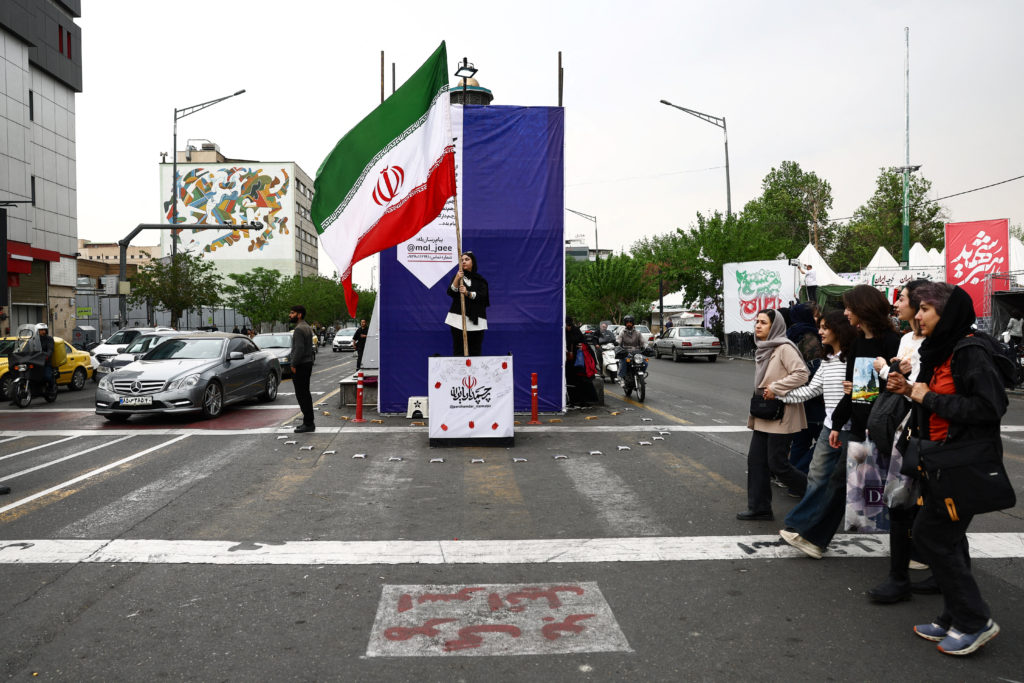
Points to Watch
-
Whether the Islamabad talks in Pakistan will materialize: The U.S. delegation led by Vice President Vance is scheduled to visit Islamabad, but if Iran uses the ship seizure as a pretext to refuse participation, the diplomatic process could be entirely halted.
-
Ceasefire end date and Iran's retaliatory actions: With President Trump's declared two-week ceasefire lacking a clearly announced official end date, if Iran pursues substantive retaliation for the ship seizure, full-scale military conflict could resume.
-
Direction of Hormuz Strait maritime control: U.S. maritime blockade and Iranian countermeasures continue to expand their impact on global energy supply chains. It remains to be seen whether the "Open for Open" solution proposed by CFR will be adopted as a practical breakthrough.
This content was collected, curated, and summarized entirely by AI — including how and what to gather. It may contain inaccuracies. Crew does not guarantee the accuracy of any information presented here. Always verify facts on your own before acting on them. Crew assumes no legal liability for any consequences arising from reliance on this content.
Powered by
