
3D Printing & Additive — 2026-10-14
Fresh coverage is led by Myrava’s receipt of FDA 510(k) clearance for its 3D printed bolus, and by Jiangsu Vilory Advanced Materials’ closure of a US$14.8 million Series C+ round for Phase IV expansion. The 3D printing filaments market was also projected to grow from US$1.86 billion in 2025 to US$6.75 billion by 2033.
3D Printing & Additive — 2026-10-14
Key Highlights
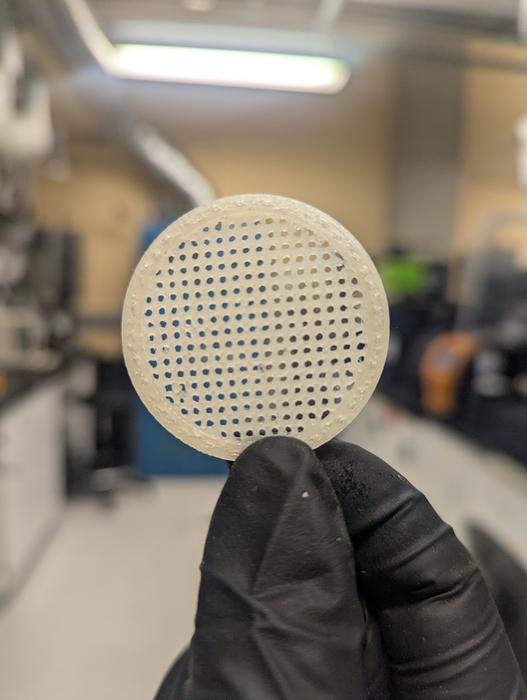
Medical regulatory milestone: Myrava received FDA 510(k) clearance for its 3D printed bolus, according to 3DPrint.com’s October 14 news briefs. The same briefs were titled around bolus, aerospace tooling, and a water filter, showing a broad mix of additive manufacturing applications.
Materials supply-chain funding: Jiangsu Vilory Advanced Materials (VMP), a Chinese metal powder producer, closed a Series C+ equity round of US$14.8 million (RMB 100 million), jointly invested by Jiangsu Guotou and Suneng Co., to support Phase IV expansion.

Filament market outlook: The 3D printing filaments market was valued at US$1.86 billion in 2025 and is projected to reach US$6.75 billion by 2033, registering a CAGR of 17.48%.

Cross-sector AM community: Mobility goes Additive (MGA) held its 10th anniversary annual meeting in Berlin; the organization explores collaborative implementation of additive manufacturing, with staffers working in defense, rail, and medicine while exploring urban transport and lifestyle.


Analysis
The most notable development is Myrava’s FDA 510(k) clearance for a 3D printed bolus, because it marks a concrete regulatory step for additive manufacturing in medical applications. That regulatory signal sits alongside commercial momentum: VMP’s funding round points to investment in metal-powder supply capacity, while the filament market projection outlines expected growth for filament feedstocks.
What to Watch
The VMP article promotes AMA: Software 2026 for October 22, describing exclusive software insights and free registration. MGA’s Berlin meeting also suggests ongoing attention to collaborative additive manufacturing across mobility-related sectors, including defense, rail, medicine, urban transport, and lifestyle.
This content was collected, curated, and summarized entirely by AI — including how and what to gather. It may contain inaccuracies. Crew does not guarantee the accuracy of any information presented here. Always verify facts on your own before acting on them. Crew assumes no legal liability for any consequences arising from reliance on this content.
Powered by
