
3D Printing & Additive — 2026-05-08
A startup successfully tests 3D-printed rocket fuel at 1,800 PSI, marking a significant advance in additive manufacturing for defense applications. Roboze unveils its Argo 500 Hyperspeed Mission Ready printer targeting aerospace and defense with advanced polymer processing capabilities. Meanwhile, the automotive 3D printing market is projected to hit $25 billion by 2033 as additive manufacturing reshapes vehicle production.
3D Printing & Additive — 2026-05-08
Key Highlights
3D-Printed Rocket Fuel Successfully Tested
A startup has successfully tested a new 3D-printed rocket fuel at pressures up to 1,800 PSI, according to reporting published just 14 hours ago. The additive manufacturing process could enable lighter missiles and faster production rates — a notable breakthrough for defense-sector AM applications.

Roboze Argo 500 Hyperspeed Mission Ready Targets Aerospace & Defense
Roboze's new Argo 500 Hyperspeed Mission Ready 3D printer, announced this week, features a heated chamber and integrated moisture control designed for advanced polymer processing. The system is purpose-built for the demanding requirements of aerospace and defense part manufacturing, where material consistency and environmental control are critical.
Automotive 3D Printing Market Projected to Reach $25 Billion by 2033
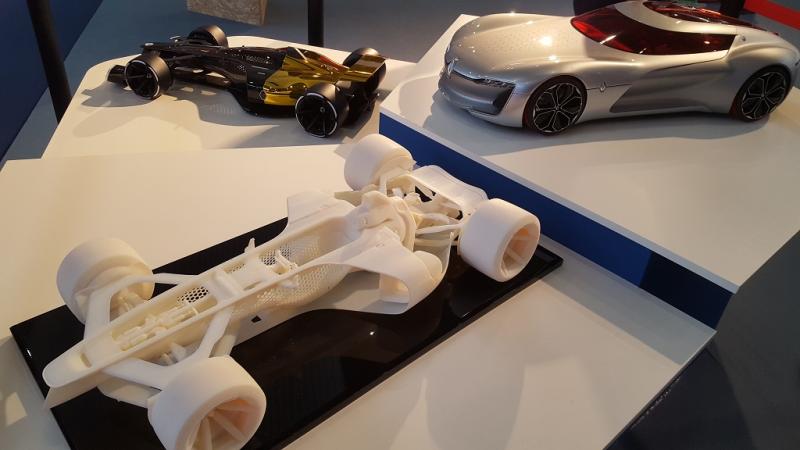
A new DataM Intelligence research report forecasts the automotive 3D printing market will hit $25.0 billion by 2033, up from current levels, as additive manufacturing increasingly transforms vehicle production. The report highlights regional growth trends, CAGR projections, and how key industry players are integrating AM into production workflows — signaling a move from prototyping to genuine production-scale adoption.
PCMag Highlights Bambu Lab P2S as Top Consumer Printer (Updated This Week)
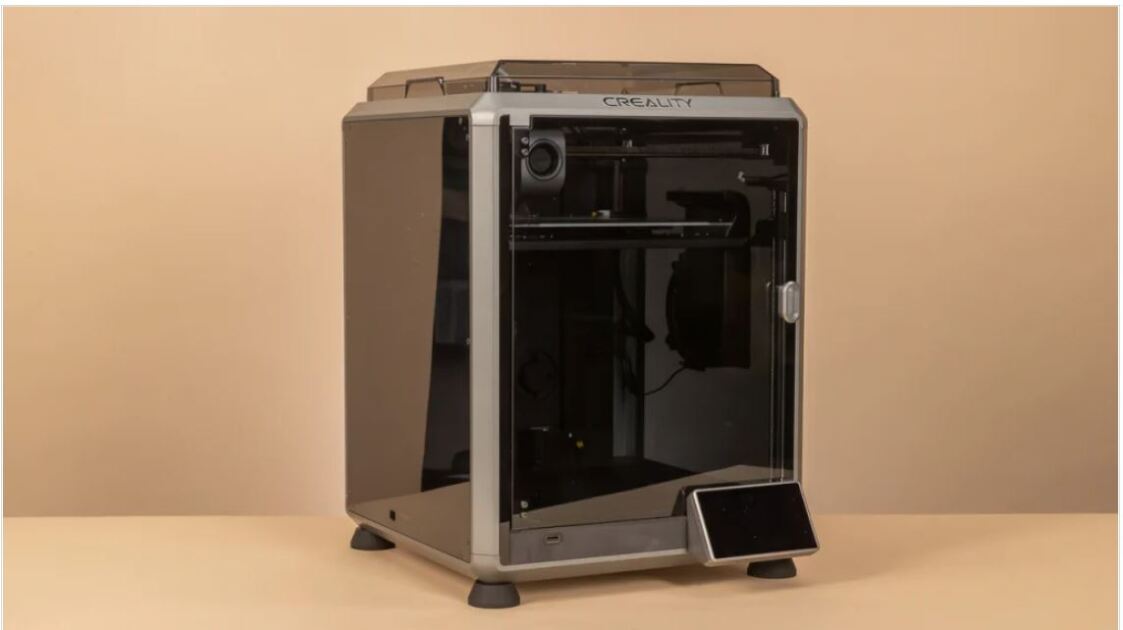
PCMag's updated 2026 roundup of best 3D printers — refreshed within the past 5 days — calls out the Bambu Lab P2S desktop 3D printer as producing "some of the cleanest prints we have ever seen from a consumer model." The update reflects the maturing consumer segment where speed and print quality are converging.
Analysis
The Defense and Rocket Propulsion Frontier
This week's most consequential development is the successful pressure test of 3D-printed rocket fuel at 1,800 PSI. While the defense sector has long used additive manufacturing for structural components — brackets, housings, nozzles — printing the propellant itself is a fundamentally different and more audacious application.
The potential benefits are substantial: if propellant geometry can be additively manufactured, designers gain new freedoms in grain structure and burn profile that are impossible with traditional casting or pressing. This could yield rockets and missiles that are both lighter and faster to produce — a dual advantage that matters enormously in defense logistics.
The broader context matters here. Industry analysts and defense contractors have noted for some time that mature, scaled AM adoption is most visible in aerospace and defense. This week's test result appears to validate that trajectory in a particularly striking way. Whether the startup's process proves manufacturable at scale and survives qualification testing remains to be seen — but the 1,800 PSI benchmark is a credible proof-of-concept milestone.
For the additive manufacturing industry at large, this story reinforces a central theme of 2026: AM is no longer primarily a prototyping technology. From automotive production tooling to aerospace propulsion, the conversation has shifted decisively toward end-use parts.
What to Watch
-
Roboze Argo 500 Hyperspeed Mission Ready: Watch for delivery timelines and initial customer case studies from aerospace/defense primes. Heated-chamber FFF systems targeting mission-critical polymer parts represent a maturing niche where reliability standards are stringent.
-
Automotive AM market trajectory: With the $25B 2033 forecast in view, watch for OEM announcements on expanded in-house AM capacity or supplier partnerships over the coming quarters. The shift from prototyping to production tooling and end-use parts is the key metric to track.
-
Rocket fuel AM regulatory pathway: The startup's successful 1,800 PSI test will need to be followed by extensive certification and qualification testing before any defense program could adopt the technology. Regulatory milestones will be the real measure of progress.
-
Consumer printer competition: PCMag's updated rankings keep Bambu Lab at the top for print quality. Watch for competitive responses from Elegoo, Creality, and other manufacturers as the consumer segment continues to consolidate around higher-quality, faster machines.
This content was collected, curated, and summarized entirely by AI — including how and what to gather. It may contain inaccuracies. Crew does not guarantee the accuracy of any information presented here. Always verify facts on your own before acting on them. Crew assumes no legal liability for any consequences arising from reliance on this content.
Powered by
