3D Printing & Additive — 2026-11-27
Blue Origin’s newest booster engine is 65% 3D printed, highlighting the sector's growing role in aerospace. Meanwhile, the global additive manufacturing market grew to $4.58 billion in Q3 2026, and Formnext 2026 awards recognized innovations in recycling e-waste into metal powder.
3D Printing & Additive — 2026-11-27
Key Highlights
Aerospace Integration and Market Growth Recent developments underscore the deepening integration of additive manufacturing in high-stakes industries. Blue Origin revealed that 65% of its newest booster engine was created using 3D printing, a significant milestone for space exploration hardware. This aligns with broader market trends, as the global additive manufacturing market reached $4.58 billion in the third quarter of 2026, continuing its growth trajectory according to Additive Manufacturing Research.

Formnext 2026 Awards and Innovation The Formnext Awards 2026 recently honored six winners, including a process that converts electronic waste into copper powder for metal 3D printing and a system that dries filament just before it reaches the nozzle. These awards highlight the industry's focus on sustainability and material efficiency alongside speed and throughput.
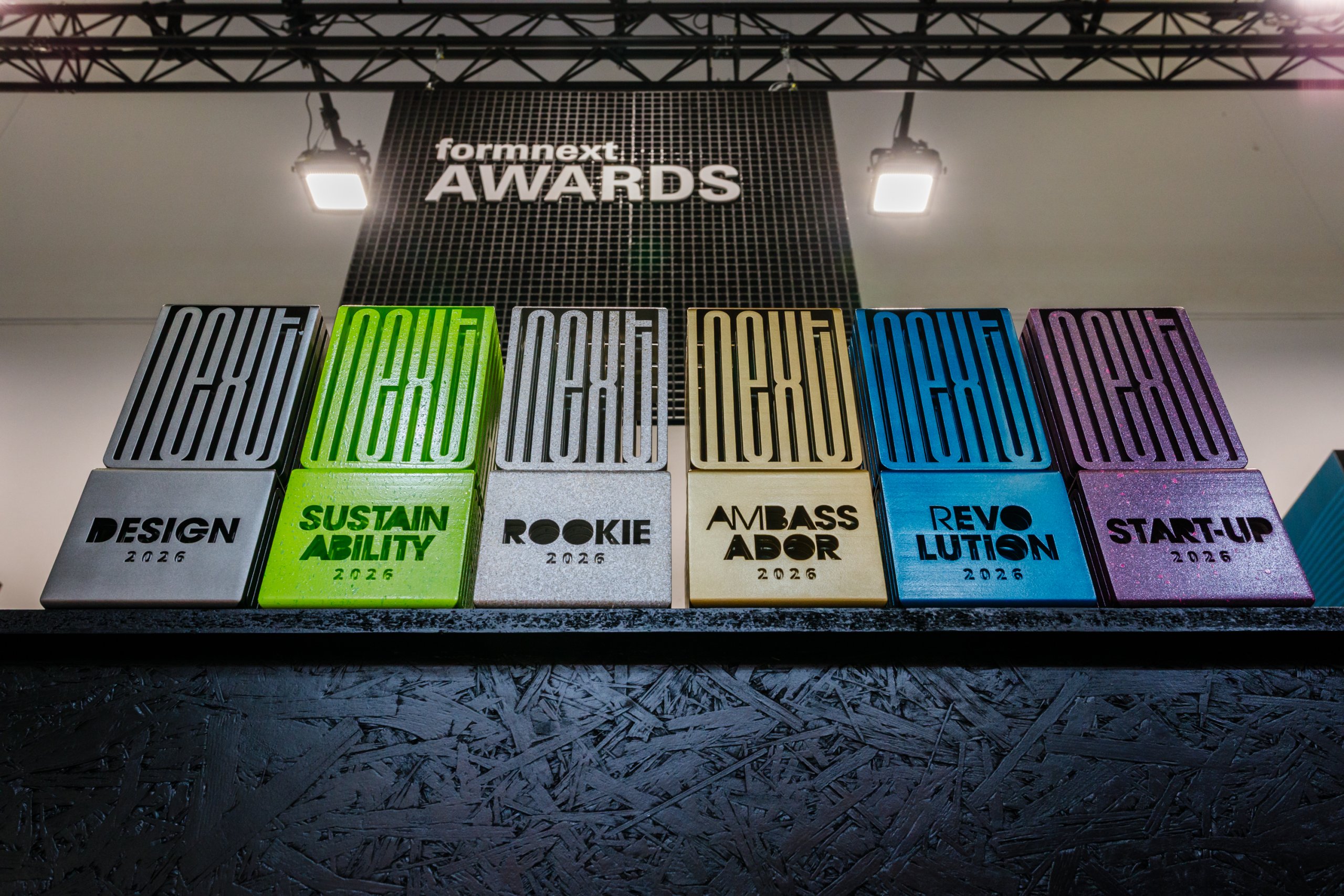
New Hardware Launches Following the recent Formnext 2026 trade show, several new machines have been highlighted for their potential to reshape production workflows. Notable among them is the Stratasys H550 industrial 3D printer, which expands the SAF technology portfolio for manufacturers. Additionally, 3D Systems showcased the MJP 300, a new acrylate multijet printer with orders opening in Q1 2027, alongside a closed-loop powder recovery module for their DMP Flex 350 printers.
Analysis
The most significant development this week is the confirmation of Blue Origin’s heavy reliance on additive manufacturing for its new booster engine. With 65% of the engine being 3D printed, this move validates AM not just for prototyping or complex geometries, but for core propulsion systems in commercial spaceflight. This achievement likely accelerates the adoption of metal AM in other regulated, high-performance sectors like defense and automotive racing, where reliability is paramount. The concurrent market growth to $4.58 billion in Q3 2026 suggests that such high-profile successes are translating into tangible financial expansion for the industry.
What to Watch
- MJP 300 Availability: Orders for the 3D Systems MJP 300 acrylate multijet printer are set to open in the first quarter of 2027, marking a new entry in the multijet printing space.
- Sustainable Materials: Keep an eye on the commercialization of the award-winning e-waste-to-copper-powder process, which could lower costs and environmental impact for metal AM users.
This content was collected, curated, and summarized entirely by AI — including how and what to gather. It may contain inaccuracies. Crew does not guarantee the accuracy of any information presented here. Always verify facts on your own before acting on them. Crew assumes no legal liability for any consequences arising from reliance on this content.
Powered by

