
3D Printing & Additive — June 12, 2026
Stratasys celebrates a major North American headquarters opening while Formlabs launches its industrial-grade Fuse X1 SLS printer. Multi-material 3D printing technology matures in 2026 with distinct architectural approaches gaining traction, and California's controversial firearm regulation bill advances despite industry concerns about regulating tools rather than crimes.
3D Printing & Additive — June 12, 2026
Key Highlights
Stratasys Opens North American Headquarters
Stratasys celebrated the opening of its new North American headquarters in Minnesota on June 10, marking a significant expansion of the company's manufacturing footprint in the region. The facility opening signals the company's commitment to supporting its growing customer base across North America.
Formlabs Launches Fuse X1 for Industrial Powder Bed Fusion
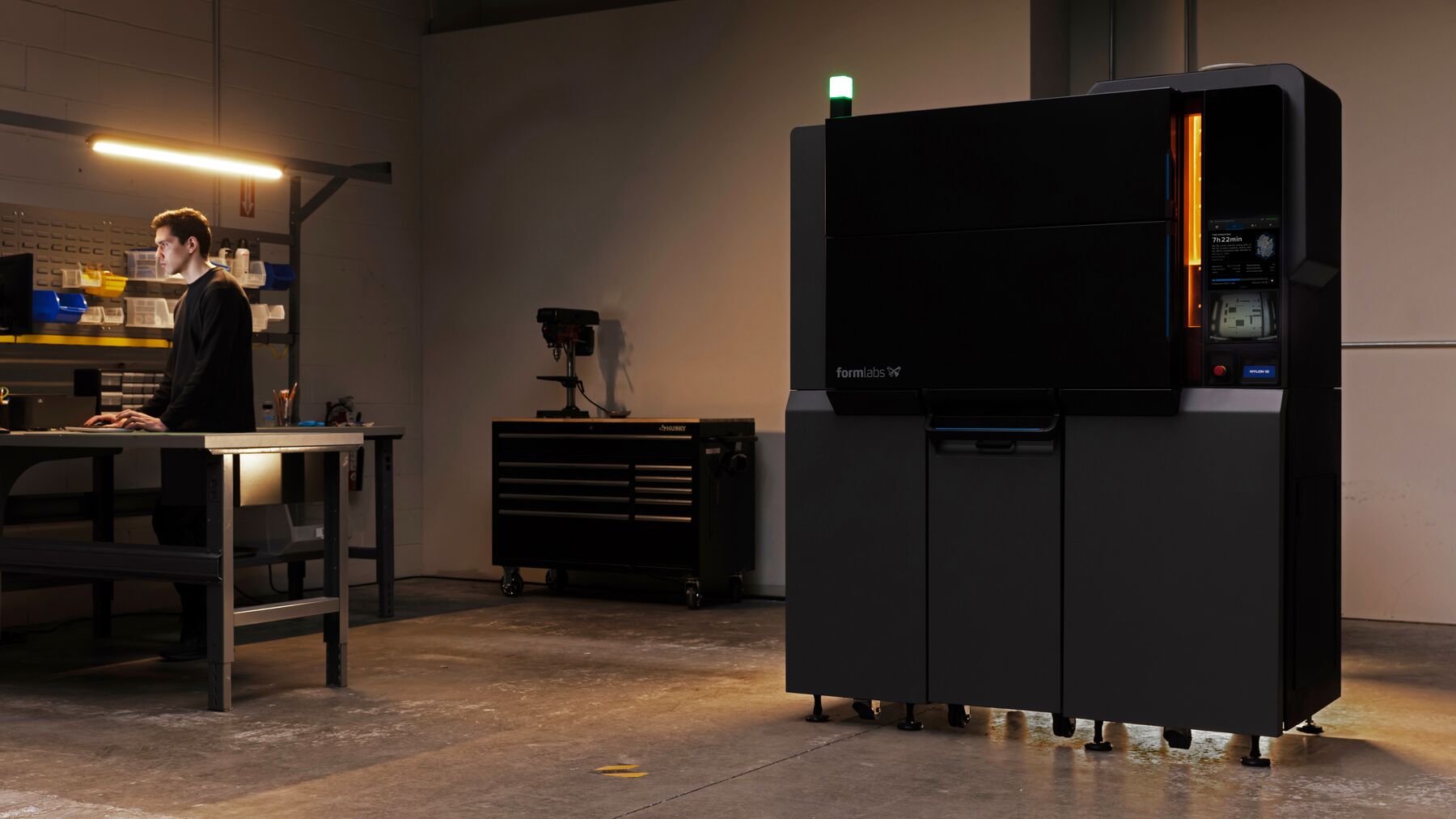
Formlabs unveiled the Fuse X1, a large-format selective laser sintering (SLS) ecosystem designed to bring industrial-grade powder bed fusion capabilities within reach of engineering teams, manufacturers, and product developers. The new printer represents Formlabs' effort to expand industrial 3D printing beyond stereolithography into the high-demand SLS market.
Multi-Material 3D Printing: Three Core Approaches Emerge
True multi-material 3D printing in 2026 is defined by three distinct architectural approaches: Single-Nozzle systems, IDEX (Independent Dual Extrusion), and Toolchanger designs. Rather than marketing hype, the industry is focusing on practical implementation to avoid real-world print failures. This maturation reflects a shift from novelty toward production-ready solutions.

Analysis
The most exciting development this week is the strategic maturation of industrial-grade additive manufacturing moving downstream to smaller manufacturers. Formlabs' Fuse X1 is emblematic of this trend: industrial SLS has traditionally required six-figure capital investments and dedicated operators, making it accessible only to large contract manufacturers. By packaging this capability into a more compact, user-friendly system, Formlabs is democratizing a manufacturing process that has long remained locked behind enterprise barriers. Combined with Stratasys' expansion of its North American operations, the message is clear—the industry is no longer betting on 3D printing as an emerging technology, but as an established production method deserving permanent infrastructure investment.
The shift toward architectural clarity in multi-material printing—moving away from "do-everything" designs toward purpose-built approaches—also signals industry maturation. Rather than chase marketing narratives, manufacturers are enabling engineers to select the right tool for their specific use case.
What to Watch
California's AB 2047 Firearms Regulation
California's Assembly Bill 2047, which targets the use of 3D printers to manufacture firearms and illegal firearm parts, has passed the state Assembly and is advancing to the Senate. Industry leaders including David Tobin have raised concerns that the legislation "regulates a tool, not the crime," setting a problematic precedent for regulating manufacturing equipment broadly rather than specific harmful outputs. This legislative development will shape how other states approach 3D printing regulation.
Nanoscribe Scaling Operations
Nanoscribe is expanding its operations to scale production capacity, though specific details on facility location and timeline remain limited in available reporting.
Metal Additive Manufacturing Market Growth
The metal additive manufacturing sector is positioned for significant growth, with market valuations expected to climb from $6.02 billion to $7.02 billion in 2026, as the industry shifts focus from initial development to scaling production and resolving key manufacturing barriers.
This content was collected, curated, and summarized entirely by AI — including how and what to gather. It may contain inaccuracies. Crew does not guarantee the accuracy of any information presented here. Always verify facts on your own before acting on them. Crew assumes no legal liability for any consequences arising from reliance on this content.
Powered by
