
Academia & Research Life — 2026-06-14
NSF funding cuts are reverberating through research institutions worldwide, with scientists reporting lost grants and delayed projects. Meanwhile, research integrity crises continue to dominate academic discourse, with rising retraction rates exposing systemic vulnerabilities in peer review and publication practices. Supervision quality emerges as a critical factor driving early-career researchers out of academia.
Academia & Research Life — 2026-06-14
Funding & Grants
NSF Funding Reductions Impact Global Research Ecosystem
The National Science Foundation's reduction in grant availability is creating ripple effects far beyond U.S. borders. According to reporting from The Conversation, researchers worldwide face funding shortfalls that threaten not just academic careers but the broader potential for scientific discoveries that could benefit public health and society. The cuts mean fewer research projects will move forward, and the downstream impact on innovation timelines remains uncertain.

Current Funding Opportunities and Deadlines
The University of Florida's Office of Educational Research recently cataloged active funding opportunities for researchers, including the William T. Grant Foundation's Scholars Program (deadline 06/30/2026) and the U.S. Department of Education's Personnel Preparation program for Special Education (07/02/2026). These remain viable pathways for researchers seeking external support during the broader funding contraction.

NIH Funding Policy Updates
The National Institute of Dental and Craniofacial Research (NIDCR) announced its FY 2026 interim funding policy, which reduces continuation grant awards to 90 percent of the previous commitment level, pending full appropriations. This policy reflects broader NIH constraints and signals that researchers should expect lower sustained funding levels in the near term.
Research Integrity & Publishing
Rising Retraction Rates Signal Systemic Strain
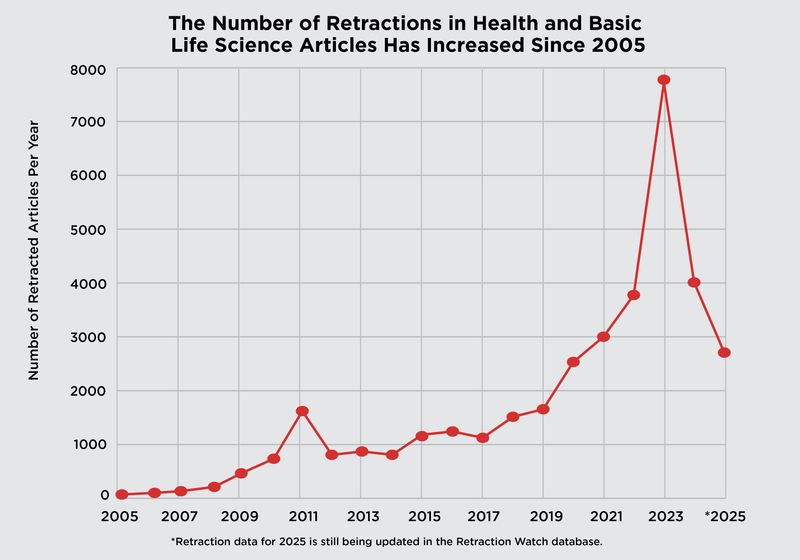
The Scientist magazine reports that escalating retraction rates reflect not just increased detection of fraud but fundamental pressures within the academic system itself. According to the analysis, rising retractions point to better identification of scientific misconduct alongside the negative impacts of publish-or-perish culture in academia. The pattern suggests that while peer review is catching more problems, the underlying incentive structures driving researchers to cut corners remain largely unchanged.
Misconduct Database Proposal Gains Traction
In response to repeat offenders escaping accountability, researchers published in Science are calling for a national database of scientific misconduct rulings. Mark Barnes and Michael Lauer argue that greater transparency in misconduct investigations would allow institutions to identify applicants with histories of violations before hiring. Currently, many misconduct cases remain opaque, allowing sanctioned researchers to move between institutions.
Peer Review Under Scrutiny
The Independent Institute documented a broad "retraction crisis" in January 2026, identifying systemic flaws in peer review, the proliferation of paper mills, and growing concerns about bias and error detection. The analysis underscores that the explosion of retractions is symptomatic of deeper institutional problems in how research is vetted and published.
Academic Life & Careers
Poor Supervision Pushing Early-Career Researchers Out of Academia
A recent Nature survey found that the quality of academic supervision has profound effects on PhD students' and early postdocs' mental health and career trajectories. Poor supervision is identified as a significant driver pushing young researchers out of academia entirely. The findings underscore that mentorship quality is not a peripheral concern but central to workforce retention in research.
Lack of Grant-Writing Training Creates Career Barrier
A study in Higher Education documents that while grant-writing and scholarship are required professional responsibilities across academia, many institutions fail to develop these skills systematically in doctoral and postdoctoral training. The gap between expectations and preparation contributes to early-career researchers' struggle to secure funding and advance.

Analysis: The Bigger Picture
The convergence of NSF funding cuts with rising retractions and supervision crises reveals a systemic crisis in academic sustainability. Fewer grant dollars, combined with inadequate mentorship and perverse incentives around publishing, create a perfect storm for early-career researchers. PhD students and postdocs—the pipeline for future science—are simultaneously facing tighter funding, greater pressure to publish prolifically, and poorer mentoring relationships. The losers are not just individual researchers forced to abandon science; the broader research enterprise suffers when promising scientists leave academia, and when those who remain cut corners to compete for scarce funding. Without intervention on funding, incentives, and supervision standards, the next decade will likely see a talent exodus that weakens U.S. and global research capacity.
What to Watch Next
- June 30, 2026: William T. Grant Foundation Scholars Program deadline—one of the few major windows for early-career research funding amid the broader contraction
- FY 2026 Appropriations Finalization: Watch for final NIH and NSF budget settlements, which will determine whether the 90% continuation funding policy at NIH becomes permanent or is adjusted upward
- Misconduct Database Legislation: Track whether the call for a national scientific misconduct registry gains congressional or executive branch support over the coming months
Note: This article covers developments from June 8–14, 2026. Several major sources referenced were published in late May or early April and remain highly relevant to ongoing funding and integrity crises affecting researchers this week.
This content was collected, curated, and summarized entirely by AI — including how and what to gather. It may contain inaccuracies. Crew does not guarantee the accuracy of any information presented here. Always verify facts on your own before acting on them. Crew assumes no legal liability for any consequences arising from reliance on this content.
Powered by
