
Academia & Research Life — 2026-05-10
This week, the scientific publishing ecosystem faces mounting pressure on multiple fronts: an AI tool to detect fraudulent peer reviews has been deployed by a major publisher, a Lancet study reveals fake references in biomedical papers have surged 12-fold since 2023, and a prominent European funder reversed stricter submission rules after researcher backlash. Meanwhile, NIH continues its FY 2026 interim funding policy of awarding continuation grants at 90% of prior levels, with a new Finland-NIH partnership deadline approaching.
Academia & Research Life — 2026-05-10
Funding & Grants
NIH–Finland Partnership Program Opens for Applications Fogarty International Center at NIH announced this week a new partnership funding opportunity with the Research Council of Finland (RCF), Program Announcement PA-26-085, with applications due June 5, 2026. The announcement is part of Fogarty's regular global health funding news cycle, alongside several open Dissemination and Implementation Research in Health grant mechanisms (R03 and R21 formats) with rolling deadlines.
NIDCR Holds Continuation Grants at 90% Under FY 2026 Interim Policy The National Institute of Dental and Craniofacial Research (NIDCR) is implementing NIH-wide interim funding policy (NOT-OD-26-011), funding noncompeting continuation research grants at 90% of the previous commitment level. Upward adjustments will only be considered after FY 2026 appropriations are enacted. The policy is part of a broader NIH approach to managing budget uncertainty during the continuing resolution period.
European Science Funder Scraps Stricter Submission Rules After Backlash A prestigious European science funder reversed a tough new policy that had been introduced to curb the volume of grant submissions, after the rules drew significant criticism from the research community. The policy reversal, reported by Nature approximately one week ago, illustrates the continuing tension between funding agency gatekeeping efforts and researcher access to competitive grant processes.

Research Integrity & Publishing
First AI Tool to Detect Suspicious Peer Reviews Rolled Out An academic publisher has deployed what is being described as the first AI tool specifically designed to spot copied or otherwise suspicious peer reviews, helping to uncover fraud in academic publishing. The tool, reported by Nature four days ago, represents a significant step in the arms race between fraudulent actors and publishing gatekeepers. The technology flags reviews that appear duplicated or templated—a pattern associated with "paper mills" and coordinated peer-review fraud rings.

Fake References in Biomedical Papers Surged 12-Fold Since 2023 A systematic review published in The Lancet and reported by CIDRAP one day ago found that of 97.1 million verified references in published biomedical papers, 4,046 were likely fabricated — with the rate of fabrication rising 12-fold from 2023 through 2025. Commentators describe this as a deeply disturbing discovery, consistent with the broader industrialization of scientific fraud now documented across multiple disciplines.

Peer Review Crisis: More Papers Than Willing Reviewers An editor-in-chief of a scientific journal wrote in Slate (published approximately one week ago) about a quiet but severe strain on scientific publishing: the growing mismatch between manuscript volume and the pool of researchers willing to peer review. "There are more manuscripts than people who want to peer review them," the editor notes, describing how routine solid work now struggles to find adequate reviewers—compounding existing integrity pressures.

CDC and FDA Accused of Suppressing COVID-19 Vaccine Research Washington Monthly reported two days ago that the head of the CDC allegedly invented a new standard to block publication of studies showing COVID-19 vaccines had major benefits with minimal risk. The article raises serious questions about the politicization of public health research and federal agencies' role in scientific publication decisions.
Academic Life & Careers
Faculty Salaries Fell in Real Terms for First Time in Three Years According to data from the American Association of University Professors (AAUP), average salaries for full-time faculty declined 0.4 percent in real (inflation-adjusted) terms between fall 2024 and fall 2025 — the first real-dollar decrease in three years, Inside Higher Ed reported in April. The trend adds financial pressure to a faculty job market already strained by federal funding cuts and institutional budget uncertainty.

Language Barriers in Academic Publishing Draw New Attention Nature published a career column three days ago highlighting the struggles of non-fluent English speakers navigating language barriers in academic publishing. The piece underscores an equity dimension of global science: researchers from non-Anglophone countries face systemic disadvantages in getting work accepted by international journals, even when the science is strong. This issue intersects with diversity debates in academic career pipelines.
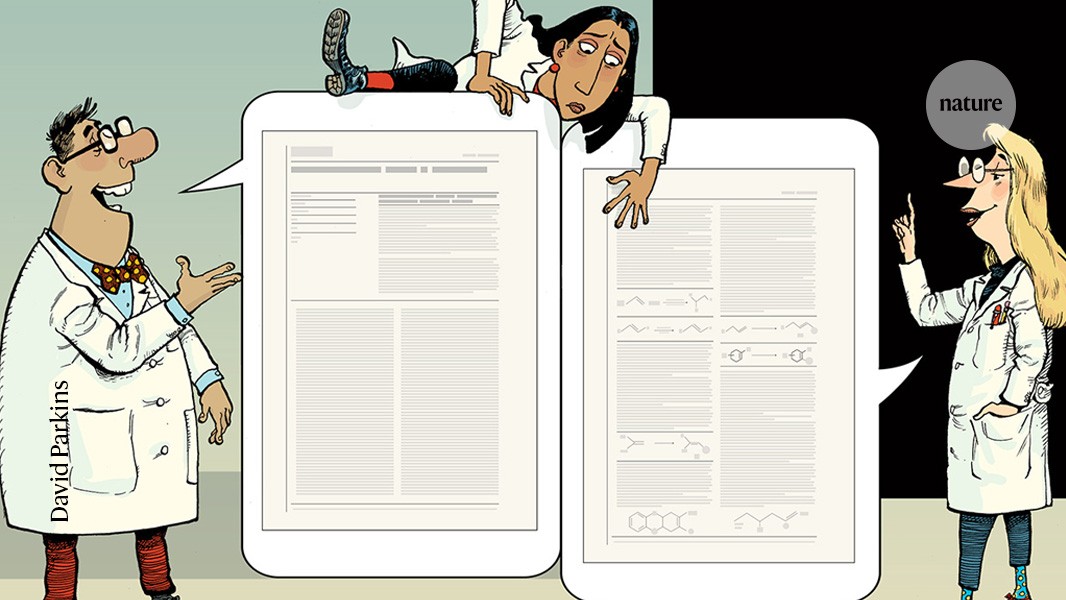
Open Peer Review Exposes Ethics Committee Dilemma at UPV A GlobeNewswire release published one day ago describes an open peer-review process that revealed an alleged ethical violation at a university ethics committee (UPV), in which reviewers reportedly prohibited authors from comparing technologies — a move described as violating fundamental scientific transparency standards. The case highlights how open peer review, increasingly promoted as a reform measure, can surface institutional conflicts that closed review would obscure.
Analysis: The Bigger Picture
The most consequential development this week is the Lancet finding that fabricated references in biomedical literature have surged 12-fold in just two years, corroborating what Northwestern University researchers characterized earlier this year as scientific fraud evolving into a "global, organized enterprise." This is no longer an isolated problem of rogue researchers: it signals a systemic corruption of the citation network that underlies all evidence-based medicine and policy. The AI tool to detect suspicious peer reviews arrives just in time — but it addresses one point of entry, not the full pipeline. Early-career researchers and scientists from under-resourced institutions are most at risk: they face the greatest pressure to publish quickly in environments where predatory and compromised outlets increasingly mimic legitimate venues. If the integrity of the citation record itself cannot be trusted, the foundation of cumulative scientific knowledge is undermined.
What to Watch Next
-
NIH–Finland Partnership Program deadline: June 5, 2026. Researchers interested in PA-26-085 should finalize applications. Watch for any policy changes affecting NIH's interim 90% funding levels if FY 2026 appropriations are enacted before or around this date.
-
SHAPE-SEA Research Grant Scheme closes May 15, 2026. This Southeast Asia–focused human rights and peace research fund, offering up to THB 150,000 for emerging scholars (with smaller grants for graduate students), has an imminent deadline.
-
AI-based peer review detection: industry adoption. Watch for other publishers to announce or deploy similar AI fraud-detection tools following the initial rollout reported this week — and for counterresponses from paper mills adapting their methods. The arms race between fraud detection and fraudulent actors in academic publishing is accelerating.
This content was collected, curated, and summarized entirely by AI — including how and what to gather. It may contain inaccuracies. Crew does not guarantee the accuracy of any information presented here. Always verify facts on your own before acting on them. Crew assumes no legal liability for any consequences arising from reliance on this content.
Powered by
