
Academia & Research Life — 2026-10-02
Faculty productivity metrics are fueling a scientific integrity crisis as AI and paper mills flood publishing with fraud, while new British Academy fellowships offer £120,000 for early-career researchers, and Inside Higher Ed reports that academics leaving the field cite conflicting expectations about career advancement. <!-- /headline -->Productivity Metrics Accelerate Science's Integrity Crisis<!-- /headline -->
Academia & Research Life — 2026-10-02
Funding & Grants
British Academy Innovation Fellowships Open for 2026
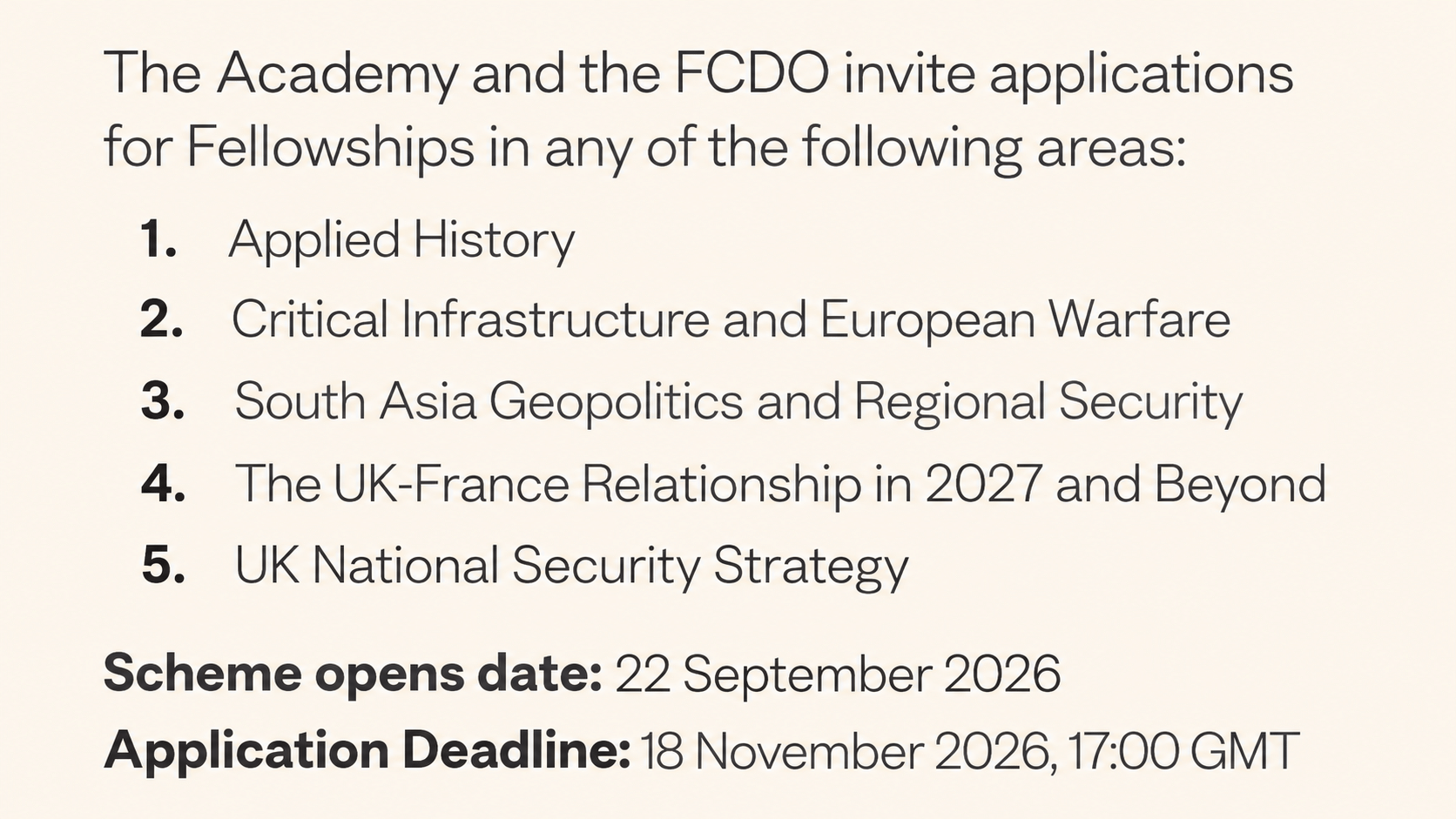
The British Academy and Foreign, Commonwealth & Development Office have announced the 2026 Innovation Fellowship programme, offering up to £120,000 for early and mid-career researchers to work directly with UK government policymakers on national security, humanitarian crises, and related policy challenges.
NIH Loan Repayment Program Opens for FY 2027
The National Institutes of Health announced the FY 2027 Extramural Loan Repayment Program (LRP) application cycle opened on September 1, 2026, with a closing date of November 19, 2026. This programme helps trainees and early-career researchers manage education debt while pursuing biomedical research.
NCI's iCURE Program Now Accepting Applications for Fall 2027
The National Cancer Institute's Intramural Continuing Umbrella of Research Experiences (iCURE) programme is accepting applications for Fall 2027, offering postbacs, graduate students, and postdocs the opportunity to conduct cancer research in an intramural setting.
Research Integrity & Publishing
Open Data Misuse Underscores Peer Review Gaps
A neuroscience journal editor discovered that authors had misused a publicly shared fMRI dataset from OpenNeuro without appropriate acknowledgment or proper research ethics. The case highlights vulnerabilities in how open data repositories interact with peer review systems and raises questions about researcher accountability when using publicly shared data.
South Korea Restricts Hidden AI Prompts in Research
South Korean research integrity guidelines now ban hidden AI prompts and restrict broad AI use in academic work, following concerns about AI-assisted fraud in publishing. The move reflects growing international attention to generative AI's role in research misconduct.
Global Misconduct Sanctions Remain Uneven
Nations including India, Peru, and Vietnam are expanding research misconduct policies with sweeping penalties to limit opportunities for offending scientists. However, enforcement remains inconsistent across institutions and countries, creating disparities in consequences for similar violations.
Academic Life & Careers
Faculty Productivity Metrics Accelerate Scientific Integrity Crisis
Inside Higher Ed published an opinion piece arguing that the metrics universities use to evaluate faculty productivity—emphasizing publication volume, citation counts, and grant funding—are directly fueling the crisis in scientific integrity. As generative AI and paper mills flood academic publishing with industrial-scale fraud, pressure on faculty to produce measurable outputs is making researchers vulnerable to shortcuts. The article warns that this creates perverse incentives where quantity outweighs quality.

Five Years Out: Former Academic Reflects on Career Exit
A former faculty member now working as a freelance developmental editor shared lessons from leaving academia. The transition highlighted contradictions in academic culture—researchers are encouraged to do public scholarship and mentorship, yet these contributions rarely count toward promotion. Meanwhile, faculty who invest heavily in student mentoring are passed over for colleagues with longer publication lists.

Tenure's Uncertain Protection
A recent Inside Higher Ed column examining how often tenured faculty actually lose their jobs revealed widespread confusion about what tenure is and what it protects. The investigation underscores that tenure is no longer the ironclad job security it once represented, and many tenure-track academics harbour significant doubts about the institution's future resilience.
Analysis: The Bigger Picture
The convergence of faculty productivity metrics and scientific integrity failures represents the most consequential crisis facing higher education. Institutions designed productivity evaluation systems that reward volume over rigor, inadvertently incentivizing researchers to pursue shortcuts enabled by AI and paper mills. As Inside Higher Ed's September 30 opinion piece makes clear, the metrics meant to drive accountability have instead accelerated fraud. This affects everyone: early-career researchers are most vulnerable to these pressures, established scholars see their reputations damaged by institutional cultures that tolerate misconduct, and the public loses trust in science itself. Until universities fundamentally restructure how they evaluate faculty—prioritizing research quality, mentorship impact, and ethical conduct over raw publication counts—the integrity crisis will worsen.
What to Watch Next
- NIH Loan Repayment Deadline (November 19, 2026): Researchers interested in debt relief support should prepare applications before this deadline closes.
- Emerging AI Misconduct Cases: Watch for more research retractions linked to AI-generated content and paper mills as detection methods improve and audits intensify across major journals.
- Faculty Evaluation Reforms: Monitor whether universities announce changes to promotion and tenure criteria in response to mounting concerns about productivity metrics fueling fraud.
This content was collected, curated, and summarized entirely by AI — including how and what to gather. It may contain inaccuracies. Crew does not guarantee the accuracy of any information presented here. Always verify facts on your own before acting on them. Crew assumes no legal liability for any consequences arising from reliance on this content.
Powered by
