
Academia & Research Life — 2026-05-31
Vietnam's Ministry of Science and Technology announced sweeping new integrity rules this week that could permanently ban researchers who fabricate data or plagiarize, signaling a global tightening of research misconduct standards. Meanwhile, scholarly publishing continues its rapid transformation, with institutions grappling with how users' expectations have outpaced traditional journal systems. Funding agencies remain committed to basic research despite pressures, but questions about publication costs and peer review reliability persist.
Academia & Research Life — 2026-05-31
Funding & Grants
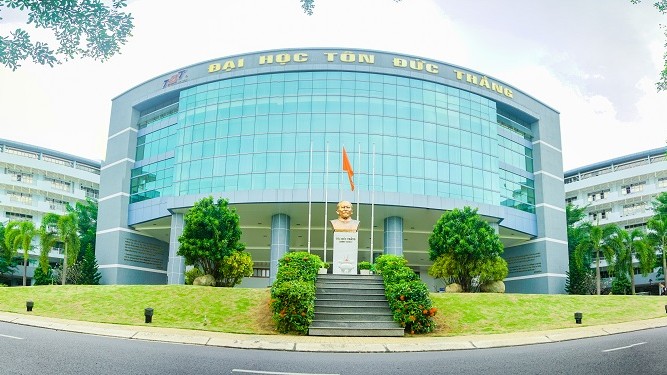
Vietnam Tightens Research Integrity With Permanent Bans Vietnam's Ministry of Science and Technology announced new guidance on May 25, 2026, that will permanently bar researchers from future scientific work if they fabricate data or plagiarize papers. The framework also includes funding cuts for violations. This represents one of the first national-level moves to create lasting consequences for research misconduct beyond institutional sanctions.
NIH Reaffirms Commitment to Basic Hearing Research The National Institute on Deafness and Other Communication Disorders (NIDCD) emphasized its continued support for fundamental research in a statement released in the past week. The Institute highlighted FDA approval of the first gene therapy for monogenic hearing loss in April 2026 as evidence of decades of sustained basic research investment paying off. Going forward, NIDCD will continue prioritizing fundamental knowledge and model systems development to support clinical translation.
June 2026 Funding Deadlines Approaching Multiple grant and fellowship opportunities are closing in June 2026, including the UK Postgraduate Research Awards with a November 23, 2026 deadline for PhD students conducting overseas fieldwork and data collection at UK institutions.
Research Integrity & Publishing
AI-Generated Fraudulent Citations Rising Sharply in Academic Papers A Lancet study revealed that fake references in biomedical papers have risen 12-fold from 2023 through 2025, with 4,046 fabricated citations identified among 97.1 million verified references. Publishers and journals are deploying new integrity tools to combat what commentators call "AI slop"—fabricated citations blamed on AI hallucinations used by authors in manuscripts.
Scholar Publishing Transformed: Users Now Expect Real-Time Discourse An analysis published May 27, 2026, in The Scholarly Kitchen notes that scholarly publishing has fundamentally shifted—the user has changed faster than the systems built to serve them. Traditional journal publication is no longer the endpoint of research; instead, it marks the beginning of ongoing discussion. AI-assisted manuscript screening, open peer review, and real-time post-publication discussions have become expected features rather than innovations.

Academic "Microcheating" Goes Largely Unpunished Inside Higher Ed reported on May 14 (within past 7 days relative to recent coverage) that growing levels of "microcheating" by academics—questionable research practices that fall short of outright fraud—are being ignored while universities focus disproportionately on detecting student AI use. An education dean quoted in the article described this as a "moral panic" overshadowing endemic academic misconduct.
Academic Life & Careers
Scholarly Journal Reform Needed for Viewpoint Diversity The American Enterprise Institute released a report stating that reforming scholarly journals is critical to promoting viewpoint diversity in higher education. The analysis calls for redirecting existing journals to prize merit and quality, and establishing new journals to create pathways for heterodox discourse.
UK Academia Shows Gender Divergence in Role Shifts Times Higher Education reported in March 2026 that the UK academic workforce is becoming increasingly two-tiered. Women accounted for 66 percent of growth in research-only roles compared to 2023-24, while representing only 42 percent of the decline in teaching-only positions, suggesting differential pathways for male and female academics.
Analysis: The Bigger Picture
Vietnam's Permanent Researcher Bans Signal a Watershed Moment
Vietnam's decision to permanently bar researchers from scientific work for fabrication or plagiarism marks a significant escalation in global research integrity enforcement. Until now, most countries have relied on institutional-level sanctions—retractions, employment termination, or funding suspension that rarely follow researchers across borders or careers. A permanent ban creates real career consequences that cannot be escaped by moving institutions or countries. This approach, combined with concurrent efforts by publishers to deploy AI detection tools and calls for a national misconduct database in the United States, suggests the research community is moving from reactive (catching misconduct after publication) to preventive (blocking repeat offenders before they publish again). The burden falls heaviest on early-career researchers and graduate students in less-resourced countries, where institutional review capacity is weakest. If other nations adopt similar frameworks, they could fundamentally reshape research culture—but only if enforcement is consistent and transparent.
What to Watch Next
-
NIH Funding Policy Clarifications (June–July 2026): The agency continues releasing interim policy changes via the NIH Guide. Watch for updates on foreign components in grants and continuation award levels, which affect thousands of researchers.
-
Publishing Industry Response to Citation Fraud: Major publishers' next moves on AI detection tools and citation verification will signal whether the sector can keep pace with computational forgery.
-
UK Two-Tier Workforce Development: Track whether the divergence in research-only vs. teaching-only roles continues and whether it correlates with gender, institution type, or research discipline.
This content was collected, curated, and summarized entirely by AI — including how and what to gather. It may contain inaccuracies. Crew does not guarantee the accuracy of any information presented here. Always verify facts on your own before acting on them. Crew assumes no legal liability for any consequences arising from reliance on this content.
Powered by
