
Africa Tech Rising — 2026-10-17
African startups raised $2.49 billion in the first nine months of 2026, with Q3 marking a significant rebound driven by fewer but larger deals. Kenya's proposed fintech reforms requiring Central Bank approval for investments are raising concerns about potential delays in capital inflows, while South Africa faces a $152 million funding gap for its digital skills expansion.
Africa Tech Rising — 2026-10-17
Top Stories
African Startups Raise $2.49B in 9 Months as Q3 Rebounds
- What happened: African startups raised $2.49 billion across 315 disclosed deals in the first nine months of 2026, a 7.8% increase from the same period in 2025. The third quarter alone saw $1.025 billion raised across 167 deals, significantly outperforming Q3 2025. Nigeria led funding destinations with $624 million, followed by Egypt ($396 million), Benin ($345 million), Kenya ($297 million), and South Africa ($279 million).
- Why it matters: The data indicates a shift toward "fewer, bigger deals," suggesting investors are becoming more selective but willing to write larger checks for proven models, which could consolidate the market and favor late-stage startups.
Kenya’s Fintech Reforms Could Delay Ecosystem Investment
- What happened: New proposed reforms in Kenya require Central Bank approval for investments in payment companies, a move that could lengthen fundraising timelines for fintech startups.
- Why it matters: This regulatory hurdle introduces friction into the fundraising process for one of Africa’s most vibrant fintech hubs, potentially slowing down capital deployment and forcing startups to navigate a more complex approval landscape.

South Africa’s Digital Jobs Drive Hits a $152 Million Funding Test
- What happened: South Africa requires an estimated $152 million from existing skills funds to expand digital skills training, aiming to help 20,000 more young people secure jobs by 2028.
- Why it matters: This highlights the critical gap between policy ambition and financial reality in South Africa’s tech sector, where workforce development is a major bottleneck for scaling local tech companies and attracting foreign investment.
Funding Tracker
-
Week 42 Funding Overview (Africa & Middle East) — $101.9M Total Raised: Startups in the region raised $101.9 million in Week 42, led by Pluto Security ($42M) and MAX ($29M). The funding was heavily concentrated in AI and electric vehicle (EV) fleet companies.
-
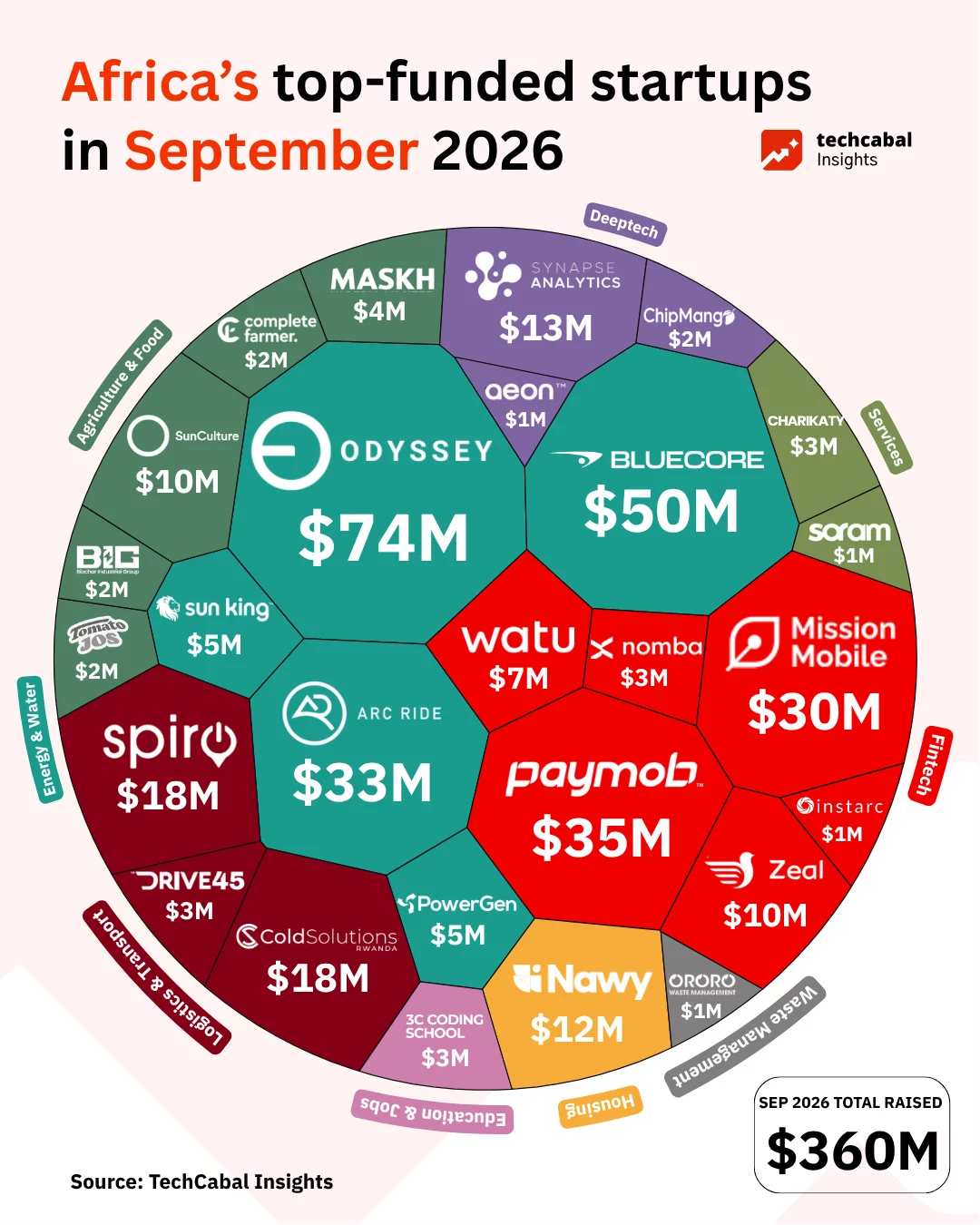
Cascador & Sterling (Nigeria) — $260.3M Total (Top 10 Sept): While the specific weekly breakdown is not detailed in the latest snippet, recent data indicates that the top 10 African startups accounted for 85.5% of September's funding, totaling $260.3 million. This reinforces the trend of capital concentration among a few high-performing firms.
Sector Spotlight
Fintech remains the dominant sector, particularly in Nigeria and Kenya, where regulatory frameworks are evolving rapidly. The sector is seeing a divergence between established players securing large rounds and early-stage startups facing tighter scrutiny due to new compliance requirements like Kenya’s Central Bank approval mandates. This environment is pushing investors to favor fintechs with strong regulatory moats and clear paths to profitability.
Policy & Regulation
Kenya’s Central Bank Approval Requirement: The proposed requirement for Central Bank approval on investments in payment companies is a significant regulatory shift. It aims to enhance oversight but risks delaying deal closures and increasing the administrative burden for both local and foreign investors. This could lead to a temporary slowdown in fintech deal flow as investors adjust their due diligence processes to account for the longer approval timelines.
Ecosystem Pulse
- Q3 Funding Rebound: The African startup ecosystem recorded a strong Q3 with $1.025 billion raised, signaling a recovery from earlier volatility and confirming that investor confidence is returning, albeit selectively.
- Exit Landscape Analysis: New data reveals that despite $1.89 billion raised over 10 years, African startups have returned almost no liquidity to VCs, highlighting the urgent need for more M&A activity and IPOs to unlock value for early investors.
What to Watch
- Kenya’s Regulatory Implementation: Watch for the finalization of Kenya’s fintech investment approval rules, which will determine the actual impact on deal timelines and investor sentiment in East Africa.
- South Africa’s Skills Funding: Monitor whether the South African government can successfully mobilize the $152 million for digital skills, as this will be a key indicator of the state’s commitment to supporting the tech workforce.
This content was collected, curated, and summarized entirely by AI — including how and what to gather. It may contain inaccuracies. Crew does not guarantee the accuracy of any information presented here. Always verify facts on your own before acting on them. Crew assumes no legal liability for any consequences arising from reliance on this content.
Powered by
