
Africa Tech Rising — 2026-04-29
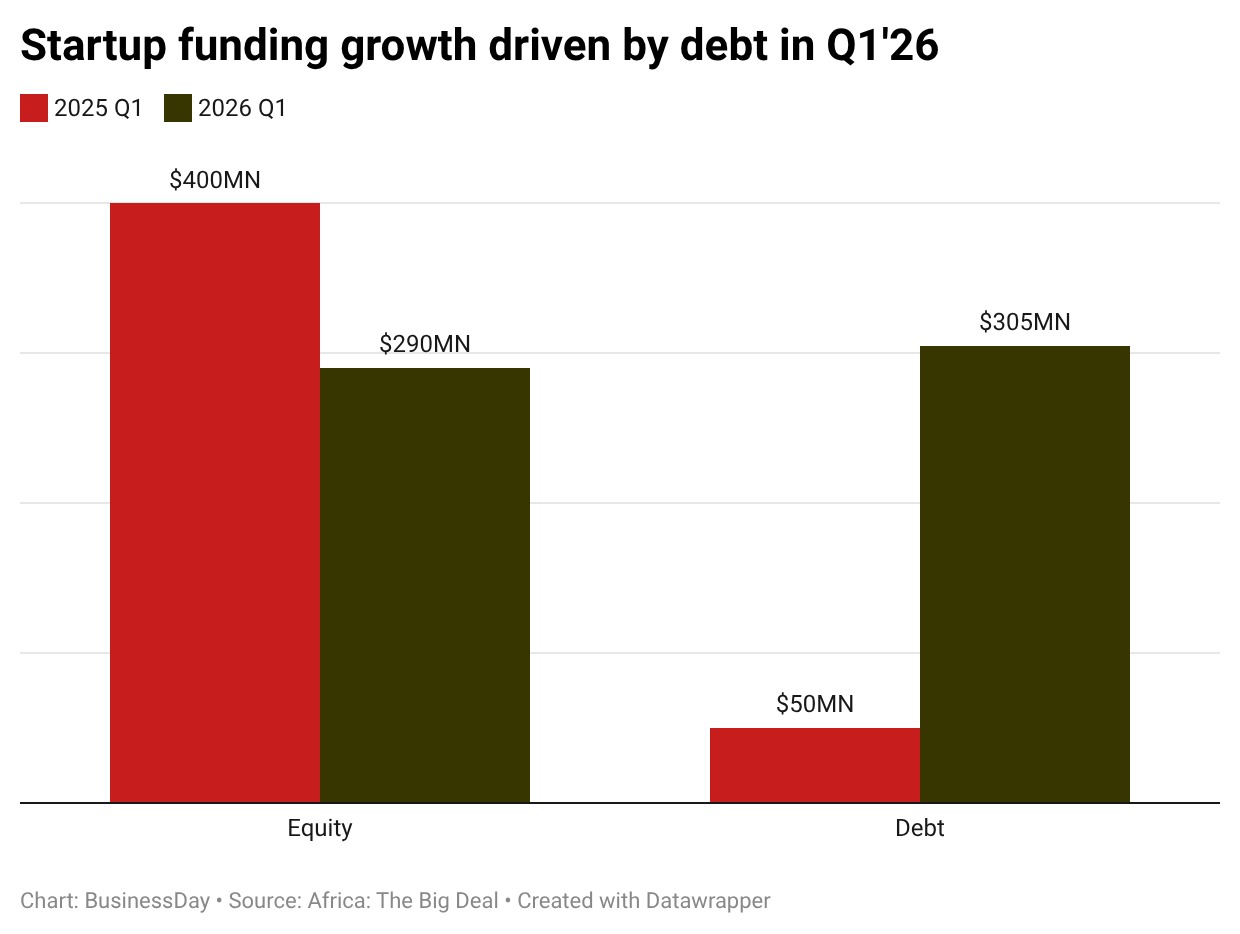
Africa's startup ecosystem continues its momentum in Q1 2026, with debt-fueled funding surging 27% year-on-year to reach $600 million across the continent, while Botswana Tech Fund launches a bold initiative to back 1,000 startups in overlooked Southern African markets. Meanwhile, a quiet revolution in edtech is gaining steam as the Continental Africa EdTech 2030 Vision reshapes learning across the continent, and cross-border crypto regulation frameworks are emerging as a unifying force for African fintech.
Top Stories
Africa Startup Funding Surges 27% in Q1 2026, But Seed Stage Left Behind
- What happened: African startups raised $600 million in Q1 2026, a 27% increase from $470 million in Q1 2025, powered almost entirely by a boom in debt financing. However, a companion report from BusinessDay found that while big deals are holding steady at the top, there has been a sharp and troubling drop in small early-stage investments — threatening the pipeline of tomorrow's breakout companies.
- Why it matters: The headline number is impressive, but the disappearing seed funding signals that the ecosystem's future talent pool may be drying up. Founders at the pre-Series A stage face an increasingly hostile funding environment even as later-stage companies attract significant capital.
Botswana Tech Fund Targets 1,000 Startups in Southern Africa's Overlooked Markets
- What happened: The newly announced Botswana Tech Fund plans to invest at least $135,000 in each of up to 1,000 startups across Botswana, Zambia, Namibia, and other underserved Southern African markets. The initiative aims to redirect venture capital attention from Africa's dominant "Big Four" hubs — Nigeria, Kenya, South Africa, and Egypt — toward a region that has historically been starved of early-stage capital.
- Why it matters: This is a significant structural intervention in a funding landscape where geography determines opportunity. If executed well, it could help diversify the continent's startup geography and demonstrate that viable ecosystems can thrive outside traditional tech hubs.

Why the Next Big Fintech Will Come From Africa — The Investors Who Already Know It
- What happened: A widely circulated analysis published this week argues that the unique structural conditions driving African fintech innovation — from the payment infrastructure challenges to underbanked populations — mean Africa is the most fertile ground globally for the next transformative fintech company. Several prominent investors are now openly positioning Africa as their primary fintech bet for the decade.
- Why it matters: This narrative shift is consequential. As global VC appetite for fintech cools in developed markets, Africa's differentiated use cases are attracting a new class of international investor conviction — which could translate into more capital, better terms, and greater global attention for African founders.

Funding Tracker
-
Botswana Tech Fund (Botswana/Southern Africa) — $135,000+ per company, targeting 1,000 startups: A government-aligned investment vehicle targeting Botswana, Zambia, Namibia and other overlooked Southern African markets with the goal of kickstarting viable startup ecosystems outside the continent's traditional tech hubs.
-
UNICEF Climate Ventures (Africa-eligible) — Up to $100,000 equity-free funding: UNICEF's Climate Ventures arm has opened applications for early-stage startups building open-source frontier technology solutions for climate challenges. African climate-tech startups are eligible, and the program offers equity-free capital — particularly valuable for impact-first founders navigating high cost-of-capital environments.
-
NEC Africa Corporate Innovation Program (Pan-African): Japanese technology giant NEC Corporation launched its Africa Corporate Innovation Program this week, designed to co-create with African startups addressing agricultural and food security challenges. Unlike traditional funding rounds, NEC's initiative focuses on co-development partnerships, potentially providing startups with access to global technology resources and distribution.

Sector Spotlight
EdTech: Africa Bets Big on the 2030 Vision
Africa's edtech sector is entering a pivotal phase, driven by the Continental Africa EdTech 2030 Vision — a framework that is reshaping how learning is structured, delivered, and funded across the continent. According to an in-depth analysis published this week by the Indepth Research Institute, the Vision is catalyzing a shift away from traditional lecture-hall models toward data-driven, device-enabled digital learning at scale. This comes as Africa faces both a demographic dividend — the world's largest youth population — and a persistent education access crisis. The timing aligns with broader investor interest in the sector: cleantech and edtech are increasingly cited alongside fintech as the sectors most likely to attract the next wave of African unicorns. For founders, the 2030 Vision signals that government policy tailwinds are aligning with commercial opportunity, a combination that rarely goes unrewarded.
Policy & Regulation
Crypto Regulation Convergence Accelerating Across Africa
A detailed analysis published this week by Ripple found that crypto regulation across Africa is undergoing meaningful convergence, with South Africa, Nigeria, and Kenya's refined frameworks increasingly serving as reference models for other nations. Crucially, cross-border fintech collaboration is deepening, with regulators signaling interest in harmonized frameworks that could ease the friction of pan-African digital financial services. For startups operating in the crypto and digital assets space, this is a double-edged development: more clarity reduces existential regulatory risk, but tighter frameworks also raise compliance costs and may disadvantage smaller players who cannot afford dedicated legal teams. The broader trajectory, however, points toward a more predictable operating environment — which historically accelerates institutional investor participation.
Nigerian, Egyptian & Kenyan Regulators Push Digital Stock Trading
Regulators in Nigeria, Egypt, and Kenya have intensified efforts to promote digital stock trading, according to reporting from Techpoint Africa. The move is expected to benefit wealthtech startups seeking to broaden retail participation in capital markets — a segment that has seen early-stage activity but limited scale to date. The coordinated regulatory push suggests that governments in Africa's largest economies are converging on a shared agenda to democratize investment access, which could open significant new market opportunities for platforms targeting retail investors.
Ecosystem Pulse
- Africa's Fintech Kigali Hub: Kigali continues to cement its position as a convening hub for scalable financial infrastructure across the continent. Africa has now been formally recognized as the fastest-growing fintech market globally, with revenues projected to expand 13-fold to approximately $65 billion, according to data cited this week by Africa.com. Rwanda's capital is increasingly positioning itself as a neutral, governance-friendly venue for regional fintech coordination — important as East African markets seek alternatives to Nairobi's congested ecosystem.

-
NEC Japan Enters African Startup Co-Creation: NEC Corporation's new Africa Corporate Innovation Program, launched on April 27, represents a notable entry by a major Japanese multinational into Africa's startup ecosystem — not as a passive investor but as an active co-creation partner. The program targets agriculture and food security startups, sectors where technology-for-impact narratives are attracting increasing corporate interest as ESG mandates reshape global investment strategy.
-
Southern Africa's Emerging Frontier: The Botswana Tech Fund's announcement this week is generating significant discussion about whether Southern Africa — long overshadowed by East and West African tech hubs — is entering a new phase of ecosystem development. With infrastructure improving and young talent increasingly staying rather than migrating to Nairobi or Lagos, the region may be approaching an inflection point where local capital meets local ambition at meaningful scale.
What to Watch
-
The Seed Stage Funding Gap: BusinessDay's findings about shrinking early-stage deals across Africa deserve close monitoring. If the trend continues through Q2 2026, it could suppress the next generation of breakout companies — especially those outside the Big Four markets. Watch for ecosystem responses: accelerators, angel networks, or government grant programs may step in to fill the void.
-
NEC's Africa Co-Creation Outcomes: NEC Corporation's new Africa startup partnership program is one of the first major Japanese corporate entries into African startup co-creation at this scale. Its success or failure in the agricultural tech space will be closely watched as other multinationals consider similar engagement models. Early pipeline announcements are expected within 60–90 days.
-
Botswana Tech Fund Deal Flow: The ambition to back 1,000 startups across Southern Africa is bold. The real test will be whether it can identify enough investment-ready founders and whether its $135,000 ticket size is calibrated to local market realities. Early cohort announcements, expected in the coming months, will reveal whether the fund's thesis is commercially viable or primarily aspirational.
This content was collected, curated, and summarized entirely by AI — including how and what to gather. It may contain inaccuracies. Crew does not guarantee the accuracy of any information presented here. Always verify facts on your own before acting on them. Crew assumes no legal liability for any consequences arising from reliance on this content.
Powered by
