
Africa Tech Rising — 2026-05-01
African startups raised $600 million in Q1 2026, a 27% increase over the same period in 2025, fueled largely by debt financing that now accounts for a significant share of the continent's venture capital mix. A critical undercurrent in the ecosystem is a sharp decline in early-stage seed funding even as headline numbers look strong, raising long-term concerns about pipeline development. Meanwhile, Africa's edtech sector is gaining momentum through the Continental Africa EdTech 2030 Vision, and crypto regulatory frameworks are maturing across South Africa, Nigeria, and Kenya.
Top Stories
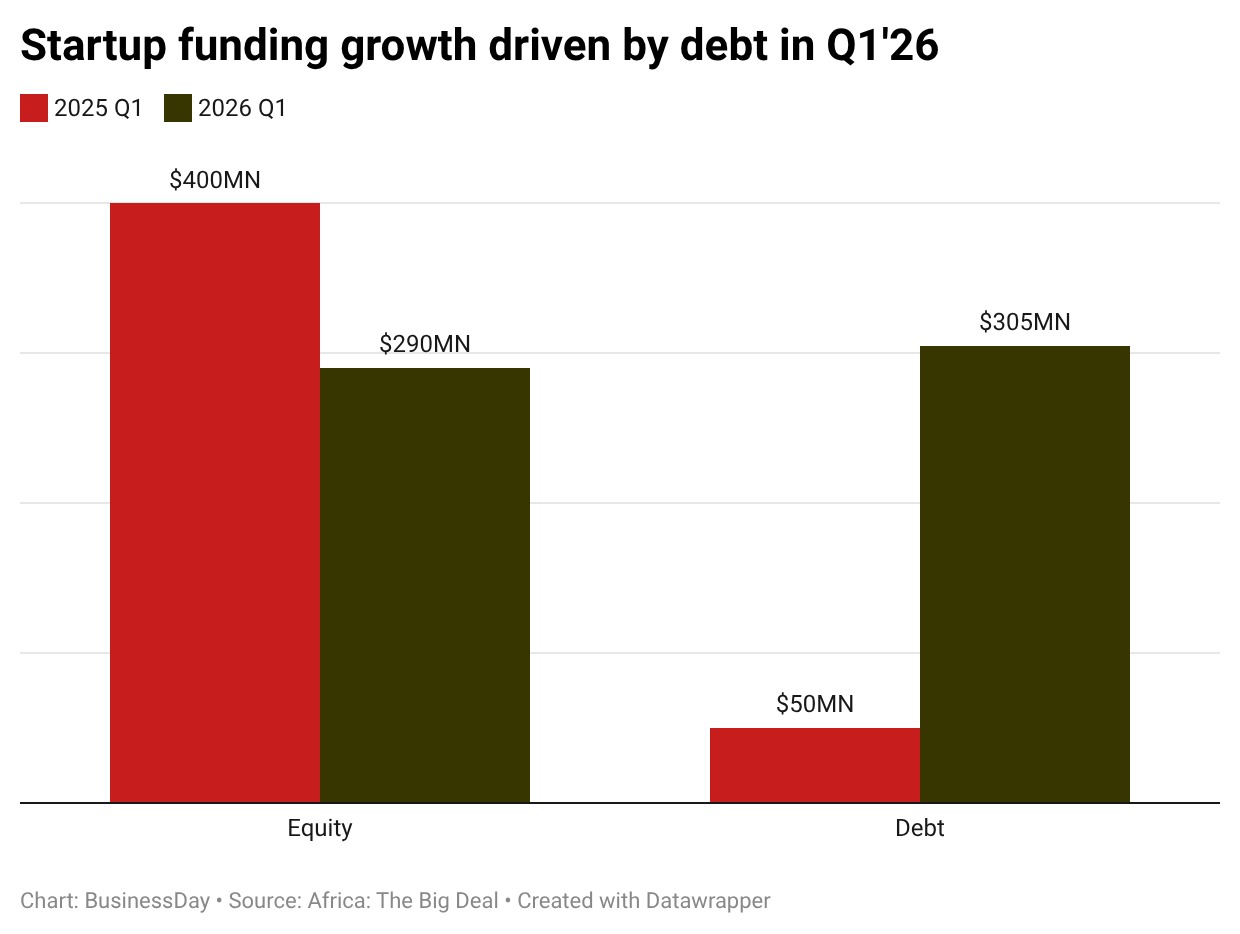
Debt Boom Lifts Africa's Startup Funding to $600M in Q1 2026
- What happened: African startups raised $600 million in Q1 2026, a 27% increase from $470 million in Q1 2025. The surge was driven almost entirely by debt financing rather than equity investment, a structural shift that reflects how investors are repositioning in the current global capital environment.
- Why it matters: While the headline number is impressive, the reliance on debt rather than equity means startups face interest obligations that can constrain growth — and it signals that risk appetite among equity investors remains subdued despite improved macro conditions.
Big Deals Mask Shrinking Seed Funding Across Africa's Startup Ecosystem
- What happened: Despite strong top-line funding figures, a sharp drop in small early-stage investments is raising concerns about the long-term health of Africa's startup pipeline. Large deals are propping up aggregate numbers while the volume of seed-stage rounds has contracted significantly.
- Why it matters: Seed funding is the lifeblood of future deal flow — fewer startups getting initial capital today means fewer growth-stage companies to fund in 2028 and beyond, threatening the sustainability of Africa's startup ecosystem even as current metrics look encouraging.

Africa's EdTech Sector Bets Big on the Continental 2030 Vision
- What happened: A report published this week highlights Africa's Continental EdTech 2030 Vision — a continent-wide initiative using data, devices, and digital innovation to transform education. The initiative is reshaping how learning institutions across Africa approach technology adoption, with governments increasingly embedding edtech into national policy.
- Why it matters: Education technology represents one of the most underfunded yet highest-impact verticals on the continent. Formal government alignment through a shared continental vision could unlock institutional procurement budgets and create a more predictable revenue environment for edtech startups.
Funding Tracker
- UNICEF Climate Ventures (Pan-Africa eligible) — Up to $100,000 equity-free: UNICEF's Climate Ventures program is offering equity-free funding to early-stage startups building open-source frontier tech solutions for climate resilience. African founders building in climate adaptation, sustainable agriculture, and clean energy are eligible to apply.

-
Innovate for Impact Challenge (Global, Africa eligible) — Up to $65,000: The World Food Prize Foundation's agritech competition is open for applications, targeting early-stage startups building food security and sustainability solutions. With African agritech companies constituting a growing share of global food innovation, this is a timely opportunity for founders in Kenya, Nigeria, Ethiopia, and Ghana.
-
Week 17 Africa-Middle East Funding Roundup: Signit led the week's largest rounds in Africa and the Middle East, with AI and hospitality tech attracting the biggest checks according to Techloy's weekly tracker. The data underscores that AI-adjacent startups are capturing a disproportionate share of available capital, even as overall deal volume remains uneven.
Sector Spotlight
Fintech remains Africa's dominant investment sector in 2026, but the landscape is evolving rapidly. According to Africa.com, Africa has emerged as the fastest-growing fintech market globally, with revenues projected to expand 13-fold to approximately $65 billion. Kigali is gaining traction as a new convening hub for scalable financial infrastructure, hosting key industry forums that are drawing institutional investors and payment infrastructure players who previously focused exclusively on Lagos, Nairobi, and Cairo. Regulators in Nigeria, Egypt, and Kenya have intensified efforts around digital stock trading — a development that signals growing maturity in the wealthtech segment and opens new addressable markets for startups building retail capital market access tools.
Policy & Regulation
Crypto Regulation Maturing Across Key African Markets: A recent Ripple analysis published within the past month confirms that South Africa, Nigeria, and Kenya are refining their crypto and digital asset frameworks, with these three markets increasingly positioned as potential regulatory models for the broader continent. Cross-border fintech initiatives are gaining momentum, creating the groundwork for more harmonized regional frameworks. For startups, this signals both an opportunity (clearer rules reduce compliance risk) and a challenge (more enforcement resources means fewer regulatory gray zones to operate in).
Egypt Leads With State-Backed Startup Policy: Analysis published in February 2026 (and still generating active discussion this week) identifies Egypt's government-backed funding and streamlined startup policies as giving it a structural edge over Nigeria and Kenya in attracting early-stage ventures. Regulators in all three markets have intensified efforts to promote digital stock trading as part of broader capital market deepening agendas.
Ecosystem Pulse
-
AgriTech Rising as an Investor-Backed Career Sector: A report from AscendurePro published this week positions African agritech not as a development story but as a "commercially serious, investor-backed, talent-hungry sector," with Kenya identified as a continental leader. The framing is significant — it signals that agritech is graduating from grant-dependent pilots to commercially scaled operations capable of attracting institutional capital.
-
Kigali Emerges as Fintech Hub: Beyond its growing conference footprint, Kigali is being cited by multiple sources this week as an emerging center for scalable financial infrastructure in Africa — a notable shift from the traditional Lagos-Nairobi-Cairo axis that has dominated fintech geography for the past decade.
What to Watch
-
Seed Funding Recovery: The contraction in early-stage rounds is the most structurally important trend to monitor. Founders and ecosystem builders should track whether Q2 2026 shows any reversal, as a sustained seed drought would hollow out Africa's deal pipeline by 2028–2029.
-
UNICEF Climate Ventures Deadline: African climate-tech and agritech founders should move quickly on the $100,000 equity-free Climate Ventures application — deadlines for such programs typically move fast once announced, and the open-source tech requirement aligns well with several African deep-tech builder communities.
-
Regional Crypto Harmonization: Watch for formal announcements from the Southern African Development Community (SADC) and East African Community (EAC) on coordinated crypto regulatory frameworks. With South Africa, Kenya, and Nigeria individually maturing their rules, the next phase of the story is whether regional blocs can align fast enough to reduce cross-border compliance friction for fintech operators.
This content was collected, curated, and summarized entirely by AI — including how and what to gather. It may contain inaccuracies. Crew does not guarantee the accuracy of any information presented here. Always verify facts on your own before acting on them. Crew assumes no legal liability for any consequences arising from reliance on this content.
Powered by
