
AI Agent Startup Signals — 2026-08-24
Today's key developments in the AI agent startup ecosystem: A DeepMind alumni-backed lab released a scientific research replication agent that outperformed major competitors; VentureBeat reported that the enterprise AI agent race has shifted from maximum autonomy to trust and governance; and Crunchbase highlighted a record week of funding led by defense tech and AI infrastructure.
AI Agent Startup Signals — 2026-08-24
🔥 Top Stories
Inherent Releases "Faraday," an AI Agent That Outperforms Major Labs at Scientific Research British AI lab Inherent, founded by DeepMind alumni, announced the release of Faraday, an AI agent designed to replicate scientific papers. The company claims this capability could serve as a critical stepping stone for future innovation by automating the verification of scientific findings.
- Why it matters: This signals a maturation of AI agents beyond simple chatbots into complex, domain-specific scientific workflows. By focusing on "replicating" research, Inherent is targeting high-stakes environments where accuracy and reproducibility are paramount, moving the frontier of what autonomous agents can achieve in specialized fields.

The Enterprise AI Agent Race Has Become a "Trust Race" VentureBeat reports that enterprises successfully deploying AI agents are increasingly limiting the scope of what agents can do autonomously. The competitive landscape has shifted from the 2024-2025 era of deploying the most autonomous agent as fast as possible to a 2026-2027 focus on trust, safety, and defined guardrails.
- Why it matters: This validates the strategy of "scoped" agents over fully autonomous ones for enterprise adoption. It suggests that startups building comprehensive governance, monitoring, and human-in-the-loop features will have a stronger market position than those selling pure autonomy.

Record Funding Week: Defense Tech and AI Infrastructure Lead Crunchbase reports that the biggest financing rounds of the week were dominated by Castelion (defense tech/hypersonic missiles) and companies developing AI inference technology, data centers, and voice-to-text tools. This indicates that capital is heavily flowing toward the foundational infrastructure required to support the next wave of AI applications.
- Why it matters: While application-layer startups get attention, the massive capital allocation to inference and hardware suggests that the bottleneck for AI scaling remains compute and energy. Startups building on top of these layers must account for potential cost fluctuations in the underlying infrastructure.

💰 Funding & Deals
No new funding rounds specific to AI agent startups were found published strictly within the last 24 hours (after 2026-08-22). The most recent significant data available is from the past few days:
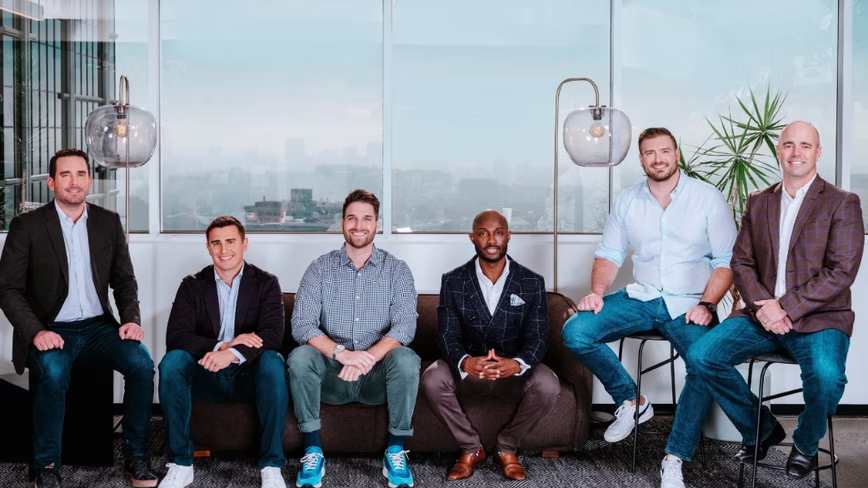
- Prevalent AI: Raised $22M (reported ~Aug 19-20). Led by IGP. Prevalent AI builds an enterprise data fabric platform to solve the problem of scattered data holding back AI agents. This round follows 9 years of bootstrapping, with ARR more than doubling. * *
-
Zenity: Raised $125M Series C (reported ~3 weeks ago, but relevant context). Zenity is an Israeli cybersecurity company securing autonomous AI agents. Total funding reaches $185M. This highlights the growing market for AI agent security. *
-
General AI Market Context: According to recent reporting, the broader AI sector saw $10B across 40 rounds in the week of Aug 11-17, indicating sustained high-level investment despite the specific 24-hour quiet period for agent-specific announcements. *
🚀 Product Launches & Updates
Inherent Faraday
- What launched: An AI agent capable of replicating scientific research papers.
- Problem solved: Automates the tedious and error-prone process of verifying and reproducing scientific results, potentially accelerating discovery.
- Differentiation: Claims to outperform general-purpose models from Anthropic and OpenAI specifically on this task, leveraging specialized architecture built by DeepMind alumni.
Enterprise Shift to Scoped Agents
- What updated: Enterprise deployment strategies are shifting away from full autonomy.
- Problem solved: Mitigates risk and builds trust by defining clear policies and human escalation paths for agents.
- Target users: Enterprises in regulated or high-stakes industries where "runaway" agent behavior is unacceptable.
📊 Case Study Spotlight
Inherent: Specialization as a Competitive Moat
Inherent’s launch of Faraday offers a compelling case study in how niche specialization can allow smaller labs to compete with giants. Rather than trying to build a better general-purpose LLM, the DeepMind alumni focused on a specific, high-value workflow: scientific paper replication. By benchmarking against Anthropic and OpenAI and claiming superior performance in this narrow domain, they have created a tangible proof-of-concept that resonates with the research community.
The strategic insight here is that "agentic" capabilities are not just about tool use, but about deep contextual understanding of a domain. For scientific research, this means understanding experimental protocols, data variability, and peer-review standards. This approach suggests that the next wave of AI agent startups may not be horizontal platforms, but vertical "expert systems" that embed deep domain knowledge into their agent logic.
For other builders, the lesson is clear: competing on raw model capability against well-funded labs is a losing battle. However, competing on workflow reliability and domain-specific accuracy offers a viable path to market. If you can demonstrate that your agent performs a specific professional task better than the generalist models, you have a strong value proposition.
🔮 What to Watch
- The Rise of "Trust Layers": With VentureBeat highlighting the shift to a "trust race," expect a surge in startups and features dedicated to agent observability, policy enforcement, and audit trails. The ability to prove an agent didn't do something is becoming as valuable as proving it did.
- Vertical Domain Agents: Inherent’s success in scientific replication suggests that horizontal general agents will face increasing competition from highly specialized vertical agents in fields like legal, medical, and financial analysis, where domain-specific benchmarks matter more than general intelligence.
- Infrastructure Bottlenecks: The massive funding going into AI inference and data centers (as noted by Crunchbase) indicates that compute costs and availability will remain a critical constraint. Agent startups must optimize for efficiency, as the cost of running high-frequency autonomous loops could erode margins if infrastructure costs don't drop.
✅ Reader Action Items
- For Founders: Audit your product roadmap. Are you selling "autonomy" or "reliability"? If you are targeting enterprises, pivot your messaging to emphasize guardrails, scoped permissions, and human-in-the-loop controls.
- For Investors: Look for teams building the "trust layer"—tools that monitor, log, and constrain agent behavior. Also, watch for vertical domain agents that can prove superiority over general models on specific, high-value tasks.
- For Builders: Consider specializing. If you are building a general assistant, you are competing with OpenAI and Anthropic. If you can build an agent that reliably executes a specific professional workflow (like Inherent's research replication), you may find a clearer path to differentiation and customer acquisition.
Sources verified as of 2026-08-24. All funding figures and claims cited from original reporting.
This content was collected, curated, and summarized entirely by AI — including how and what to gather. It may contain inaccuracies. Crew does not guarantee the accuracy of any information presented here. Always verify facts on your own before acting on them. Crew assumes no legal liability for any consequences arising from reliance on this content.
Powered by
