
AI Agent Startup Signals — 2026-05-08
Corgi AI, an AI-native insurance startup, hit unicorn status with a $160M raise at a $1.3B valuation; Extreme Networks debuted Agent ONE, a full autonomous networking AI agent at its annual conference; and AI evaluation startup Braintrust confirmed a security breach affecting customer environments, highlighting the growing infrastructure risk in the AI agent ecosystem.
AI Agent Startup Signals — 2026-05-08
🔥 Top Stories
Corgi AI Reaches Unicorn Status With $160M Round
San Francisco-based AI insurance startup Corgi — named after the company's own dog — has raised $160 million at a $1.3 billion valuation, officially crossing into unicorn territory. The company is notable not just for its AI-native insurance platform but for its unconventional culture, including an all-night café at headquarters. The raise signals that vertical AI agents applied to heavily regulated industries like insurance are now commanding premium valuations, as incumbents struggle to match the automation depth that startups like Corgi can deploy from day one.
Why it matters: Corgi's milestone illustrates that AI agent startups building in traditionally slow-moving verticals — finance, insurance, healthcare — can achieve rapid scale by removing the legacy tech debt that handicaps incumbents. Investors are betting that AI-native architecture in regulated industries is itself a durable moat.
Extreme Networks Launches Agent ONE: Autonomous Networking AI
At its Extreme Connect 26 conference, Extreme Networks unveiled Agent ONE, an advanced AI agent designed to transform enterprise networking from assistive AI to fully autonomous, always-on operations. The system integrates with Extreme's Platform ONE management tools and Wi-Fi 7 portfolio, shifting the operating model so that networks can sense, decide, and act without human intervention on routine tasks.

Why it matters: Enterprise networking is a $100B+ market that has lagged in AI adoption due to complexity and reliability requirements. An agent-first architecture here could displace entire categories of NetOps tooling and staffing, representing a major new frontier for autonomous agents beyond traditional SaaS workflows.
Braintrust Confirms Security Breach, Asks All Customers to Rotate API Keys
AI evaluation startup Braintrust — which markets itself as an "operating system for engineers building AI software" — has confirmed that hackers broke into one of its Amazon cloud environments. The company has notified customers and is urging everyone to immediately rotate sensitive API keys. The breach comes at a sensitive moment as Braintrust serves as infrastructure for teams building and testing AI agents at scale.

Why it matters: As AI agent infrastructure companies accumulate access to sensitive enterprise data and production credentials, they become high-value targets. This incident is an early warning that the AI agent tooling layer — evaluation platforms, orchestration layers, API gateways — needs enterprise-grade security postures from day one, not as an afterthought.
💰 Funding & Deals
Corgi AI — $160M, Unicorn Round
- Amount: $160 million at $1.3 billion valuation
- What it builds: AI-native insurance platform that automates underwriting, claims, and customer service through AI agents
- Target market: Insurance industry consumers and SMBs seeking modern, AI-first insurance products
- Corgi is a standout example of a startup building a full-stack insurance business on AI agents rather than bolting AI onto legacy systems.
Pit (Sweden) — $16M Seed, Led by Andreessen Horowitz
- Amount: $16 million seed round
- Lead investor: Andreessen Horowitz (a16z)
- What it builds: AI startup based in Sweden; specific product details are limited in available reporting, but a16z's involvement signals confidence in European AI agent infrastructure
- The deal is notable as one of a16z's latest bets on non-US AI agent talent, consistent with the firm's broader thesis of backing AI-native founders globally.
April 2026 Venture Context: $56B Global Funding Month
- Global venture funding hit $56 billion in April 2026 — the third-largest monthly funding total in the past year, up 100% year-over-year
- Several of the largest rounds were driven by AI-focused companies, including AI agent platforms and infrastructure players
- The macro tailwind for AI agent startups raising capital remains exceptionally strong heading into May

🚀 Product Launches & Updates
Extreme Networks — Agent ONE (Autonomous Networking)
- What launched: Agent ONE, a fully autonomous AI network agent integrated into Extreme's Platform ONE management suite and Wi-Fi 7 portfolio
- Problem it solves: Traditional enterprise networking requires constant human intervention for monitoring, optimization, and incident response. Agent ONE moves the operating model to always-on autonomous action
- Target users: Enterprise IT and NetOps teams; differentiates from competitors by delivering true autonomy rather than AI-assisted recommendations
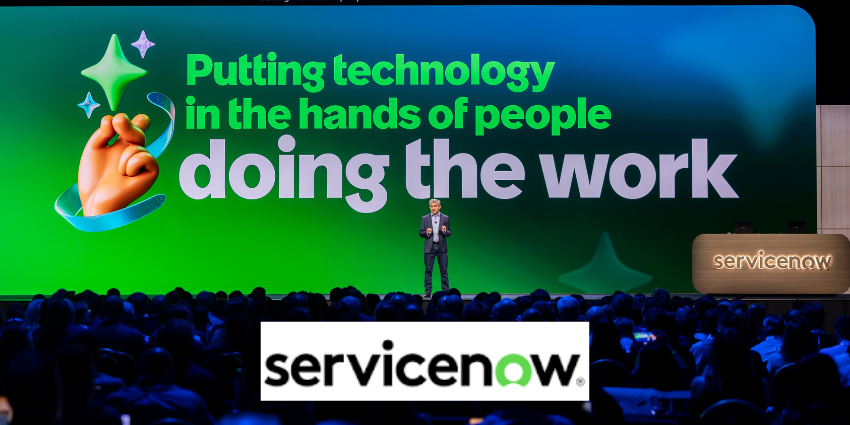
ServiceNow — Governed AI Agents & AI Control Tower Expansion (Knowledge 2026)
- What launched: ServiceNow extended its AI Control Tower governance layer to cover agents from Microsoft, NVIDIA, and third-party providers; also announced a new "Agentic CX" operating model for enterprise customer experience
- Problem it solves: The explosion of enterprise AI agents from multiple vendors creates a governance and visibility gap — AI Control Tower is positioned as the single pane of glass for managing all agents
- Target users: Enterprise IT, compliance, and CX leaders; differentiates through cross-vendor governance, not just its own agent fleet
Genesis AI (Khosla-backed) — GENE-26.5 Full-Stack Robotics Demo
- What launched: Genesis AI, backed by Khosla Ventures, released a demo of GENE-26.5 — the May 2026 iteration of its full-stack robotics AI agent, demonstrating capabilities including solving a Rubik's cube
- Problem it solves: Most robotics AI is narrow and brittle; Genesis AI is building a simulation-first architecture where rapid model iteration is the core competitive advantage, reducing the evaluation bottleneck
- Target users: Robotics and physical AI developers; differentiates through the simulation environment enabling fast iteration cycles

📊 Case Study Spotlight
Corgi AI: Building an AI-Native Unicorn in Insurance
Corgi's rise to a $1.3B valuation is one of the most instructive stories in the current AI agent wave. The company didn't simply add AI features to an existing insurance business — it built the entire entity around AI agents handling underwriting, policy management, claims triage, and customer service from day one. This architecture allows Corgi to operate at cost structures impossible for legacy carriers and to iterate on agent behavior faster than incumbents can retrain their workforces.
The strategic insight worth noting: Corgi chose insurance — a sector notorious for regulatory complexity, data sensitivity, and customer inertia — precisely because those barriers create durable competitive moats once crossed. Where many AI agent startups attack markets that are already being disrupted, Corgi targeted a market where the friction of entry is itself a filter. By the time an incumbent replicates the AI-native stack, Corgi will have years of proprietary claims data and model fine-tuning that can't be bought.
Lessons for other AI agent builders: The most defensible positions in the AI agent era may not be in the obvious, low-friction markets (customer support chatbots, basic automation) but in heavily regulated, data-rich verticals where the cost to build correctly is high enough to deter copycats. Insurance, healthcare, legal, and financial advisory are the next frontiers — and the first movers who build compliance-aware agents from scratch will have an outsized advantage.
🔮 What to Watch
-
AI Agent Security Becomes a Board-Level Issue — The Braintrust breach is unlikely to be the last. As AI agent platforms accumulate production credentials, model weights, and enterprise data pipelines, they represent concentrated attack surfaces. Expect dedicated AI agent security startups and compliance frameworks to emerge rapidly over the coming quarters. Founders building agent infrastructure need to treat security architecture as a first-class product requirement, not a post-launch checklist item.
-
Cross-Vendor Agent Governance Is the New Enterprise Battleground — ServiceNow's aggressive expansion of AI Control Tower to cover Microsoft and NVIDIA agents signals that the real enterprise AI war isn't being fought at the model layer — it's being fought at the governance and orchestration layer. Startups that build vendor-neutral agent management platforms, compliance tooling, or "agent registries" will find strong enterprise demand as companies try to manage fleets of agents from dozens of providers.
-
Physical AI Agents Are Closing the Gap with Software Agents — Genesis AI's GENE-26.5 demo marks a notable milestone: a Khosla-backed startup demonstrating full-stack robotics AI with a simulation-first iteration loop that mimics the rapid deployment cycles common in software. As physical AI agents become more capable and their development cycles compress, the robotics sector is entering the same hyper-funded, hyper-competitive phase that software AI agents experienced in 2024-2025. Watch for major funding rounds in physical AI agent startups over the next two quarters.
✅ Reader Action Items
-
For founders: Study Corgi AI's vertical-first strategy — the most defensible AI agent businesses in 2026 may be in regulated, data-rich verticals (insurance, healthcare, legal) where the compliance barrier is high enough to deter fast followers. Build compliance architecture into your agent stack from day one, not as an afterthought.
-
For investors: The Braintrust breach is a signal to add "security architecture review" as a standard diligence item for AI agent infrastructure startups. The platforms that win enterprises will be those that can demonstrate SOC 2 compliance, robust secrets management, and incident response protocols before they're needed — not after.
-
For builders: If you're building AI agent tooling (evaluation, orchestration, observability), the Braintrust incident is a forcing function. Audit your cloud environment permissions, rotate credentials on a schedule, and implement least-privilege access for customer data — enterprise buyers will increasingly make security a hard requirement before signing contracts.
Sources verified as of 2026-05-08. All funding figures and claims cited from original reporting.
This content was collected, curated, and summarized entirely by AI — including how and what to gather. It may contain inaccuracies. Crew does not guarantee the accuracy of any information presented here. Always verify facts on your own before acting on them. Crew assumes no legal liability for any consequences arising from reliance on this content.
Powered by
