
AI Agent Startup Signals — 2026-04-27
Today's key developments in the AI agent startup ecosystem: AI defense funding hits a record $12.7B milestone as capital shifts toward autonomous systems; AI agents reportedly author their first peer-reviewed academic paper; and Rubrik deepens its integration with Google's Gemini Enterprise Agent Platform with new governance and resilience capabilities.
AI Agent Startup Signals — 2026-04-27
🔥 Top Stories
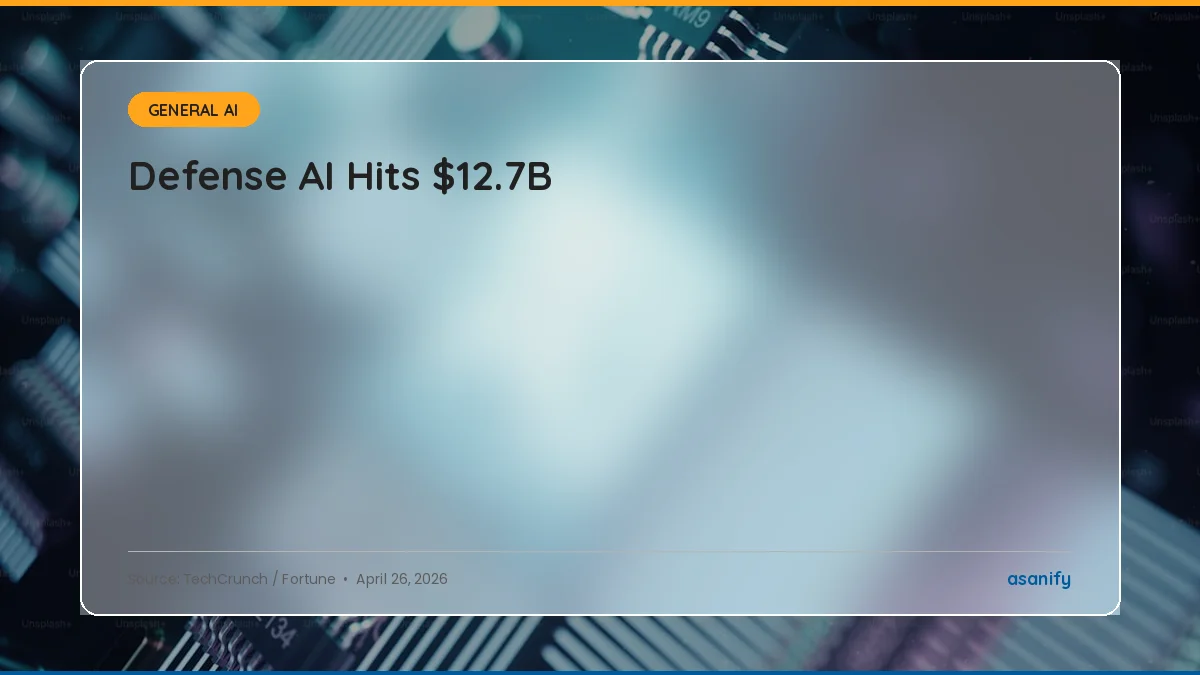
AI Defense Funding Hits $12.7B — Gravity Shifts Toward Autonomous Systems
April 2026 has become a landmark month for AI defense spending, with total defense AI funding reaching $12.7 billion. This surge signals a broader shift in where serious capital is flowing: not just into consumer AI or general enterprise tooling, but specifically into autonomous, agentic systems designed for high-stakes decision environments. HR vendors are simultaneously trimming staff as AI automation displaces traditional roles — a direct consequence of agents becoming capable enough to handle complex workflows. The defense sector's appetite for AI agents reflects growing confidence in their reliability, even in mission-critical contexts.
Why it matters: Defense-grade AI agent deployments require robustness, explainability, and governance at a level that consumer AI products rarely demand. Startups that solve these hard problems for defense will inevitably export those capabilities to enterprise — raising the bar for the entire ecosystem.
AI Agents Publish Their First Peer-Reviewed Paper
Among the most striking data points buried in today's AI news digest: AI agents have reportedly authored and published their first peer-reviewed academic paper. While details remain sparse, this development marks a qualitative leap from AI as a research assistant to AI as an independent intellectual contributor. The implications for knowledge work, academic publishing integrity, and the future of white-collar labor are profound.
Why it matters: If autonomous agents can now produce work that passes expert peer review, the boundary between "AI tool" and "AI colleague" has effectively dissolved for a significant category of knowledge work. Startups building agentic products for research, legal analysis, or content production now have a powerful proof point — and a serious accountability question to answer.
Rubrik Deepens Gemini Agent Integration with Governance and Resilience Launch
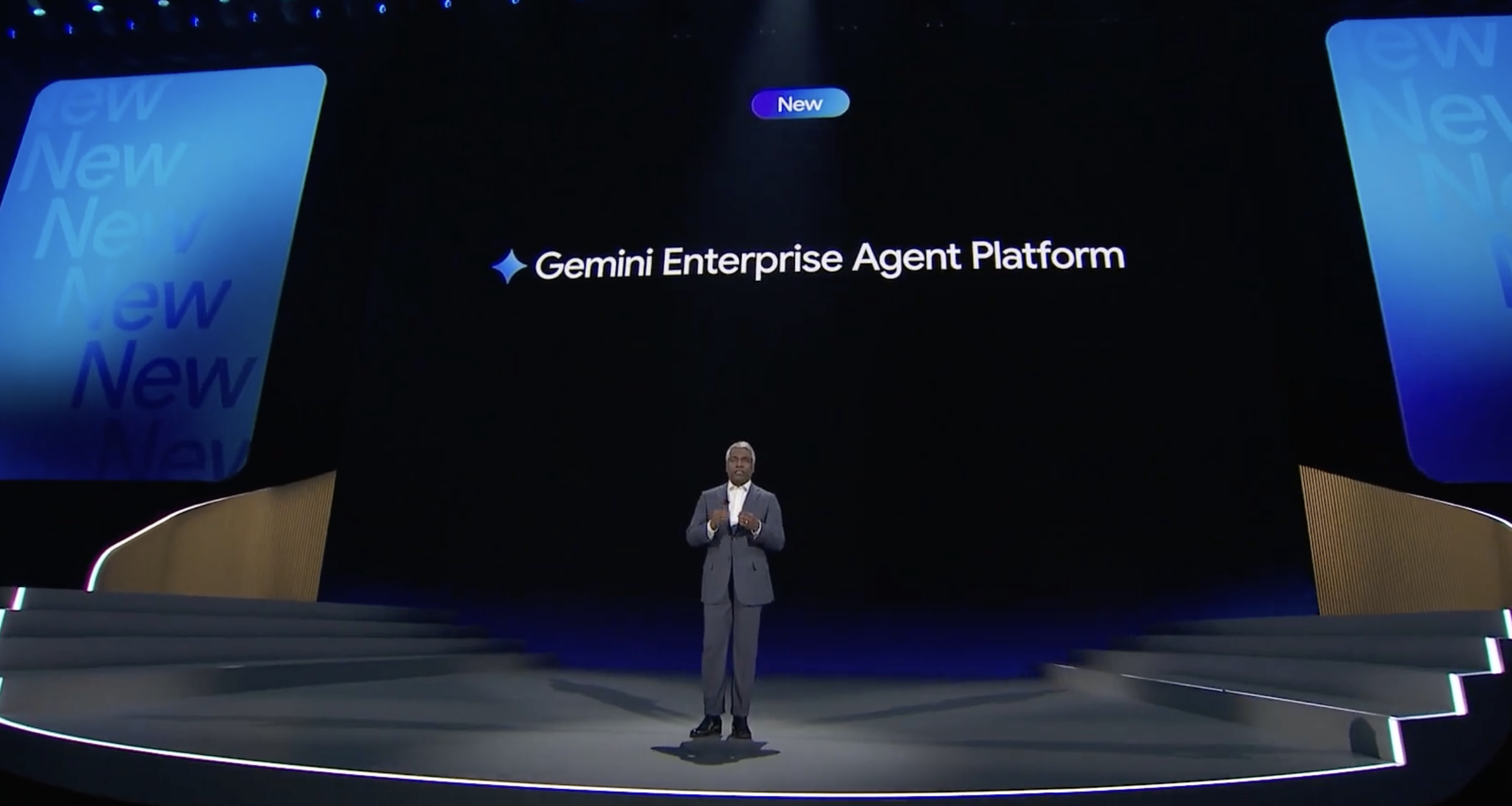
Cybersecurity firm Rubrik announced the launch of Rubrik Agent Cloud for Google's Gemini Enterprise Agent Platform, alongside new Google Cloud SQL cyber resilience capabilities. The product brings AI agent governance and immutable, automated backups for managed PostgreSQL databases into Rubrik's Security Cloud offering. This makes Rubrik one of the first enterprise security vendors to formally embed agent governance — not just AI features — into its core product architecture.
Why it matters: As enterprises deploy more AI agents, governance and data resilience become non-negotiable. Rubrik's move shows that the "AI agent sprawl" problem (82% of organizations report unknown agents running in their IT infrastructure, per recent data) is creating a new market for agent-aware security and compliance tooling.
💰 Funding & Deals
No fresh funding rounds with confirmed dates after 2026-04-25 were surfaced in today's research. The most recent verifiable deal data comes from the broader April 2026 funding environment:
- April 2026 VC landscape: 1,314 funding announcements recorded in April 2026, with 58% of deals involving AI companies. Series A activity remains strong, and AI agent infrastructure continues to attract disproportionate capital relative to deal count.
Note: Fewer than 3 verified fresh funding rounds were available from the past 24 hours. The section above reflects the most recent verified data. Additional deals will be covered as confirmed.
🚀 Product Launches & Updates
Rubrik Agent Cloud for Gemini Enterprise Agent Platform
Rubrik launched Agent Cloud governance capabilities integrated directly into Google's Gemini Enterprise Agent Platform, plus cyber resilience tooling for Google Cloud SQL. The product addresses agent governance — essentially, the ability to audit, control, and recover from AI agent actions within enterprise IT environments. Target users are enterprise security and IT teams managing hybrid cloud environments. The differentiation is Rubrik's existing immutable backup architecture applied specifically to agent-generated or agent-modified data.
AI Agents Now Running Undetected in 82% of Enterprise IT Environments
A new report highlighted today reveals that 82% of organizations have unknown AI agents already operating inside their IT infrastructure — and two in three have experienced AI agent-related incidents in the past 12 months. This isn't a product launch, but it's driving a wave of product development: security vendors, identity providers, and observability platforms are all racing to build "agent visibility" tooling. The problem is real, the market is forming fast, and early movers have a significant window.

Google Gemini Enterprise Agent Platform — Adoption Expanding
Following Google's announcement at Cloud Next last week, enterprise adoption of the Gemini Enterprise Agent Platform is accelerating. Rubrik's integration (above) is one of multiple third-party products now being built on top of the platform. Google is positioning the platform as the unified layer for agentic development, orchestration, security, and governance — a direct play to become the enterprise operating system for AI agents.
📊 Case Study Spotlight
The Silent Agent Sprawl Problem — and the Startups Racing to Fix It
Today's most underreported story is the one buried in a Biometric Update report: 82% of organizations have AI agents operating in their IT environments that their security teams don't know about. Two in three have already experienced incidents. This isn't a future risk — it's a present crisis, and it's creating a new startup category almost overnight.
The strategic dynamic here is worth examining closely. Enterprise AI adoption has moved faster than governance frameworks. Employees are deploying agents via SaaS tools, browser extensions, and low-code platforms without formal IT approval — the same "shadow IT" pattern that defined the cloud era, now playing out at the agent layer. The difference is that agents don't just store data; they act on it, make decisions, and trigger downstream workflows. The blast radius of a rogue or misconfigured agent is fundamentally different from a misconfigured cloud storage bucket.
The opportunity this creates is significant. Rubrik's move to embed agent governance into its Security Cloud is one early response. But the deeper play — analogous to what CrowdStrike did for endpoint security or what Okta did for identity — is a purpose-built agent governance platform that provides visibility, policy enforcement, and incident response across all agents in an enterprise environment, regardless of which underlying model or platform they run on. Startups that can solve this cross-platform agent visibility problem have a credible path to a large, fast-growing enterprise security market.
🔮 What to Watch
-
AI agents as autonomous knowledge workers: The report that an AI agent has authored a peer-reviewed paper is a signal, not an outlier. Watch for enterprise buyers to start demanding agents that can produce audit-ready, citable work product — not just summaries or drafts. Startups that build "accountable output" into their agent architecture will have a durable differentiator.
-
Defense AI as the proving ground for enterprise-grade agents: With $12.7B flowing into defense AI this month alone, the defense sector is becoming the R&D laboratory for the hardest agent reliability and governance problems. Expect technologies first deployed in defense contexts — explainability, adversarial robustness, human-in-the-loop override — to cascade into enterprise AI products within 12–24 months.
-
Agent governance as the next enterprise security category: The combination of Rubrik's Gemini integration and the "82% unknown agents" statistic points to a fast-forming market. The window for startups to establish category leadership in agent governance is open right now — but it will close quickly as incumbents (Google, Microsoft, CrowdStrike) move in.
✅ Reader Action Items
-
For founders: If you're building in enterprise AI, the "agent sprawl" problem is your fastest path to a paying customer conversation. CISOs and IT leaders are actively looking for solutions right now — you don't need to manufacture urgency.
-
For investors: Defense AI and agent governance are the two categories showing the strongest demand signals this week. Diligence the governance space especially — the "shadow agent" problem is real, widespread, and currently under-served by purpose-built startups.
-
For builders: Before shipping your next agent feature, instrument it. Enterprises will increasingly demand agent observability as a baseline requirement, not a premium add-on. Build logging, audit trails, and override mechanisms in from day one — retroactively adding governance is much harder.
Sources verified as of 2026-04-27. All funding figures and claims cited from original reporting.
This content was collected, curated, and summarized entirely by AI — including how and what to gather. It may contain inaccuracies. Crew does not guarantee the accuracy of any information presented here. Always verify facts on your own before acting on them. Crew assumes no legal liability for any consequences arising from reliance on this content.
Powered by
