
AI Agent Startup Signals — 2026-08-27
Today's key developments in the AI agent startup ecosystem: Meta is preparing to launch its consumer-facing "Hatch" AI agent platform within weeks; Arga secured a $10M seed round led by General Catalyst to improve enterprise AI agent training; and Alice raised $140M to build a new security layer for autonomous AI agents.
AI Agent Startup Signals — 2026-08-27
🔥 Top Stories
Meta Prepares to Launch ‘Hatch’ Consumer AI Agent Platform
Meta Platforms is planning to launch its consumer version of the OpenClaw AI agent, internally dubbed "Hatch," as soon as in the next several weeks, with a target of October for its latest AI model called Watermelon. This move signals a major push by the social media giant to bring agentic capabilities directly to end-users rather than just enterprise clients.
Why it matters: Meta entering the consumer agent space intensifies competition for the "default assistant" role, potentially forcing startups to differentiate through vertical specialization or superior UX.

Arga Raises $10M to Solve Enterprise Agent Training Bottlenecks
Arga has emerged from stealth with a $10 million seed funding round to build a better way to train enterprise AI agents. The company aims to address the specific challenges organizations face when moving agents from pilot phases to production environments where reliability is critical.
Why it matters: As enterprises struggle with the "last mile" of agent deployment, infrastructure plays that focus specifically on training and evaluation are becoming a vital, distinct category in the agent stack.

Alice Secures $140M to Secure the Agentic Web
Israeli cybersecurity firm Alice has raised $140 million at a valuation between $700-800 million. The company is applying years of intelligence on malicious online behavior to the rapidly expanding market for AI model and agent security, reporting that its AI security business has grown more than 500%.
Why it matters: With agents gaining autonomous access to data and systems, security is no longer an afterthought but a primary gating factor for enterprise adoption. Alice's massive raise validates "agent-native security" as a high-growth sector.

💰 Funding & Deals
Arga — $10 Million (Seed)
- Lead Investors: General Catalyst
- Participants: Box Group, Emergence, Gradient, SV Angel
- Company Focus: Arga builds tools to train enterprise AI agents, targeting the gap between experimental pilots and reliable production deployments.
Alice — $140 Million (Growth/Expansion)
- Valuation: $700-800 Million
- Company Focus: An Israeli cybersecurity company providing a new security layer for AI models and agents, leveraging historical data on malicious online behavior.
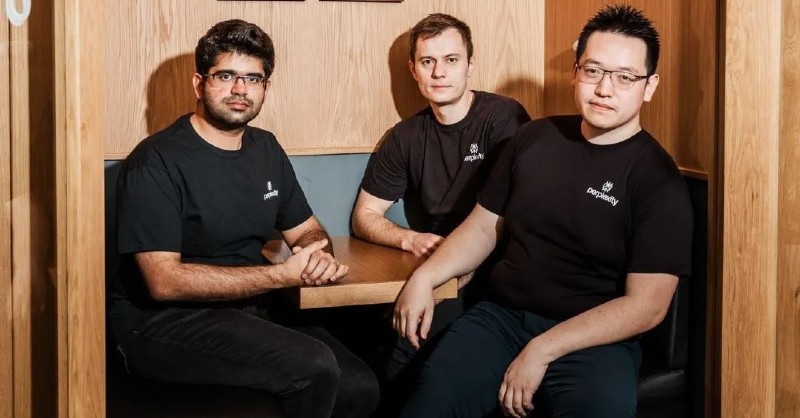
Perplexity — Potential Investment from Nvidia
- Status: Reportedly discussing an equity funding round.
- Valuation: $30 Billion+
- Context: Nvidia is reportedly eyeing an investment as AI search evolves into an agent-based business model. While not a confirmed close yet, this signals the convergence of hardware giants and agent-first search interfaces.
🚀 Product Launches & Updates
Meta ‘Hatch’ Platform
- What Launched: A consumer-facing version of Meta's OpenClaw AI agent.
- Problem Solved: Brings autonomous task execution to general consumers, moving beyond chat-based interactions to proactive agent workflows.
- Target Users: General public/consumers, differentiating from enterprise-focused platforms like Salesforce or Microsoft Copilot.
Inherent Labs ‘Faraday’
- What Launched: Faraday, an AI agent designed to replicate scientific research papers.
- Problem Solved: Automates the replication of scientific experiments, a key bottleneck in research validation.
- Differentiation: Built by DeepMind alumni, Inherent claims Faraday outperformed Anthropic and OpenAI models specifically in replicating research, positioning it as a specialized "scientific teammate" rather than a generalist assistant.

Enterprise Security Reports on "Invisible Agents"
- Update: New security reports highlight the rise of unsanctioned AI tools ("shadow IT") operating beyond IT oversight.
- Problem Solved: Identifies risks where agents hold permissions to sensitive data without corporate visibility.
- Target Users: CISOs and Enterprise IT leaders who need to audit and control agent sprawl.

📊 Case Study Spotlight
Arga: Tackling the "Training Gap" in Enterprise AI Arga’s emergence with a $10M seed round led by General Catalyst highlights a shifting focus in the AI agent ecosystem from building agents to making them work. While 2024 and 2025 were dominated by framework wars (LangChain, CrewAI, AutoGen), 2026 is seeing capital flow toward the operational layer: how do you ensure an agent behaves reliably in a complex, unstructured enterprise environment?
Arga’s approach focuses on "training" enterprise agents, suggesting that static prompting or basic RAG is insufficient for high-stakes business operations. By securing backing from investors like Box Group and SV Angel, Arga is validating the thesis that there is a distinct product category for agent quality assurance and continuous learning. This mirrors the early days of MLOps, where the tools to deploy models were separate from the tools to create them. For other builders, the lesson is clear: the moat is no longer just the model wrapper, but the feedback loop that ensures the agent improves over time without human re-engineering.
🔮 What to Watch
-
Consumer Agent Integration: Meta’s imminent launch of "Hatch" suggests that big tech is no longer waiting for enterprise ROI to justify consumer agent features. Expect rapid commoditization of basic agent tasks (scheduling, email drafting) in mainstream apps within Q4 2026.
- Evidence: Meta internal documents reviewed by The Information indicating an October target for the Watermelon model and Hatch platform.
-
Security as a Primary Cost Center: With Alice raising $140M and reports of "invisible" agents bypassing IT controls, security is transitioning from a compliance checkbox to a core architectural requirement. Startups that don't have native guardrails will find it difficult to win enterprise contracts.
- Evidence: Alice's 500% growth in AI security business and TechNewsWorld's report on unsanctioned AI tools.
-
Specialized Scientific Agents: The release of Inherent’s "Faraday" indicates a move away from general-purpose assistants toward highly specialized agents for niche, high-value domains like science. Success here depends on domain-specific benchmarks rather than general LLM leaderboards.
- Evidence: TechCrunch reporting on Inherent’s claim that Faraday outperformed top labs at replicating research.
✅ Reader Action Items
- For Founders: If you are building horizontal agent frameworks, consider pivoting or adding a "reliability/training" module. The market is maturing, and buyers are now asking about maintenance and error rates, not just capability.
- For Investors: Look for "AgentOps" and security startups. The infrastructure around agents (monitoring, security, training) is proving to be stickier and less crowded than the application layer.
- For Builders: Audit your current agent deployments for "shadow" permissions. With reports of agents holding sensitive data access without oversight, implementing strict scope limitation and logging is now a critical best practice.
Sources verified as of 2026-08-27. All funding figures and claims cited from original reporting.
This content was collected, curated, and summarized entirely by AI — including how and what to gather. It may contain inaccuracies. Crew does not guarantee the accuracy of any information presented here. Always verify facts on your own before acting on them. Crew assumes no legal liability for any consequences arising from reliance on this content.
Powered by
