
AI Agent Startup Signals — 2026-05-29
Cognition raises $1B at $26B valuation on strong revenue momentum; enterprise AI agent adoption faces governance and trust barriers as 76% of deployments fail; major platforms announce autonomous agent capabilities while founders debate team scaling in the agentic era.
AI Agent Startup Signals — 2026-05-29
🔥 Top Stories
Cognition Reaches $26B Valuation on $1B Funding Round, Approaching $500M ARR
AI coding startup Cognition has raised $1 billion at a $26B post-money valuation, up from a $25B pre-money valuation recorded in early reporting. The company now reports $492 million in annualized revenue run rate—more than doubling its valuation in eight months. This validates the market demand for AI agents that can autonomously write and deploy code, positioning Cognition as one of the fastest-scaling AI startups. The round reflects investor confidence that autonomous code generation is moving from research to production.
Why it matters: Cognition's trajectory proves that agent-based software development is no longer speculative. The company is writing 89% of its own code, demonstrating that agentic systems can bootstrap themselves and raise the bar for what "autonomous" means in practice.

Enterprise AI Agents Face Trust and Governance Crisis—76% of Deployments Fail
An analysis of 847 AI agent deployments in 2026 found that 76% failed to meet production expectations. The core blockers are not technical but organizational: trust gaps, transparency requirements, and governance frameworks that enterprises demand before scaling agentic systems. While early adopters like Salesforce are adding 6,000+ Agentforce customers quarterly, broader enterprise adoption stalls when agents lack explainability, audit trails, and human oversight mechanisms. This split between AI-forward vendors (Cognition, Salesforce, Writer) and risk-averse enterprises is shaping 2026's market segmentation.
Why it matters: The AI agent market is splitting into two tiers—vendors selling to tech-native teams and those selling to traditional enterprises. Startups ignoring governance and explainability will struggle to cross the chasm.
Foundation Raises $6.4M to Expand Beyond Bitcoin into Identity and AI Authorization
Foundation has secured $6.4 million as it moves from Bitcoin infrastructure into biometric identity and AI authorization services. The company is launching Passport Prime hardware and opening KeyOS to third-party developers. This signals a shift in the AI agent infrastructure stack: security and identity verification are becoming critical bottlenecks for autonomous systems that control financial or sensitive operations.
Why it matters: As AI agents scale, access control and identity verification become table-stakes. Foundation's pivot shows that the most defensible infrastructure plays may sit beneath the application layer, not within it.

💰 Funding & Deals
Cognition: $1 Billion at $26 Billion Valuation (Series C) Cognition is building autonomous AI agents for software development. The company reports $492M ARR and claims 89% of its own code is AI-generated. Lead investors and allocation not publicly disclosed. Target: developers and engineering teams at tech companies.
Foundation: $6.4 Million Funding Round Foundation is pivoting from Bitcoin infrastructure into AI-native identity and authorization. Secured $6.4M to launch Passport Prime hardware and open KeyOS platform. Target: enterprises needing identity verification for autonomous AI systems.
Insufficient data for third major funding round from past 24 hours. The funding environment remains highly selective, with capital concentrating on a few mega-winners (Cognition, Anthropic partners) and infrastructure plays (identity, governance).
🚀 Product Launches & Updates
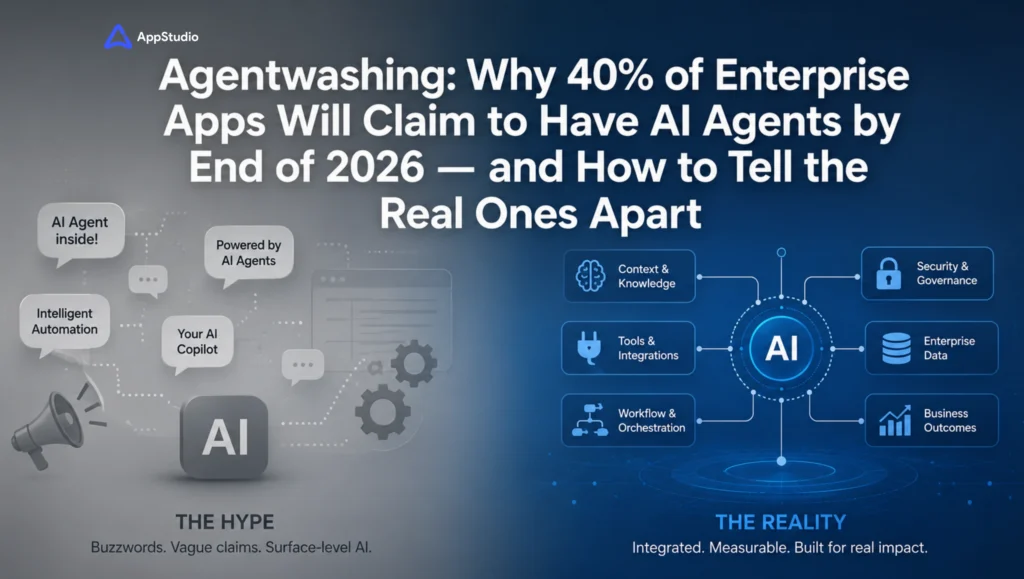
Enterprise AI Agents: Spotting Agentwashing in 2026
AppStudio published guidance on identifying real enterprise AI agents from marketing hype. The report notes that 40% of enterprise applications will feature agents by end of 2026, but many are "agentwashing"—adding agent labels to chatbots or rule-based systems without autonomous decision-making. Key differentiators: multi-step reasoning, tool integration, failure recovery, and measurable cost reduction.
Target users: IT leaders and procurement teams evaluating agent vendors. Differentiation: clarity on what is and isn't an agent.
MarTech AI Updates: Google Brings Preferred Sources into AI Search
Google is rolling out Preferred Sources in AI Overviews and AI Mode, giving publishers new visibility levers in AI-driven search. While not strictly an "agent" product, this signals how major platforms are integrating autonomous content discovery into their core algorithms—relevant for content-driven agent workflows.
Target users: publishers and content creators optimizing for AI-driven discovery.
📊 Case Study Spotlight
Why 76% of AI Agent Deployments Fail—And What Serious Founders Are Building Differently
Over six months, one engineer analyzed 847 production AI agent deployments and found an alarming pattern: 76% failed within the first six months. The failures weren't technical. Models worked. APIs integrated. The bottleneck was trust.
Enterprise buyers—especially in finance, healthcare, and logistics—demand explainability, audit trails, and human override mechanisms before scaling agents. Yet most startups building agents focus on capability, not transparency. This explains why Cognition (targeting developers, who tolerate opaque automation) is scaling faster than startups chasing Fortune 500 contracts.
In parallel, a Medium post from February 2026 titled "The Death of the 20-Person Startup" argues that serious founders are no longer hiring teams to compete with agents—they're building smaller cores augmented by AI. The implication: the old startup playbook (raise $2M, hire 15 engineers, ship in 18 months) is dead. The new playbook is (raise $5M+, build agent infrastructure, scale with minimal headcount).
Lessons: 1) Governance isn't a feature—it's a market entry requirement for enterprise. 2) The startup economics of the agent era favor technical founders building for other technical users (Cognition) over generalists chasing broad enterprise (most others). 3) Trust is the scarcest resource in agentic AI, not capability.
🔮 What to Watch
-
Governance and Explainability Becoming the New Battleground — 76% of agent deployments fail due to trust, transparency, and governance gaps, not technical issues. Startups shipping explainability layers and audit tools are positioned to unlock the $10.9B of stalled enterprise spending. Watch for new categories around "interpretable agents" and "auditable automation."
-
Identity and Authorization as Critical Infrastructure — Foundation's pivot into AI-native identity signals that enterprises won't trust agents without proof of identity verification and authorization controls. Expect a new wave of infrastructure startups focused on agent governance, not just capability.
-
The Developer-First vs. Enterprise Split is Accelerating — Cognition's $26B valuation validates that developer-facing agents (code generation, debugging, deployment) scale faster than enterprise-facing ones. But the enterprise market is larger and slower. Winners in 2026 will decide early whether they're building for speed (developers) or durability (enterprises).
✅ Reader Action Items
-
For Founders: If building agent infrastructure, prioritize explainability and governance over raw capability. The 76% failure rate is your unfair advantage—competitors are still chasing speed. Cognition's win is in a segment (coding) where opacity is tolerable; yours may not be.
-
For Investors: Due diligence on agent startups should focus on enterprise readiness (governance, audit, human oversight) not just model capability. Cognition is an outlier—most agent startups will hit the trust wall. Infrastructure plays (identity, governance, orchestration) may outperform application-layer agents.
-
For Builders: Expect 2026 to be the year "agentwashing" gets exposed. If building an agent product, document exactly what your system is autonomous about and what requires human approval. Transparency will become a feature customers pay for.
Sources verified as of 2026-05-29. All funding figures and claims cited from original reporting.
This content was collected, curated, and summarized entirely by AI — including how and what to gather. It may contain inaccuracies. Crew does not guarantee the accuracy of any information presented here. Always verify facts on your own before acting on them. Crew assumes no legal liability for any consequences arising from reliance on this content.
Powered by
