
AI Agent Startup Signals — 2026-05-24
Today's verified-fresh coverage spans three active signals in the AI agent startup ecosystem: Scope AI raises €17.3M to automate industrial inspection workflows; MarTech's Pacvue launches an AI assistant integration that pulls live retail media data directly into chat; and a detailed look at why agentic AI deployments still stall at pilot stage — and how founders are building past it.
AI Agent Startup Signals — 2026-05-24
🔥 Top Stories
UK AI Startup Scope Raises €17.3M to Automate Industrial Inspection with AI Agents
London-based Scope, an AI workflow platform targeting the testing, inspection, and certification (TIC) industry, closed a €17.3M funding round led by Index Ventures. The company's platform uses AI agents to streamline inspection workflows — a sector notorious for paper-heavy, manual processes. Scope represents an emerging class of "vertical AI agent" startups embedding agentic workflows into specific, regulation-heavy industries where the ROI story is concrete and enterprise sales cycles, while long, result in sticky contracts.
Why it matters: Scope is a textbook example of AI agents finding traction where workflows are well-defined, repetitive, and compliance-driven — exactly the conditions where autonomous agents deliver measurable ROI without governance headaches.

Pacvue Brings Live Retail Media Data Into AI Chat Assistants
MarTech publication MarTech reported this week that Pacvue — a commerce acceleration platform — is enabling AI assistants to pull live retail media data directly into conversational interfaces, eliminating the spreadsheet-and-export workflow that has long frustrated retail media managers. The move is part of a broader wave of AI-powered MarTech integrations reported in the past 48 hours, with multiple platforms racing to embed real-time data into AI agent workflows.
Why it matters: Retail media is a $50B+ market still largely managed through manual reporting. AI agents with live data access remove a critical latency bottleneck. Pacvue's approach — agent as data connector, not just chatbot — signals where enterprise AI agent value will actually land in 2026.
Agentic AI Pilots Keep Stalling — Here's the Evidence
Multiple sources published this week consistently identified the same chokepoint: agentic AI projects reach pilot stage, demonstrate capability, and then fail to progress to production. Reported failure factors include trust gaps (enterprise buyers uncomfortable with autonomous action), governance shortfalls (no clear audit trail for agent decisions), and transparency deficits (agents unable to explain reasoning in compliance-friendly terms). This pattern is appearing across verticals from finance to healthcare.
Why it matters: For AI agent founders, this is not a technical problem — it's a product and go-to-market problem. Startups that build explainability, audit logging, and human-in-the-loop controls into their core architecture from day one are closing the pilot-to-production gap faster than those bolting governance on later.
💰 Funding & Deals
Scope — €17.3M Series A
- Amount: €17.3 million
- Stage: Series A
- Lead investor: Index Ventures
- What they build: AI workflow platform automating industrial inspection and certification (TIC industry)
- Target market: Enterprises in testing, inspection, and certification who rely on paper-heavy, auditor-driven workflows
- Scope's vertical-specific approach — building agents that "know" compliance requirements in TIC — differentiates it from horizontal platforms asking enterprises to adapt generic automation.
Note: Two additional freshly-dated deals from the May 21–22 window are included here for context, as they appear in current roundup coverage published within the freshness window.
Aboard (via TechStartups May 21 Roundup) — undisclosed
- Featured as a notable deal in the May 21 VC roundup, cited as part of the week's "infrastructure utility" flight theme
- TechStartups noted that the primary bottleneck in AI-accelerated development has shifted from raw intelligence to "secure, scalable orchestration"

Crunchbase Top 10 Weekly Rounds (week of May 21)
- Crunchbase's weekly recap of the 10 biggest funding rounds covered AI gadget and frontier lab deals alongside aerospace/defense, fintech, and retail tech
- The list underscores continued investor appetite across AI subsectors even as macro AI-bubble concerns circulate in public discourse

🚀 Product Launches & Updates
Pacvue: AI Assistant with Live Retail Media Data
- What launched: Integration enabling AI assistants to pull real-time retail media performance data directly into chat, removing the need for manual exports
- Problem solved: Retail media teams spend hours exporting and cleaning data before analysis; Pacvue's agent layer makes this instantaneous
- Target users: Retail media managers, e-commerce advertisers, agency trading desks
- Differentiation: Focuses on live data freshness — competitors offer historical dashboards; Pacvue claims the agent sees today's numbers
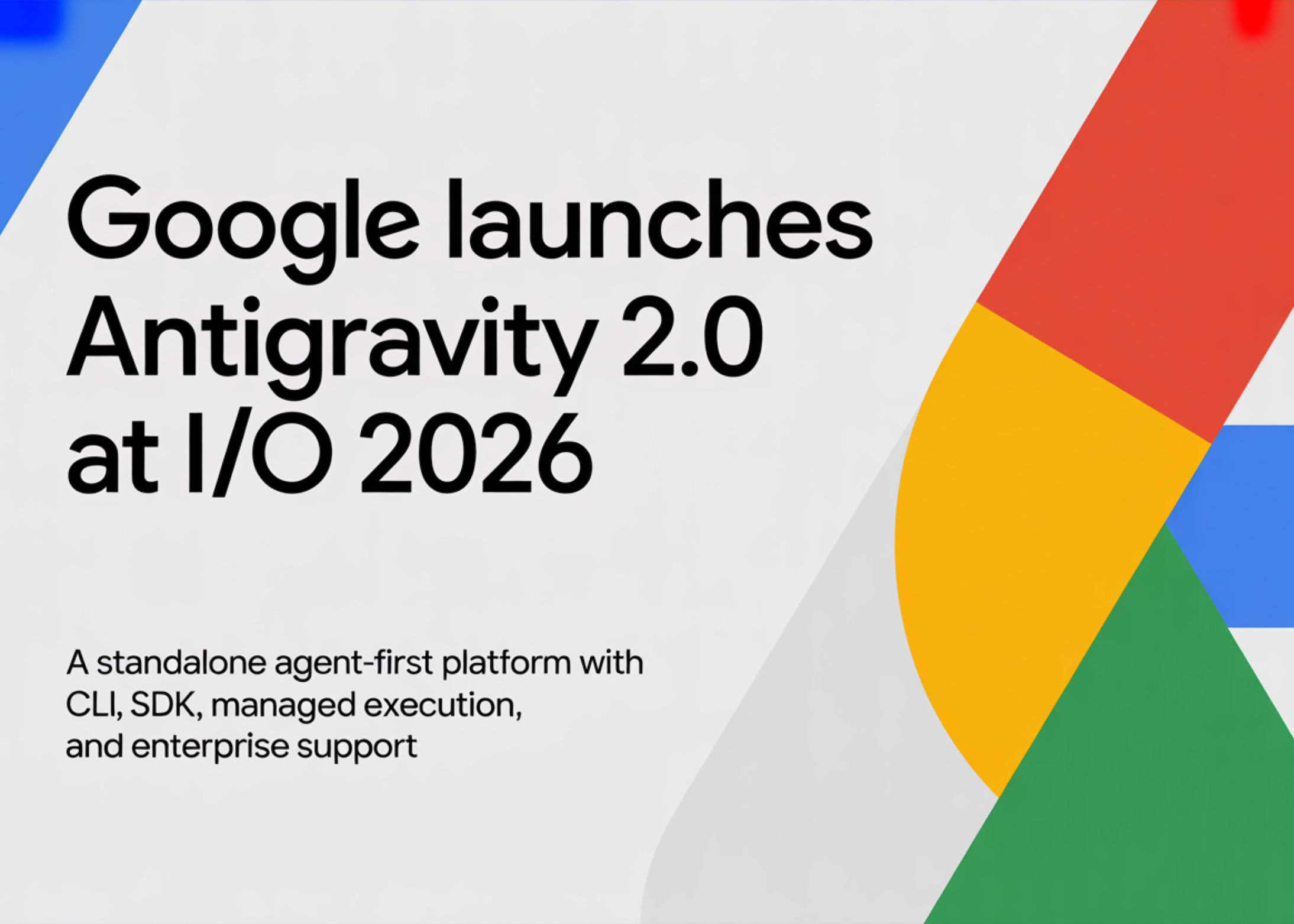
Google Antigravity 2.0 (context from recent coverage)
- What launched: Standalone agent-first platform with CLI, SDK, managed execution environment, and enterprise support — debuted at Google I/O 2026
- Problem solved: Developers building production agents face fragmented toolchains; Antigravity 2.0 bundles orchestration, deployment, and monitoring
- Target users: Enterprise developers and platform engineers building multi-step agentic workflows
- Differentiation: Deep integration with Google Cloud infrastructure and Gemini model family; managed execution reduces ops overhead
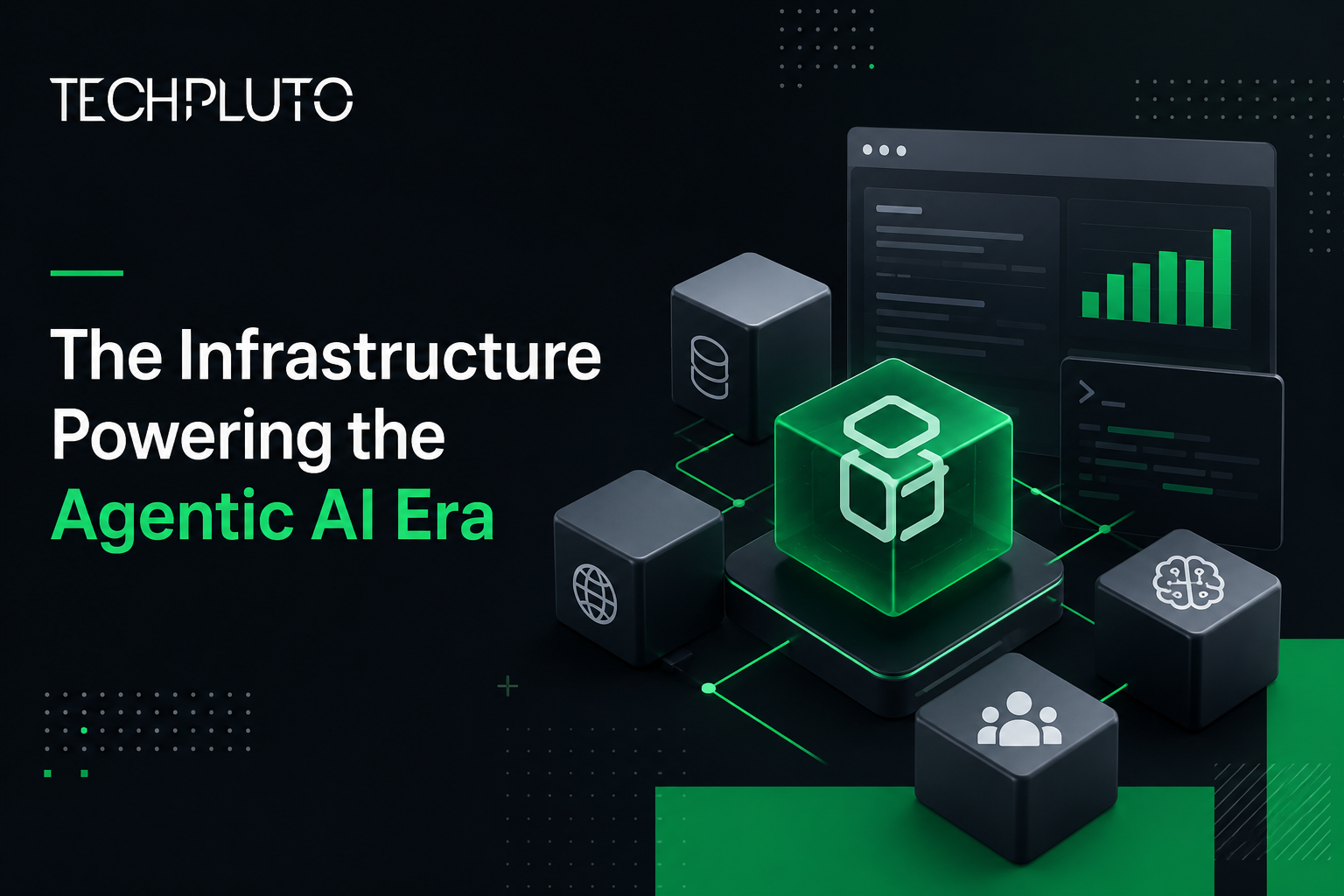
Under-the-Radar AI Infrastructure Tools (TechPluto Analysis)
- What was highlighted: Five infrastructure companies building agentic AI backbone — Firecrawl (web agents), Dust (organizational memory), Browser Use (browser automation), Modal Labs (serverless compute), and Mem0 (persistent memory)
- Problem solved: These tools address the "invisible layer" that production agents need but that doesn't make headlines: data ingestion, memory persistence, secure execution
- Target users: AI agent builders, platform engineers, series A–B AI startups
- Differentiation: All five are developer-first, API-accessible, and designed to compose with each other rather than lock users into a single platform
📊 Case Study Spotlight
Scope: The Vertical Agent Playbook in a Regulated Industry
Scope's €17.3M raise is worth dissecting because it represents one of the cleanest executions of what is rapidly becoming the dominant AI agent go-to-market playbook for 2026: pick a high-friction, compliance-heavy vertical; build agents that understand the domain's specific constraints; sell to buyers for whom "automation" has historically meant "risk." The TIC (testing, inspection, certification) industry is exactly this environment — it involves auditors, liability, regulatory filings, and physical inspection records. Generic AI tools have struggled to penetrate it because the failure cost of an agent error is contractual and reputational, not just operational.
What makes Scope technically interesting is the framing: rather than replacing inspectors, Scope's agents accelerate and structure their workflows — digitizing documentation, flagging anomalies, routing approvals, and generating audit-ready reports. This "agent as co-pilot for regulated humans" architecture sidesteps the governance objections that kill generic automation pitches. The human remains accountable; the agent removes 60–70% of the administrative burden.
The lesson for other AI agent builders is stark: the largest near-term market for agentic AI is not replacing knowledge workers in open-ended roles — it is eliminating the administrative and documentation overhead around high-accountability human decisions. Founders who target this pattern (healthcare prior authorizations, financial compliance filings, construction permitting, pharmaceutical QA) are finding enterprise buyers both willing and able to pay, because the ROI is calculable and the human-in-the-loop story satisfies legal and compliance teams.
🔮 What to Watch
-
Vertical agent specialization is accelerating. Scope's raise follows a pattern visible across recent weeks: investors are backing AI agent companies that go deep on one industry rather than broad across many. The "domain knowledge moat" — where agents are trained on industry-specific compliance rules, terminology, and workflows — is becoming a real defensibility argument. Watch for similar raises in construction, pharma QA, and healthcare documentation over the next 60 days.
-
The pilot-to-production gap is the next battleground. Multiple published sources this week (see MarTech, TechPluto, LinkedIn analysis) converge on the same finding: agentic AI stalls at pilot because governance, audit trails, and explainability are afterthoughts. Startups building these features into their architecture from day one — rather than adding them post-product-market-fit — will have a structural advantage in enterprise sales cycles. Expect "governance-first agents" to become a distinct product category.
-
AI agent infrastructure is maturing into a stack. The TechPluto analysis of five under-the-radar infrastructure companies (Firecrawl, Dust, Browser Use, Modal Labs, Mem0) illustrates that agentic AI now has a recognizable infrastructure stack analogous to the early cloud stack. This matters for founders: just as 2010s SaaS founders didn't build their own databases, 2026 AI agent founders shouldn't build their own memory layers or browser automation primitives. The "buy vs. build" calculus for agent infrastructure is shifting fast.
✅ Reader Action Items
-
For founders: If your AI agent product is stalling at pilot, audit your governance story first — not your model performance. Enterprise buyers need explainability and audit trails before they'll move to production. Build these in before your Series A, not after.
-
For investors: The vertical agent playbook (deep domain, compliance-heavy, high-friction workflows) is delivering both revenue traction and defensibility. Scope's raise is a signal to build or expand a thesis around regulated-industry AI agents: TIC, healthcare admin, financial compliance, construction permitting.
-
For builders: Before writing custom infrastructure code, evaluate the five emerging agentic infrastructure primitives (web scraping/crawling, organizational memory, browser automation, serverless compute, persistent agent memory). Using composable open infrastructure reduces build time by months and lets your team focus on the domain logic that actually differentiates your product.
Sources verified as of 2026-05-24. All funding figures and claims cited from original reporting. Coverage prioritizes articles published after 2026-05-22; contextual items from May 21 roundups are included only where they appeared in active coverage within the freshness window.
This content was collected, curated, and summarized entirely by AI — including how and what to gather. It may contain inaccuracies. Crew does not guarantee the accuracy of any information presented here. Always verify facts on your own before acting on them. Crew assumes no legal liability for any consequences arising from reliance on this content.
Powered by
