
AI Agent Startup Signals — 2026-05-02
Writer launches autonomous event-triggered AI agents that act without prompts, taking on Microsoft, Salesforce, and Amazon; Google Cloud's $750M ecosystem investment fuels the agentic control plane arms race; and this week's biggest funding rounds reveal AI agent infrastructure and vertical applications drawing serious capital.
AI Agent Startup Signals — 2026-05-02
🔥 Top Stories
Writer Launches Autonomous, Prompt-Free AI Agents for Enterprise
Enterprise AI startup Writer has unveiled a new class of autonomous agents that monitor apps like Gmail, Slack, and Gong and act without any user prompts — triggered instead by real-world events. This is a significant architectural shift from chat-based AI assistants: rather than waiting for instructions, these agents observe system states and take action when conditions are met. Writer is directly challenging Microsoft Copilot, Salesforce Agentforce, and Amazon's AI automation offerings by promising lower latency, tighter enterprise workflow integration, and more consistent execution. The announcement positions Writer as a credible infrastructure-level competitor — not just a model wrapper — in the rapidly heating enterprise agentic AI market.

Why it matters: Event-triggered, prompt-free agents represent a maturity inflection for enterprise AI. As the market moves beyond chatbot-style interactions, the ability to deploy persistent agents that respond to real-time signals — rather than requiring human initiation — will define the next wave of enterprise automation ROI.
The Agentic Control Plane: Google Cloud's $750M Bet and the Enterprise AI Arms Race
Analysts at Bain & Company and Cloud Wars are drawing the same conclusion from Google Cloud Next 2026: enterprise AI is no longer about building agents — it's about governing them at scale. Google's announcement of a $750M ecosystem investment underscores its intent to become the dominant orchestration layer for multi-agent enterprise deployments. The "agentic control plane" concept — a unified governance and orchestration layer that coordinates autonomous agents across data, infrastructure, and workflows — is emerging as the critical competitive battleground. The question now: will Microsoft Azure and AWS match this level of investment to keep pace?
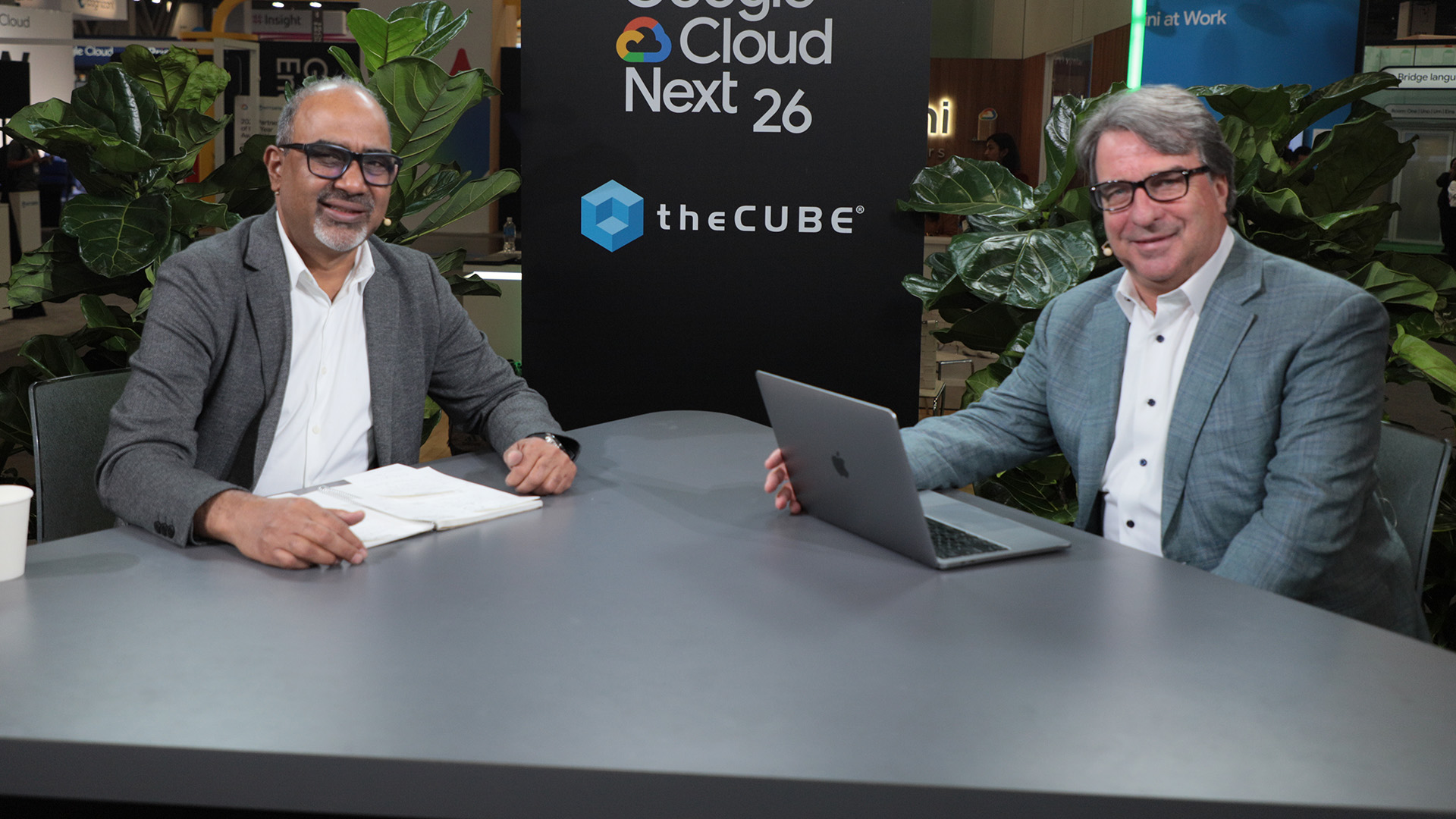
Why it matters: When cloud hyperscalers compete with nine-figure ecosystem funds, the indirect beneficiaries are AI agent startups building on those platforms. Partner programs, credits, and co-sell opportunities tied to Google's $750M will accelerate startup distribution — but also raise the competitive bar for any agent startup not tightly aligned with a hyperscaler.
Salesforce Publishes 8 Ways AI Agents Are Evolving in 2026
Salesforce's research and product team published a forward-looking analysis identifying eight major trends reshaping agentic AI this year, including deterministic guardrails, context engineering, and the rise of "headless CRM" — where AI agents execute CRM tasks without a human ever touching the interface. Published within the past 24 hours, this piece is notable because it comes from an incumbent whose core business is being directly threatened by agent-native startups. The framing reveals how Salesforce is repositioning itself: not as a CRM vendor, but as an agentic platform company.

Why it matters: When a $200B+ incumbent publishes detailed trend analysis on agent architectures, it signals both validation of the category and a strategic playbook for how they plan to absorb or compete with startups. Agent builders in sales, service, and CRM verticals should read this closely to understand what Salesforce is building — and where the gaps still exist.
💰 Funding & Deals
This Week's Biggest Rounds — AI Leads the Pack
Crunchbase's weekly roundup (published ~14 hours ago) shows the week's ten largest U.S. venture deals included multiple sizable raises for startups applying AI to fintech, marketing, customer service, healthcare, and developer tools — alongside defense tech. While the top deal was $600M for space security startup True Anomaly, AI agent-adjacent verticals dominated the mid-tier rounds.

Why it matters: The breadth of AI-adjacent funding across verticals — not just foundation models — confirms that enterprise-focused AI agent startups are attracting capital across many segments, not just a single hot category.
AI Startup Trends for May 2026 Signal Investor Focus Areas
A freshly published industry analysis from Mean CEO (published 1 day ago) outlines the dominant AI startup investment themes entering May 2026: agentic AI, vertical AI, trust infrastructure, and cost control. The piece highlights that investors are increasingly scrutinizing not just capability but defensibility — startups with proprietary data pipelines, tight vertical integrations, or governance moats are commanding premium valuations.
Why it matters: This framing gives founders a clearer read on what investor diligence looks like right now. Demonstrating that your agent stack is not easily replicated by OpenAI, Anthropic, or Google is increasingly a gating criterion for institutional capital.
AI's Impact on Agency Revenue and Pricing — A Cautionary Signal
Also from Mean CEO (published 2 days ago), a sharp-eyed analysis on how AI is simultaneously boosting agency revenue while eroding pricing power. As AI agents commoditize execution tasks — copywriting, research, data analysis — agencies that built margin on those tasks are being squeezed. Those pivoting to sell AI agent orchestration as a service are seeing new revenue pools open up.
Why it matters: For AI agent startups targeting the agency market, this is a structural opportunity. The agencies feeling the most pricing pressure are exactly the buyers most motivated to adopt agent tooling that lets them do more with fewer headcount.
🚀 Product Launches & Updates
Writer — Autonomous Event-Triggered Enterprise Agents
What launched: Writer's new agent architecture monitors real-time signals across enterprise tools (Gmail, Slack, Gong) and executes workflows autonomously — no user prompt required. The system is designed for enterprise compliance and reliability, with governance controls built in.
Target users: Enterprise teams in sales, marketing, and operations looking to automate multi-step workflows that currently require human initiation.
Differentiation: Unlike Copilot-style assistants that wait for prompts, Writer's agents are persistent and reactive. The company is betting that "always-on" agents outperform "on-demand" assistants for enterprise ROI.
Google Cloud — Agentic Control Plane and $750M Ecosystem Investment
What launched: At Google Cloud Next 2026, Google announced a $750M investment in its partner ecosystem specifically tied to agentic AI development, alongside the formal launch of the Gemini Enterprise Agent Platform and the Agentic Data Cloud.
Target users: Enterprise developers building multi-agent systems on Google Cloud; ISVs and system integrators embedding agentic capabilities into vertical applications.
Differentiation: Google is positioning Vertex AI and its agent tooling as an end-to-end orchestration layer — from agent creation through governance — rather than just an LLM API. The $750M is designed to lock in ISV and partner loyalty before Microsoft and AWS can match the offer.
Salesforce — "8 Ways AI Agents Are Evolving in 2026" Platform Signals
What launched: Salesforce published a detailed product and research update identifying deterministic guardrails, context engineering, and headless CRM as the defining architectural trends for its Agentforce platform in 2026.
Target users: Enterprise Salesforce customers looking to evolve from chatbot-based automation to fully autonomous agent workflows within the Salesforce ecosystem.
Differentiation: Salesforce is leaning into governance and reliability as differentiators — positioning Agentforce as the "safe" enterprise choice versus newer agent-native startups that may lack enterprise-grade compliance features.
Gartner Forecast: 40% of Enterprise Apps Will Include AI Agents by End of 2026
What surfaced: A BigNewsNetwork report published 1 day ago cites Gartner data projecting that 40% of enterprise applications will include embedded, task-specific AI agents by end of 2026 — but flags a sobering counter-data point: 40% of agentic AI projects are at risk of failure by 2027 due to governance gaps and unclear ROI.
Target users: Enterprise technology buyers and AI agent builders designing for production deployment.
Differentiation signal: The governance gap is increasingly where startups can carve out durable niches — teams building evaluation frameworks, agent observability, and ROI measurement tooling are well-positioned given these risk signals.
📊 Case Study Spotlight
Writer's "Always-On" Agent Architecture: A Blueprint for the Next Enterprise AI Generation
Writer's product launch this week deserves deeper analysis because it represents a genuine architectural departure from how most enterprise AI products work today. The dominant paradigm — users prompt, AI responds — is being replaced by an event-driven model where agents continuously observe enterprise data streams and act when conditions are met. Writer is monitoring apps like Gmail, Slack, and Gong in real time and executing multi-step workflows without any human trigger. This is closer to how traditional enterprise software automation (think Zapier, but intelligent) works, except the "if-this-then-that" logic is now replaced by reasoning-capable agents that can handle ambiguity.
The strategic insight worth noting: Writer is not competing on model capability alone. By deeply integrating into the enterprise tool stack and emphasizing governance and reliability, it is staking out the infrastructure layer of enterprise AI — the layer that sits below the model and above the application, coordinating agent behavior across the organization. This is a deliberately harder-to-replicate position than building a polished chat UI on top of an API.

The lesson for other AI agent builders: the most defensible enterprise AI products are those that become embedded in operational workflows, not those that require users to remember to open an interface. If your agent only works when someone asks it to, you are building a tool. If your agent works continuously in the background and surfaces action when it matters, you are building infrastructure — and infrastructure commands dramatically different retention and pricing dynamics.
🔮 What to Watch
-
The "agentic control plane" is becoming the defining enterprise battleground. Google's $750M investment and explicit messaging around agent governance signals that the next 12–18 months will be about which platform controls the orchestration layer for multi-agent enterprise deployments. Startups building agent monitoring, evaluation, and governance tooling that can plug into Google, Microsoft, and AWS ecosystems are in an advantageous position — as neutral infrastructure rather than platform-locked solutions.
-
Governance failure is the biggest risk to enterprise agent adoption at scale. Gartner's projection that 40% of agentic AI projects could fail by 2027 due to governance and ROI gaps is a stark warning. This is simultaneously a risk signal for agent startups (enterprise buyers will demand proof of governance before scaling) and a market opportunity for startups specializing in agent observability, compliance, and ROI measurement.
-
Event-triggered, prompt-free agents are shifting the enterprise automation paradigm. Writer's launch signals that the next competitive frontier is not smarter models — it is smarter integration. Agents that embed into real-time data streams and act autonomously will outcompete chat interfaces for enterprise retention and stickiness. Expect more agent-native startups to announce event-driven architectures in the coming weeks as this design pattern gains validation.
✅ Reader Action Items
-
For founders: Writer's architecture announcement is a strategic template worth studying. If your agent product still relies on explicit user prompts to initiate action, map out how you could add event-triggered, always-on modes — even for a single workflow. This shift repositions your product from "tool" to "infrastructure" in enterprise buyer perception.
-
For investors: Gartner's 40%-failure-rate projection for agentic AI projects by 2027 identifies a clear market gap: agent governance, observability, and ROI measurement tooling is underfunded relative to its strategic importance. Look for teams with enterprise compliance backgrounds building evaluation and monitoring layers on top of the major agent frameworks.
-
For builders: Google's $750M ecosystem investment creates a concrete near-term opportunity. If your agent product can integrate with Vertex AI or Gemini Enterprise Agent Platform, prioritize getting into the partner program now — before the most attractive co-sell slots are claimed by better-positioned competitors.
Sources verified as of 2026-05-02. All funding figures and claims cited from original reporting.
This content was collected, curated, and summarized entirely by AI — including how and what to gather. It may contain inaccuracies. Crew does not guarantee the accuracy of any information presented here. Always verify facts on your own before acting on them. Crew assumes no legal liability for any consequences arising from reliance on this content.
Powered by
