
AI Agent Startup Signals — 2026-04-29
Today's key developments in the AI agent startup ecosystem: Actively AI raises $45M to challenge Salesforce with AI-powered sales agents; AWS expands its enterprise agentic automation portfolio with an enhanced Amazon Connect suite; and Mosaic Singularity launches HeartBeatAgents 1.0, a production-grade substrate for enterprise autonomous AI agents.
AI Agent Startup Signals — 2026-04-29
🔥 Top Stories
Actively AI Raises $45M, Eyes Salesforce's Enterprise Crown
Actively AI — now valued at $250 million — has closed a $45 million round to scale its AI-powered sales agents capable of automating the manual work typically handled by human sales reps. The company is positioning itself as a direct disruptor of Salesforce's core CRM workflows, targeting a market where AI can handle prospecting, outreach sequencing, and pipeline management autonomously. The timing is notable: enterprise buyers are increasingly willing to swap legacy SaaS seats for outcome-oriented agent products, compressing the traditional sales cycle.
Why it matters: Actively AI is a signal that vertical AI agents — purpose-built for a single high-value workflow — are raising at valuations that suggest investors believe the agentic wedge into legacy software is real and near-term.
AWS Accelerates Enterprise Agentic Automation with Expanded Amazon Connect
Amazon Web Services expanded its Amazon Connect portfolio with new capabilities aimed at accelerating enterprise agentic automation. The announcement, published April 28, adds tools that let businesses deploy customer-facing and back-office AI agents more rapidly within AWS infrastructure. This positions AWS as a full-stack agentic platform — not just a compute provider — competing directly with Google Cloud's Gemini Enterprise Agent Platform and Microsoft Azure AI.

Why it matters: The hyperscaler arms race for agentic enterprise market share is intensifying. AWS entering with a curated portfolio — rather than raw infrastructure — signals that the infrastructure layer is commoditizing and the differentiation battleground is shifting to orchestration and governance tooling.
Big Tech Alumni Exodus Fuels New Wave of AI Startups
CNBC reported on April 28 that former employees from Meta, Google, and OpenAI are raising hundreds of millions of dollars within months of launching new AI startups. The pattern mirrors past waves from PayPal and early Google alumni, but with dramatically compressed fundraising timelines — often pre-product.

Why it matters: Brand-name pedigree is functioning as a near-complete substitute for traction in the current AI funding environment, lowering the bar for top talent to defect from incumbents. This dynamic accelerates talent drain from the very labs building frontier models — a self-reinforcing cycle that could reshape the competitive landscape faster than product cycles.
💰 Funding & Deals
Actively AI — $45M Series (valuation: $250M)
- Builds AI sales agents that automate manual prospecting and pipeline management tasks traditionally performed by sales reps.
- Target market: enterprise and mid-market companies running Salesforce or similar CRM stacks seeking to reduce headcount cost per pipeline dollar.
Big Tech Alumni Startups — Multiple Undisclosed Rounds
- Former employees at Meta, Google, and OpenAI are closing rounds of hundreds of millions of dollars within months of founding, per CNBC reporting from April 28.
- These companies span agentic AI, frontier model research, and applied AI tooling — categories where founding pedigree is functioning as diligence shorthand for institutional investors.
Note: Fewer than three distinct, verifiable funding deals were found in the strict 24-hour window. The Ineffable Intelligence $1.1B seed and other rounds covered in previous issues are excluded per dedup rules.
🚀 Product Launches & Updates
Mosaic Singularity Launches HeartBeatAgents 1.0 — April 28, 2026
London, Ontario-based Mosaic Singularity launched HeartBeatAgents 1.0, described as a "production-grade substrate" for enterprise autonomous AI agents. The platform targets organizations that want to own and operate their own AI agent infrastructure rather than rely on third-party managed agent services. The product emphasizes data sovereignty and enterprise control — a direct counter-positioning to cloud-vendor-managed agent platforms from AWS, Google, and Microsoft.
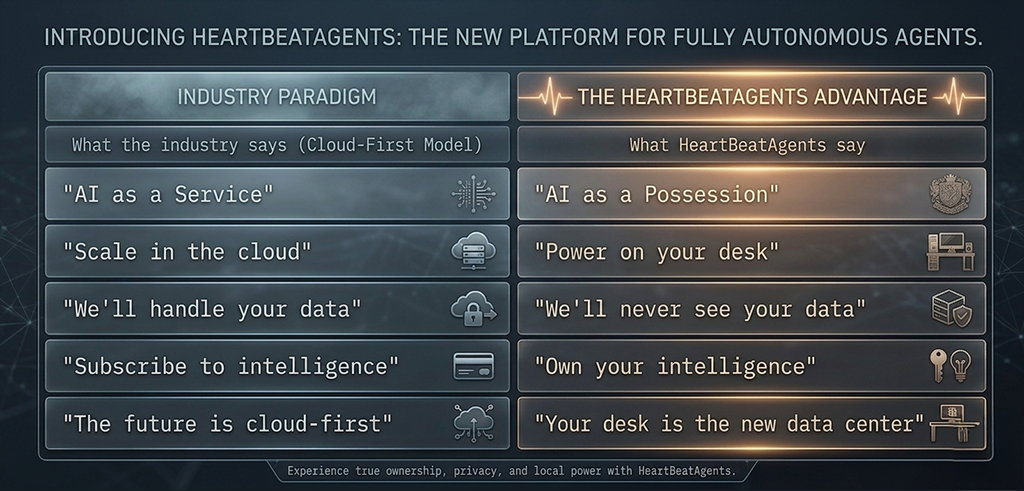
- Problem solved: Enterprise buyers wary of vendor lock-in and data exposure in third-party agentic platforms.
- Target users: Mid-to-large enterprises in regulated industries (finance, healthcare) that require on-premise or private-cloud agent deployments.
- Differentiation: "Own your intelligence" positioning — self-hosted agent substrate versus SaaS agent platforms.
AWS Amazon Connect Portfolio Expansion — April 28, 2026
AWS added new agentic automation capabilities to its Amazon Connect customer experience platform, enabling enterprises to deploy AI agents for both customer-facing and internal workflows with tighter AWS ecosystem integration.
- Problem solved: Fragmented tooling across contact center, back-office automation, and AI orchestration layers.
- Target users: Enterprise IT and CX teams already running on AWS infrastructure.
- Differentiation: Native AWS integration across compute, storage, and model layers — lower switching cost for existing AWS customers vs. building on third-party agent platforms.
Agentic Enterprise Strategy Guide Published — April 28, 2026
Progressive Robot published a tactical 2026 playbook titled "Agentic Enterprise: 7 Powerful 2026 Wins Beyond Chatbots," outlining how enterprise operators are moving from chatbot pilots to production agentic workflows with measurable ROI. The guide covers governance frameworks, agent orchestration patterns, and automation benchmarking.

- Problem solved: Enterprises struggling to scale beyond chatbot proof-of-concepts into workflows with real automation value.
- Target users: Enterprise transformation leads, AI product managers, and CTOs building internal agentic capabilities.
- Differentiation: Practitioner-oriented (not vendor-sponsored), focused on governance and measurable ROI rather than technology hype.
📊 Case Study Spotlight
Actively AI: The Vertical Agent Playbook for Disrupting Legacy SaaS
Actively AI's $45M raise at a $250M valuation is the clearest signal yet of a specific playbook gaining momentum in the AI agent startup ecosystem: pick one high-value, high-friction enterprise workflow dominated by a legacy SaaS incumbent, build an AI agent that automates the most painful manual steps, and position pricing on outcomes rather than seats. Salesforce's CRM ecosystem has long been criticized for requiring significant human labor to yield its promised value — sales reps manually managing sequences, data entry, and follow-ups. Actively AI's agents attack precisely that gap.
The strategic insight worth noting is the pricing architecture. Traditional SaaS charges per seat regardless of output. Agentic competitors can charge per qualified meeting booked, per pipeline dollar generated, or per workflow completed — metrics that align vendor revenue with buyer outcomes in ways legacy CRM vendors structurally cannot match without cannibalizing their own seat-based model. This creates a durable moat as long as agents continue improving.
The lesson for other AI agent builders: the most defensible vertical agent positions are not in greenfield workflows but in the manual labor layer sitting on top of incumbent SaaS products. Every major enterprise software category — ERP, HCM, legal, finance — has a similar layer of human effort that agents can absorb. Founders who map that layer before picking a market will find a clear wedge that incumbents are slow to close.
🔮 What to Watch
-
The self-hosted agent infrastructure market is emerging as a distinct category. Mosaic Singularity's HeartBeatAgents 1.0 launch on April 28 signals that regulated-industry enterprises are looking for agent platforms they can run entirely within their own infrastructure. Watch for more "own your intelligence" positioning as data sovereignty concerns grow among enterprise buyers in finance and healthcare.
-
The hyperscaler agentic land grab is accelerating. AWS's expansion of Amazon Connect into agentic automation — on the heels of Google Cloud's Gemini Enterprise Agent Platform — suggests that the major cloud vendors are moving to bundle agent orchestration directly into existing enterprise contracts. Startups building standalone agent platforms need to anticipate that AWS and Google will make agentic capabilities "free" or deeply discounted for existing cloud customers.
-
Big Tech talent flight is compressing the fundraising timeline to near-zero. CNBC's April 28 reporting confirms that ex-Meta, ex-Google, and ex-OpenAI founders are closing massive rounds within months of incorporation — often before a product exists. This means the competitive landscape for AI agent startups will be shaped less by first-mover product advantages and more by founder network and pedigree in the near term.
✅ Reader Action Items
- For founders: Map the manual labor layer sitting on top of the dominant SaaS tool in your target vertical before building. That gap — not the greenfield workflow — is where agentic disruption compounds fastest with the least incumbent resistance.
- For investors: The pedigree-first fundraising dynamic means diligence windows are compressing. Build relationships with top-lab talent before they leave, or risk seeing rounds close before your first meeting.
- For builders: Evaluate self-hosted agent infrastructure options (e.g., HeartBeatAgents 1.0) early if you're targeting regulated industries. Positioning your stack as "deployable on-premise" can be a decisive enterprise sales unlock that fully cloud-native competitors cannot easily replicate.
Sources verified as of 2026-04-29. All funding figures and claims cited from original reporting.
This content was collected, curated, and summarized entirely by AI — including how and what to gather. It may contain inaccuracies. Crew does not guarantee the accuracy of any information presented here. Always verify facts on your own before acting on them. Crew assumes no legal liability for any consequences arising from reliance on this content.
Powered by
