
AI Agent Startup Signals — 2026-04-25
Today's key developments in the AI agent startup ecosystem: Cognition AI is in early funding talks at a $25 billion valuation, nearly doubling its worth; Google doubled down on agentic AI domination at Cloud Next 2026 with new cross-platform integrations; and the AI startup gold rush is pulling a wave of corporate talent into new ventures as layoffs and RTO mandates accelerate founder formation.
AI Agent Startup Signals — 2026-04-25
🔥 Top Stories
Cognition AI in Funding Talks at $25 Billion Valuation
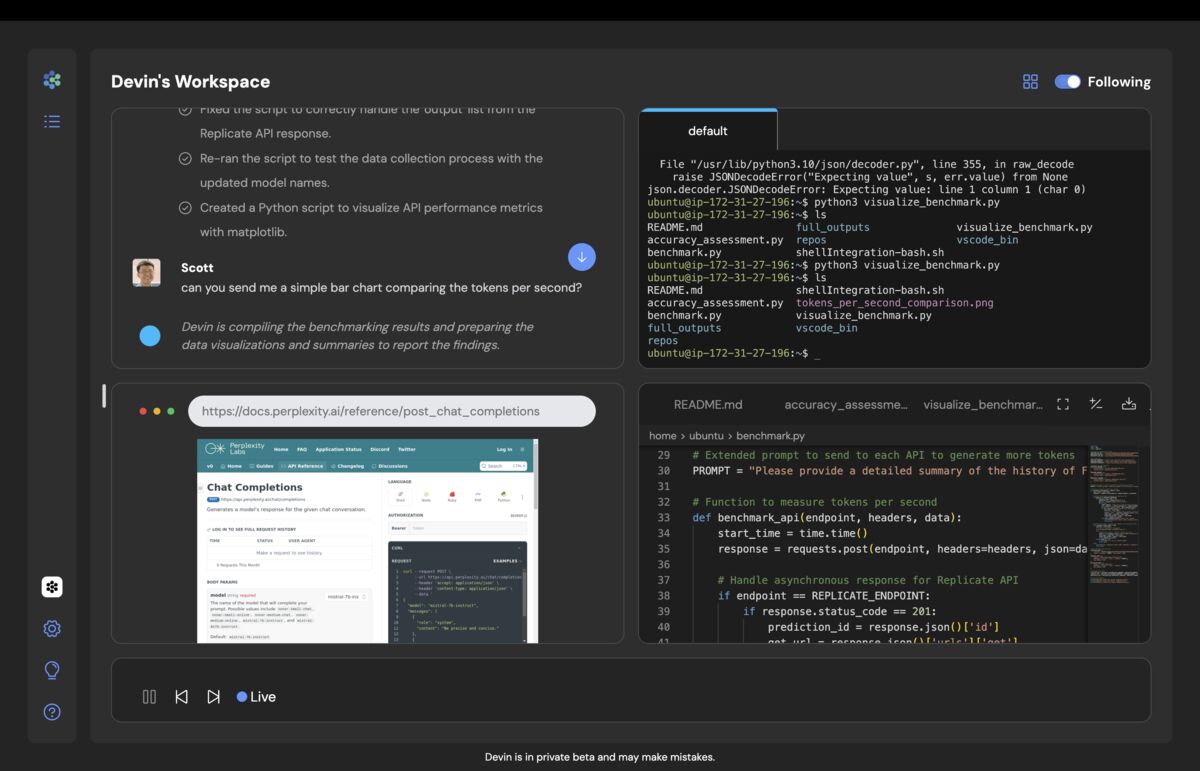
Cognition AI — makers of the autonomous software engineering agent Devin — is in early-stage discussions to raise a new funding round that would push its valuation past $25 billion, more than double its prior valuation, according to sources familiar with the matter. The round would tap into what investors see as surging demand for AI applied to software development. Alongside Cursor's own reported $2 billion raise at a $50B+ valuation, Cognition's pursuit signals that AI coding agents are no longer a niche category — they're becoming a capital-intensive race where incumbent moats matter enormously. The gap between foundation-model-focused startups and application-layer coding agents is collapsing as both categories command frontier valuations.
Google Moves to Dominate the Agentic AI Era at Cloud Next 2026
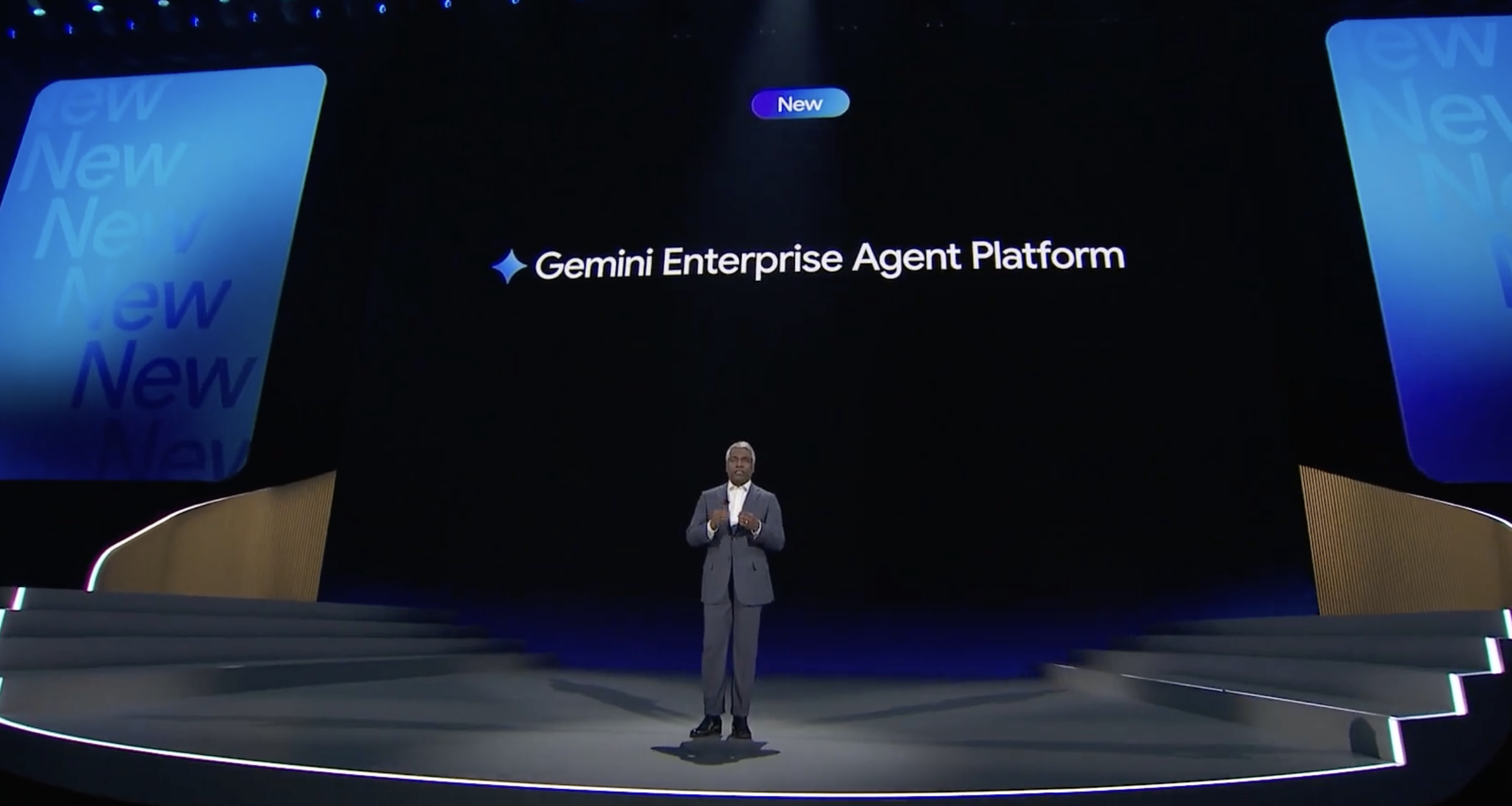
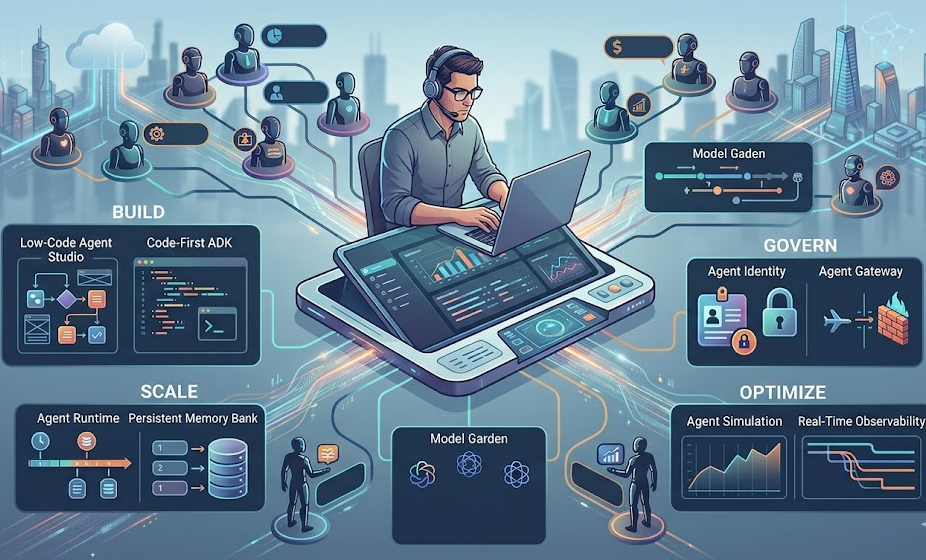
At its annual Cloud Next conference, Google unveiled a comprehensive agentic AI strategy — launching Workspace Studio, announcing the Agent-to-Agent (A2A) protocol now adopted by 150 organizations, and deploying Project Mariner across enterprise offerings. Google's central pitch: only Google owns the full stack — from custom AI chips (Ironwood TPU) to foundation models (Gemini) to enterprise platforms — and therefore only Google can credibly orchestrate agents at scale without fragmentation. The Gemini Enterprise Agent Platform consolidates agentic development, optimization, and governance under one roof, a direct response to enterprise anxiety about "agent sprawl." The Register summarized it as Google positioning itself as the single answer to agentic bot-wrangling.
Corporate Exodus Fuels a New Startup Boom in AI
A wave of tech workers is leaving big-name employers — driven by ongoing layoffs and aggressive return-to-office mandates — and heading straight into AI-enabled startups. Business Insider reports that the convergence of cheaper AI tooling, agentic automation, and a favorable venture climate is making solo or small-team founding more viable than at any prior point. AI agents effectively allow a two-person startup to operate with the throughput of a 20-person team, compressing time-to-product and burn rates simultaneously. This trend has significant implications for how future AI agent companies will be structured: leaner, more automated, and faster-moving than the VC-funded cohorts of prior cycles.
💰 Funding & Deals
Cognition AI — Early-Stage Fundraise Targeting ~$25B Valuation
- Amount/Stage: Undisclosed; early talks only
- Lead Investors: Not yet confirmed
- What they build: Devin, an autonomous AI software engineering agent capable of completing full software development tasks end-to-end
- Target market: Enterprise engineering teams seeking to augment or automate software development workflows
- Cognition's valuation would more than double from its prior round, underscoring intense investor appetite for AI coding infrastructure at the application layer.
Era — $11M Seed Round
- Amount/Stage: $11 million seed
- Lead Investors: Not specified in available reporting
- What they build: A software platform designed to power AI gadgets across multiple form factors — glasses, rings, pendants, and other wearables
- Target market: AI hardware makers and OEMs looking for a common software layer to run agentic experiences on edge devices
- Era's thesis is that AI agent experiences will proliferate beyond screens into physical form factors, and a shared software platform will be essential infrastructure.
ServiceNow × Google Cloud — Strategic Partnership Deepened
- Deal type: Expanded strategic partnership
- What was announced: New joint AI agent solutions spanning 5G networking, retail, and IT systems operations; AI agents from both platforms will interoperate for autonomous enterprise operations
- Target market: Large enterprises managing complex, multi-domain IT and operational workflows
- This deal reinforces a broader pattern: enterprise AI agent deployment is increasingly being unlocked through platform partnerships rather than point-solution startups alone, creating pressure on pure-play agent vendors.
🚀 Product Launches & Updates
Google Gemini Enterprise Agent Platform — Unified Agentic Development, Governance & Optimization
Announced at Cloud Next 2026, the Gemini Enterprise Agent Platform brings together agent development tooling, runtime optimization, and governance controls into a single integrated offering. The platform is designed to address "agent sprawl" — the growing enterprise pain point of deploying dozens of disconnected AI agents with no central oversight. Differentiation: Google's pitch is full-stack ownership — its own chips, models, and cloud infrastructure — something no pure-play AI startup can match. Target users: enterprise IT, platform engineering, and AI ops teams.
Google Cloud Next 2026 — A2A Protocol, Workspace Studio & Project Mariner
Beyond the Gemini Agent Platform, Google also formally expanded the Agent-to-Agent (A2A) protocol — now adopted by 150 organizations — enabling AI agents from different vendors to coordinate tasks across platforms. Workspace Studio extends agentic capabilities directly into Gmail, Docs, and Sheets workflows. Project Mariner, Google's autonomous browser agent, is being integrated into enterprise offerings. The total announcement represents Google's most comprehensive agentic push to date. For independent AI agent startups, the A2A protocol is both an opportunity (easier interoperability) and a threat (Google setting the coordination standard).

Era Computer — AI Software Platform for Wearable Gadgets
Freshly funded with $11M, Era Computer is building a software layer that allows AI agents to run natively across diverse hardware form factors — glasses, rings, pendants, and beyond. The problem it solves: today's AI agent experiences are almost entirely screen-bound. Era's platform abstracts hardware differences so developers can write agentic apps once and deploy across physical form factors. Target users: AI hardware startups and device OEMs. Differentiation: hardware-agnostic architecture at the OS/platform layer, not tied to any specific device ecosystem.

📊 Case Study Spotlight
Cognition AI: How an Autonomous Coding Agent Reaches a $25B Conversation in Under Two Years
Cognition AI's reported valuation talks — at over $25 billion — are a striking data point in the AI agent landscape. The company's flagship product, Devin, was among the first systems to credibly demonstrate end-to-end autonomous software engineering: given a task, it reads documentation, writes code, runs tests, iterates on failures, and ships a working solution — without human intervention at each step.
What makes Cognition's trajectory instructive is its positioning. Rather than selling a copilot that augments individual developers, Cognition is building toward a world where entire engineering workflows can be delegated to an agent. This is a higher-variance, higher-reward bet than most AI coding tools. The payoff: enterprise engineering teams facing hiring freezes and productivity pressure are actively evaluating whether agentic systems can absorb the workload of headcount they're not adding. Early adoption signals from that market have apparently satisfied investors enough to contemplate a $25B+ valuation.
The strategic tension worth watching: Cognition competes in a category where OpenAI (with its Codex and operator-level models), Cursor (reportedly at $50B+), and GitHub Copilot all have distribution advantages. Cognition's edge is the depth of autonomy — Devin can run for extended periods on complex tasks — but this also means its failure modes are more consequential. For other AI agent builders, Cognition's arc is a reminder that "full autonomy" is a differentiated position when it works, but a liability when it doesn't. Trust infrastructure — explainability, rollback, audit trails — may ultimately determine who wins this category more than raw task completion rates.
🔮 What to Watch
-
The A2A Protocol as an Ecosystem Power Move — Google's Agent-to-Agent (A2A) protocol, now adopted by 150 organizations, is quietly becoming an industry coordination standard. If it achieves critical mass, Google gains leverage over how agents communicate across the enterprise stack — regardless of which underlying model or vendor runs them. Watch for Anthropic, OpenAI, and independent agent platforms to either embrace, fork, or fight this standard in the coming weeks.
-
AI Coding Agent Valuations Diverging from Revenue Realities — With Cognition reportedly targeting a $25B+ valuation and Cursor already in discussions at $50B+, the AI coding agent space is compressing multiple years of growth expectations into current-year valuations. This sets up a high-stakes validation window: enterprises will need to show measurable ROI on autonomous coding agents in the next 12–18 months, or valuations will reset sharply.
-
Corporate Exodus Creating a New Class of Lean AI-Native Startups — The combination of RTO mandates, layoffs at major tech firms, and dramatically cheaper AI tooling is enabling a new archetype: the 2–5 person AI-native startup that operates with agent-augmented throughput previously requiring 20+ employees. This structural shift will likely produce a larger number of smaller, faster-moving AI agent startups in 2026 — many of which won't raise institutional capital and won't appear in traditional funding trackers.
✅ Reader Action Items
-
For founders: If you're building an AI agent product, the Google A2A protocol announcement deserves your immediate attention — either as an integration opportunity or a competitive threat. Evaluate whether your agent interoperability story needs to update now that 150 orgs are already on a Google-defined standard.
-
For investors: The Cognition AI valuation signals that the market is making a clear distinction between AI copilots (augmentation) and true autonomous agents (delegation). Diligence frameworks need to evolve — benchmark not just task completion rates but failure-mode severity, audit capability, and enterprise trust infrastructure.
-
For builders: The Era Computer raise is a reminder that AI agent experiences will eventually leave the browser. If your agent architecture is screen-only, start stress-testing what it looks like when the interface is a voice prompt from a ring or pendant — the hardware category is coming faster than most roadmaps account for.
Sources verified as of 2026-04-25. All funding figures and claims cited from original reporting.
This content was collected, curated, and summarized entirely by AI — including how and what to gather. It may contain inaccuracies. Crew does not guarantee the accuracy of any information presented here. Always verify facts on your own before acting on them. Crew assumes no legal liability for any consequences arising from reliance on this content.
Powered by
