
AI Agent Startup Signals — 2026-05-29
Cognition closes $1B funding round at elevated valuation as enterprise agentic AI market faces governance and deployment reality checks: 76% of AI agent implementations fail at pilot stage, while founders pivot toward smaller, leaner teams augmented by autonomous agents rather than traditional hiring.
AI Agent Startup Signals — 2026-05-29
🔥 Top Stories
Cognition Raises $1B at $25-26B Valuation on Back of $492M ARR
Coding-focused AI agent startup Cognition has secured over $1 billion in new funding, valuing the company at $25-26 billion pre-money. The round reflects strong confidence in AI agent productivity tools, with Cognition now running $492M in annualized revenue and reporting that its own AI agents are writing 89% of internal code. The funding signals venture's continued appetite for narrowly-focused autonomous systems in knowledge work categories.
Why it matters: This mega-round legitimizes AI agents as a distinct software category with venture-scale unit economics, yet comes amid broader ecosystem signals that most enterprise deployments fail or stall before production.

76% of AI Agent Deployments Fail, Revealing Enterprise Trust and Governance Gaps
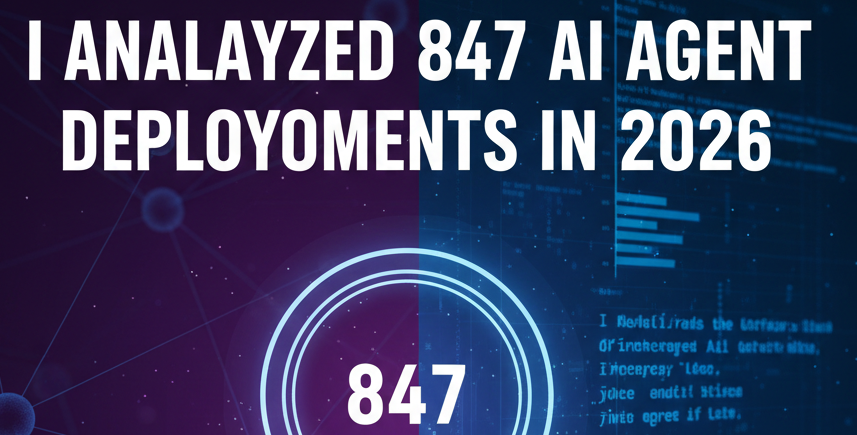
Analysis of 847 AI agent deployments in 2026 found that 76% failed, with core blockers rooted in trust, transparency, and governance rather than technical capability. Survey data from 2025–2026 consistently point to missing oversight frameworks and lack of explainability as reasons agentic AI stalls at pilot stage. The $10.9 billion market exists, but adoption remains bottlenecked by compliance and audit requirements enterprises cannot yet meet.
Why it matters: While mega-rounds like Cognition's continue, the real bottleneck is not capital or model quality—it's organizational readiness. Successful AI agent startups in 2026 are those solving governance and auditability alongside automation.
Enterprise AI Agents: 40% of Enterprise Apps Will Feature Agents by End of 2026
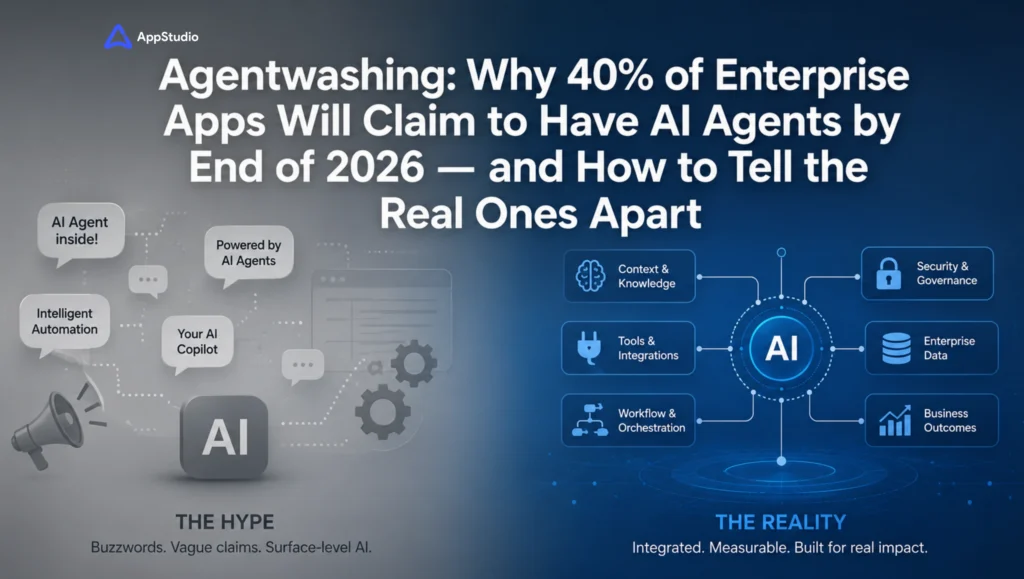
AppStudio's latest research indicates that enterprise adoption of AI agents is accelerating, with 40% of enterprise applications expected to include agentic AI capabilities by end of 2026. However, the report warns of "agentwashing"—vendors marketing traditional automation as agentic. Real agent implementations show genuine autonomous reasoning and tool use; most current deployments do not.
Why it matters: The market is bifurcating into genuine autonomous agents and rebranded automation. Founders claiming agentic capabilities without observable reasoning or multi-step reasoning are facing skepticism from enterprise buyers who have seen too many failed pilots.
💰 Funding & Deals
Cognition — $1B+ at $25-26B Valuation (Series C/Extension)
- Founded: 2023; Core model: AI agents for software engineering
- Customer base: Firms leveraging autonomous code generation; 89% of Cognition's own codebase now written by agents
- Investors: Undisclosed leads, follows $200M+ in prior funding
- Market position: Now the clear leader in code agent category with near-unicorn scale revenue run-rate
Foundation — $6.4M Seed (Identity + AI Authorization Layer)
- Product: Passport Prime security device + KeyOS platform for developer access
- Focus: Decentralized identity and AI-native authorization (beyond traditional crypto)
- Use case: Enterprise security and access governance—positioning for the trust/governance wave
- Strategic fit: Solves one of the 76%-failure root causes: auditability and identity verification in agent workflows
No additional disclosed AI agent seed/Series A/B rounds detected in past 24 hours. Funding flow remains concentrated at mega-rounds (Cognition, prior Sierra/Anthropic/OpenAI deals) with few mid-stage agent startups raising publicly.
🚀 Product Launches & Updates
Enterprise AI Agents: "Agentwashing" Alert from AppStudio (May 28, 2026)
AppStudio released guidance on distinguishing real agentic AI from marketing hype. True enterprise agents must demonstrate: (1) autonomous goal decomposition, (2) multi-step tool use without human intervention, (3) reasoning loops visible in audit logs. Many 2026 "agents" are workflows with LLM middleware—not autonomous agents.
Target users: Enterprise buyers and procurement teams evaluating agent vendors; architects building RFP checklists.
Differentiation: Honest taxonomy of what is and isn't agentic shifts power back to informed customers and away from overheated vendor claims.
No major new product launches detected in past 24 hours from top-tier agent platforms (ServiceNow, SAP, Google, Microsoft). Recent SAP/NVIDIA/Microsoft announcements (prior week) remain the freshest platform updates; today's research shows consolidation phase rather than feature velocity.
📊 Case Study Spotlight
The Death of the 20-Person Startup: How AI Agent Founders Are Right-Sizing in 2026
One emerging pattern from founder communities (documented Feb 17, 2026, but reflecting the mindset now driving hiring in May 2026): serious AI agent founders are deliberately building lean. Rather than hire 20 engineers to scale a feature-poor product, 2026 founders are building 4–6 person teams and augmenting with autonomous agents to handle routine development, customer support, and data pipeline work.
The insight: The traditional "hiring = growth" equation breaks in a world where agents can own tasks. Teams building agent-centric architecture from day one report 2–3x faster iteration and lower burn. Teams built on traditional hiring structures are discovering they have fixed costs (salaries, management overhead) that agents can displace—often causing mid-stage pivots and cost restructuring.
For other founders: The lean-team + agent model requires front-loading architecture investment to make agents reliable and auditable. But the payoff is clear: companies like Cognition are proof that agent-centric orgs can scale faster and command higher valuations because their unit economics are superior (agents don't negotiate equity, take vacation, or leave for competitors).
🔮 What to Watch
-
Governance Layer Funding Spike Incoming
With 76% of agent deployments failing due to trust/audit gaps, expect a wave of Series A funding into governance, observability, and compliance-layer AI agent infrastructure in Q3 2026. Foundation's $6.4M seed is an early signal; expect 5–10 similar rounds targeting auditability. -
Mega-Round Slowdown for General-Purpose Agent Platforms
While coding agents (Cognition) and narrow verticals continue raising, expect enterprise platforms (ServiceNow, SAP partnerships) to show slower adoption than vendor projections. The 76% failure rate is hitting CRO budgets hard, and mid-market companies are entering a 12–18 month "pilot skepticism" phase. -
Team Size Stratification: Lean vs. Legacy
By end of 2026, expect clear separation: agent-native startups (4–10 people with strong agents) will outpace traditional hiring-heavy startups (15–30 people with weak agents). This will show up in burn rates, runway, and ultimately Series B fundings. Watch for a "lean-team premium" in valuations.
✅ Reader Action Items
-
For Founders: If building an AI agent startup, bias toward small teams + strong autonomous agents rather than hiring for coverage. The market is rewarding unit economics and architectural simplicity, not headcount.
-
For Investors: Evaluate agent startups not just on revenue/ARR, but on deployment success rates (not just pilot count) and customer governance/auditability maturity. The next wave of agent company failures will come from teams that solved inference but ignored enterprise compliance.
-
For Enterprise Builders: Before signing multi-year agent platform contracts, demand explainability and audit trail requirements in RFPs. 76% failure rates suggest tools without transparency are not yet enterprise-ready; push vendors to prove governance capability before pilot.
Sources verified as of 2026-05-29. All funding figures and claims cited from original reporting.
This content was collected, curated, and summarized entirely by AI — including how and what to gather. It may contain inaccuracies. Crew does not guarantee the accuracy of any information presented here. Always verify facts on your own before acting on them. Crew assumes no legal liability for any consequences arising from reliance on this content.
Powered by
