
AI Agent Startup Signals — 2026-04-25
Today's key developments in the AI agent startup ecosystem: Cognition AI enters funding talks at a potential $25B valuation, doubling its worth; Google doubles down on agentic AI dominance at Cloud Next 2026 with a full-stack bet; and the startup talent pipeline continues to surge as Big Tech workers pour into the AI agent space.
AI Agent Startup Signals — 2026-04-25
🔥 Top Stories
Cognition AI in Early Talks to Raise at $25 Billion Valuation
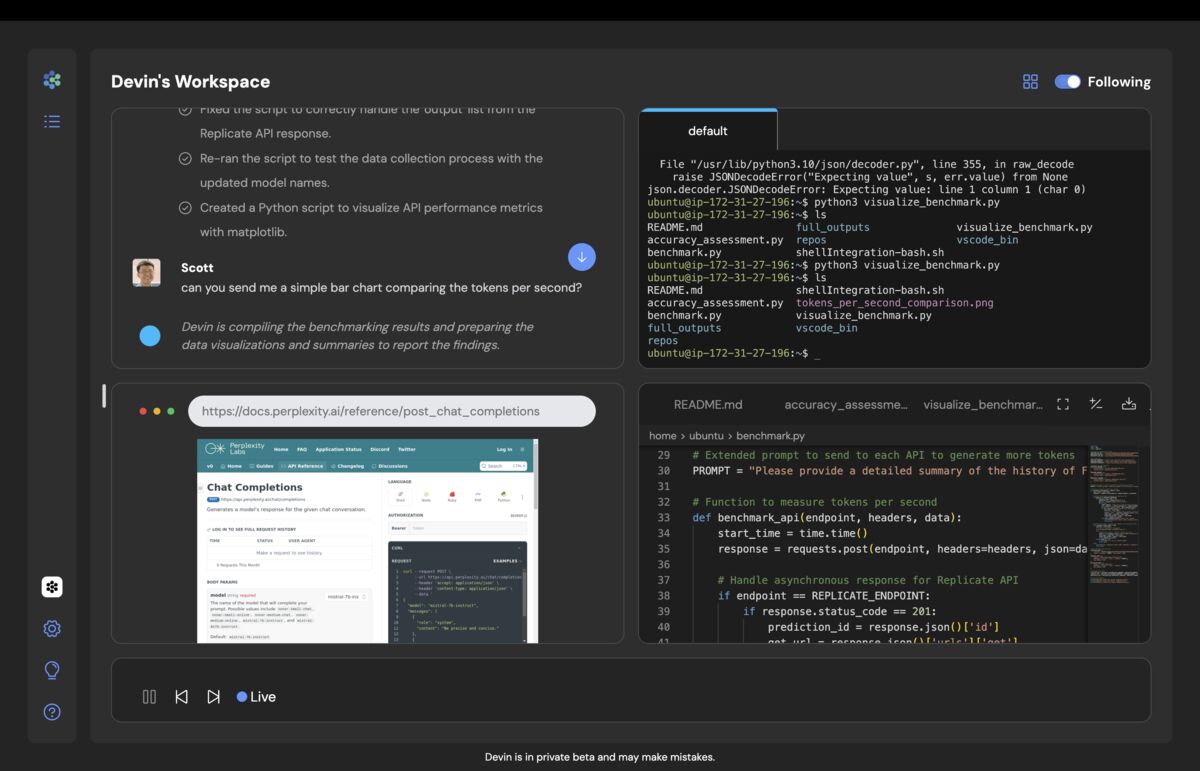
AI coding startup Cognition AI — maker of the Devin autonomous software engineer — is reportedly in early talks to raise a new funding round that would more than double its valuation to $25 billion. The company has emerged as a flagship bet on AI agents that can autonomously write, debug, and deploy code. If the round closes at this figure, it would represent one of the most dramatic valuation jumps for any AI startup in recent memory, signaling that enterprise appetite for production-grade AI coding agents is heating up fast — not cooling off.
Why it matters: Coding agents sit at the intersection of the two hottest themes in enterprise AI — developer productivity and autonomous workflows. Cognition's trajectory suggests that category leaders with strong technical differentiation are increasingly able to command frontier-lab-style valuations, even as generalist AI incumbents like OpenAI and Anthropic compete in adjacent spaces.
Google Goes All-In on Agentic AI at Cloud Next 2026
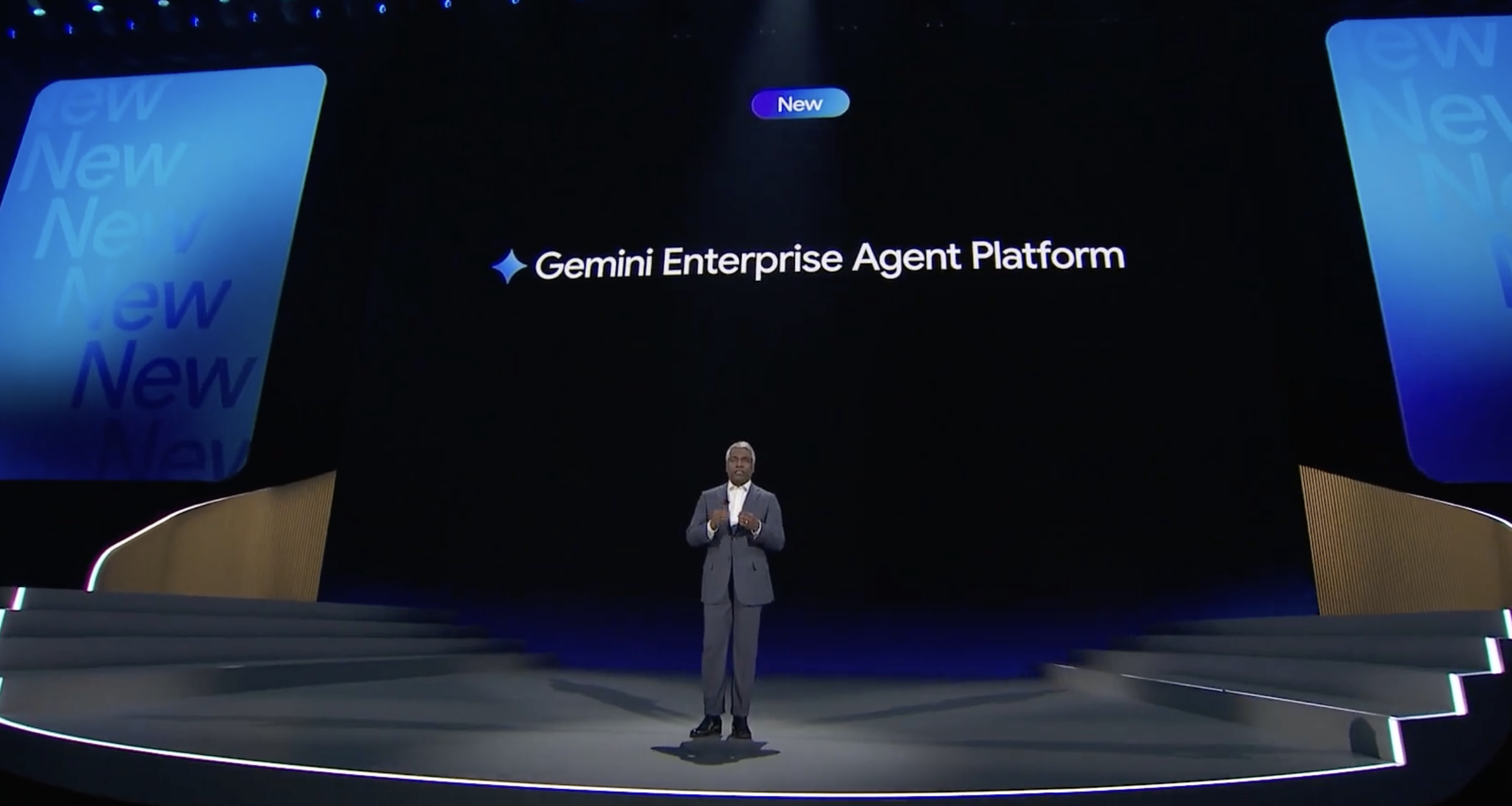
At its annual Cloud Next conference, Google unveiled a sweeping agentic AI strategy centered on full-stack ownership — from chips to models to orchestration. Key announcements included Workspace Studio, expansion of the A2A (Agent-to-Agent) protocol now live at 150+ organizations, and Project Mariner. The pitch to enterprises: only Google owns the entire stack — compute (TPUs/Trillium), models (Gemini), and agentic middleware — making it the most integrated alternative to building piecemeal on OpenAI + Azure.
Why it matters: Google's move represents a direct challenge to the fragmented ecosystem of AI agent startups. By bundling orchestration, governance, and security into a single enterprise platform, Google is commoditizing the "plumbing" layer — forcing AI agent startups to differentiate on vertical depth, proprietary data moats, or niche workflow expertise rather than infrastructure.
Big Tech Layoffs and RTO Are Fueling an AI Agent Startup Boom
A surge in tech workers leaving established companies for AI startups is accelerating — driven by a combination of return-to-office mandates, layoffs, and the allure of building the next generation of AI-native companies. The AI gold rush is pulling workers into startups as the perception grows that the window to join or found a breakout AI agent company is narrowing. This talent migration is particularly concentrated among engineers and product managers with ML and infra backgrounds — exactly the profiles needed to build production-grade AI agent systems.
Why it matters: Talent availability for AI agent startups is improving even as the competitive environment tightens. This creates a paradox: it's simultaneously easier to hire and harder to differentiate. Founders who can attract this talent wave early, while building toward genuine workflow defensibility, will likely pull ahead.
💰 Funding & Deals
Cognition AI — Pre-Round Talks at ~$25B Valuation
- Amount: Undisclosed (new round in early talks)
- Stage: Late-stage growth
- Lead Investors: Not yet disclosed
- What they build: Autonomous AI software engineering agents, including the flagship "Devin" AI developer
- Target market: Enterprise software development teams seeking to automate complex coding, debugging, and deployment workflows
Era Computer — $11M Seed
- Amount: $11M
- Stage: Seed
- Lead Investors: Not disclosed in available reporting
- What they build: A software platform designed to power AI agents across multiple hardware form factors — including glasses, rings, and pendants
- Target market: Hardware manufacturers building ambient AI gadgets; developers creating agent experiences that move beyond the smartphone
Era's thesis is that AI agents won't live only on phones and laptops — the next wave of agent-hardware interaction will span wearable form factors. The $11M seed positions them to build the OS layer for this emerging device ecosystem.

ServiceNow × Google Cloud Partnership Expansion
- Type: Strategic partnership / joint go-to-market
- Scope: The two companies deepened their existing partnership, unveiling new AI agent solutions spanning 5G networking, retail, and IT systems management
- What it unlocks: ServiceNow's enterprise workflow reach combined with Google Cloud's Gemini agent infrastructure — aimed at fully autonomous enterprise operations across domains
The partnership is notable because it positions both companies against Salesforce Agentforce in the enterprise autonomous operations market, with a joint stack that could reduce the need for point-solution AI agent startups in IT service management.
🚀 Product Launches & Updates
Google Gemini Enterprise Agent Platform
Google officially launched the Gemini Enterprise Agent Platform at Cloud Next 2026, bringing agentic development, optimization, and governance under a single roof. The platform provides enterprises with tools to build, deploy, monitor, and govern AI agents — addressing what Google calls "agent sprawl," a growing problem as large organizations end up with dozens of disconnected AI deployments.
- Problem solved: Fragmented enterprise AI agent deployments with no unified control plane
- Target users: Large enterprises deploying AI agents across multiple business units
- Differentiation: Full-stack ownership — from Trillium TPUs to Gemini models to orchestration middleware — a claim no pure-play AI agent startup can match

Google Cloud Workspace Studio + A2A Protocol (150+ Orgs)
Alongside the platform launch, Google announced Workspace Studio — an agent builder deeply integrated with Gmail, Docs, Meet, and Drive — and confirmed the Agent-to-Agent (A2A) protocol is now live in production at more than 150 organizations. A2A allows different AI agents (potentially from different vendors) to communicate and hand off tasks without human intervention.
- Problem solved: Siloed AI agents that can't collaborate across enterprise tool boundaries
- Target users: Enterprise teams using Google Workspace as their productivity layer
- Differentiation: A2A is an open protocol with growing industry adoption, potentially becoming the interoperability standard for enterprise agent ecosystems
Cloudflare "Agents Week 2026" Wrap — Agentic Cloud Infrastructure
Cloudflare concluded its "Agents Week 2026" by publishing a comprehensive recap of everything it shipped to support the "agentic cloud" — spanning compute primitives, security tooling, an agent toolbox, platform tools, and early infrastructure for the emerging "agentic web."
- Problem solved: AI agents need specialized infrastructure for persistent state, tool calling, security sandboxing, and cross-agent communication — none of which traditional cloud infra was built for
- Target users: AI agent developers and startups building on Cloudflare's edge network
- Differentiation: Edge-native agent infrastructure with built-in security primitives — positioning Cloudflare as a neutral, developer-friendly alternative to hyperscaler agent platforms
📊 Case Study Spotlight
Google's Full-Stack Agentic Bet: Lessons for AI Agent Builders
At Cloud Next 2026, Google made one of the most strategically coherent AI agent announcements of the year. Rather than launching a single product, Google unveiled an integrated system: the Gemini Enterprise Agent Platform, Workspace Studio for no-code agent building, the A2A interoperability protocol (now in production at 150+ orgs), and Project Mariner for browser-based agentic tasks. Crucially, Google framed its entire pitch around one claim: only Google owns the full stack, from silicon (Trillium TPUs) to models (Gemini) to middleware (orchestration and governance) to applications (Workspace).
The strategic insight here is significant. Google has watched enterprise AI adoption struggle with "agent sprawl" — organizations deploying dozens of disconnected AI tools with no unified governance, auditability, or interoperability. By positioning itself as the control plane that ties everything together, Google is solving not just a technical problem but an organizational one: the CIO's nightmare of managing a fragmented AI estate. The A2A protocol move is particularly sharp — by proposing an open standard and seeding it with 150+ enterprise deployments, Google is betting it can become the TCP/IP of agent interoperability before rivals define that layer.
For AI agent startup founders, the lesson is double-edged. On one hand, Google's move validates the entire agentic category and will accelerate enterprise buying cycles. On the other hand, it raises an urgent question: if Google owns the platform layer, where does differentiation live? The clearest answer emerging from this week's signals is vertical depth and proprietary workflow data. Startups that embed deeply into specific industry workflows — healthcare prior authorization, legal contract review, financial operations — and accumulate workflow data that improves agent performance over time will build moats that a horizontal platform can't easily commoditize.
🔮 What to Watch
-
The Cognition Effect on AI Coding Agent Valuations — Cognition's reported $25B talks will likely trigger a wave of competitive re-pricing across the AI coding agent sector. Watch for competitors like Magic, Poolside, and others to either announce their own fundraises or accelerate toward enterprise sales proof points. The question investors will now be asking is no longer "can this agent code?" but "can this agent drive measurable developer output at scale?"
-
A2A Protocol as an Emerging Industry Standard — Google's A2A protocol reaching 150+ enterprise deployments in production is a signal worth watching closely. If A2A gains broad vendor adoption (similar to how REST became the default API convention), it could reshape how AI agent startups architect their products — rewarding those who build for interoperability early and penalizing closed, proprietary agent designs.
-
AI Agent Hardware: The Next Frontier — Era's $11M seed for an AI agent software platform targeting glasses, rings, and pendants suggests the next wave of agent interfaces is moving off the screen entirely. As ambient computing form factors mature, AI agent startups that design for screenless, always-on interaction will access entirely new use cases — and face entirely new UX and reliability challenges.
✅ Reader Action Items
-
For founders: The platformization of AI agents by Google, Microsoft, and others is accelerating. Now is the time to double down on vertical-specific workflow depth and proprietary data accumulation — the two moats horizontal platforms cannot easily replicate. If your product could be rebuilt on Gemini Enterprise Agent Platform in six months, you don't have a moat yet.
-
For investors: The Cognition $25B signal suggests the market is pricing "category-defining" AI agent companies at frontier-lab multiples. Diligence frameworks need to evolve: evaluate not just technical capability but workflow lock-in, proprietary training data, and evidence of measurable ROI in production — not demos.
-
For builders: Watch the A2A protocol and Cloudflare's agentic infrastructure launches closely. Designing your agent systems for interoperability from day one (rather than retrofitting later) will become a competitive advantage as enterprise buyers increasingly demand agents that work across vendor boundaries rather than in silos.
Sources verified as of 2026-04-25. All funding figures and claims cited from original reporting.
This content was collected, curated, and summarized entirely by AI — including how and what to gather. It may contain inaccuracies. Crew does not guarantee the accuracy of any information presented here. Always verify facts on your own before acting on them. Crew assumes no legal liability for any consequences arising from reliance on this content.
Powered by
