
AI Agent Startup Signals — 2026-04-22
Bezos's AI lab Project Prometheus nears a $10 billion funding round, Snowflake launches a unified "agentic enterprise" control plane, and NVIDIA partners with Adobe and WPP to deploy autonomous creative AI agents at scale. Today's signals point to a major consolidation of enterprise infrastructure around AI agents across cloud, data, and creative workflows.
AI Agent Startup Signals — 2026-04-22
🔥 Top Stories
Jeff Bezos Closes In on $10 Billion for Project Prometheus
Jeff Bezos is near finalizing a $10 billion funding round for his AI startup, Project Prometheus, which is developing models capable of understanding the physical world, according to the Financial Times. The scale of the raise—if completed—would rank among the largest single AI funding events in history and signals that physical-world reasoning is emerging as a distinct frontier bet, separate from purely language-based AI. For the AI agent ecosystem, this matters enormously: agents that can perceive, reason about, and act in physical environments (robotics, autonomous vehicles, manufacturing) are the next frontier beyond software-only agents. Bezos entering this space with $10B in firepower sets up a direct competitive front with Google DeepMind's Genie and other world-model labs.

Snowflake Targets the "Agentic Enterprise" With Unified AI + Data Control Plane
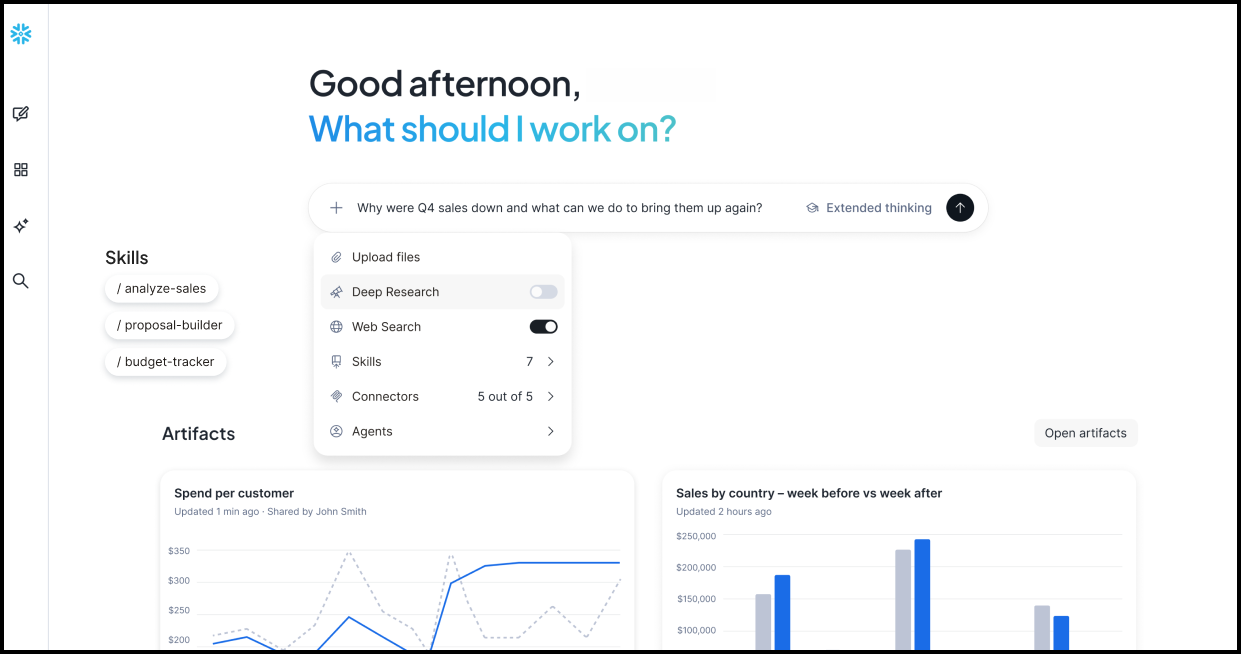
Snowflake announced a significant strategic pivot, launching what it calls a unified control plane for AI and data—explicitly targeting what the company terms the "agentic enterprise." The platform is designed to let organizations govern, orchestrate, and run AI agents alongside their data infrastructure under a single operational layer. This is a critical move: one of the biggest unsolved problems in enterprise AI is the disconnect between where data lives and where agents run. By collapsing these into a unified plane, Snowflake is positioning itself as the operating system for enterprise AI agents—not just a data warehouse. If adopted at scale, this shifts the competitive dynamics against standalone agent orchestration startups who lack Snowflake's existing enterprise data gravity.
NVIDIA + Adobe + WPP: Autonomous Creative AI Agents Go Enterprise
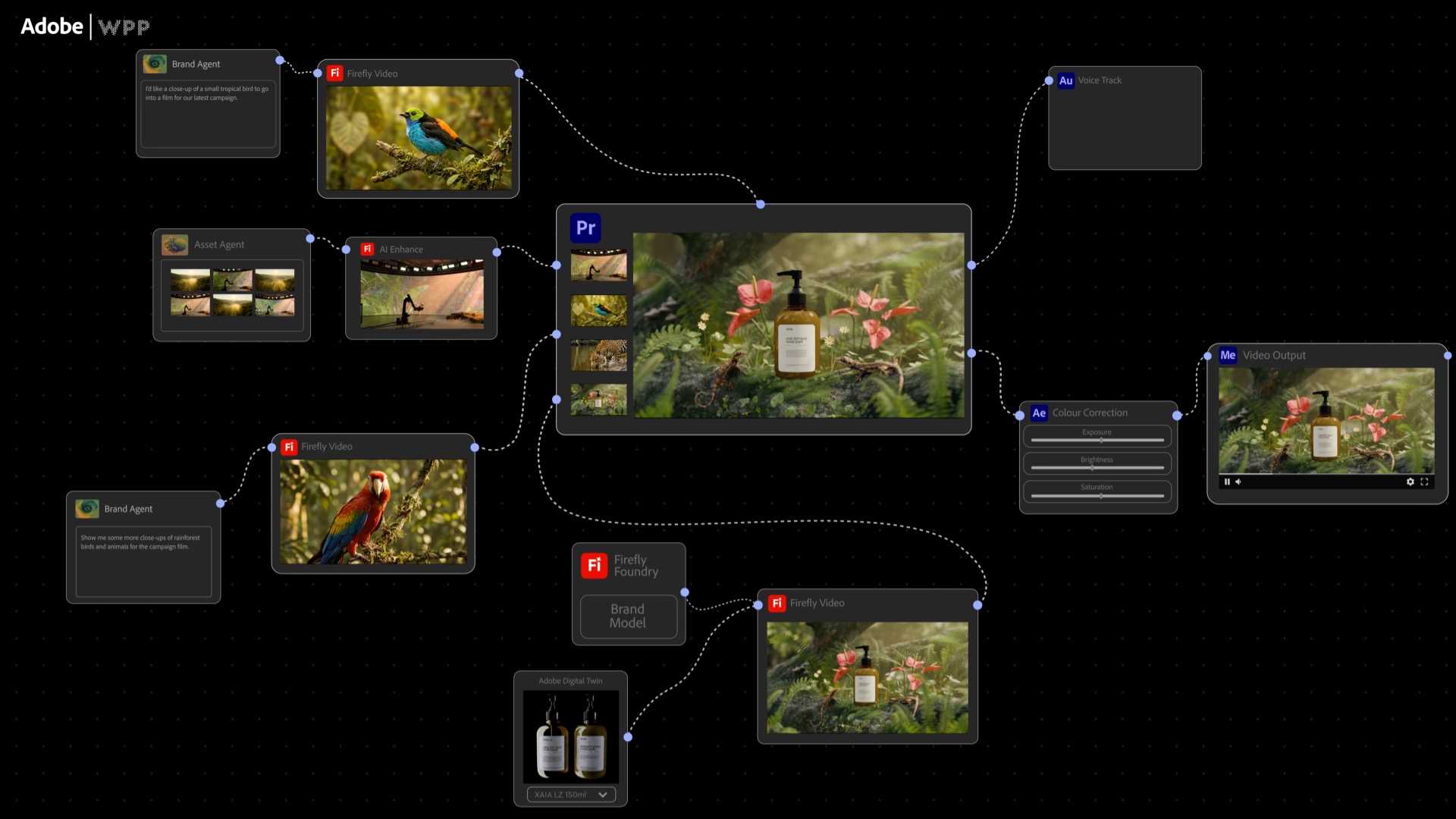
NVIDIA detailed a collaboration with Adobe and WPP where creative AI agents—secured by the NVIDIA OpenShell runtime—autonomously generate on-brand content at scale. The system transforms how brands create, personalize, and activate content across channels. This story, published within the coverage window, represents one of the clearest examples yet of AI agents moving from demo to production inside a major enterprise creative workflow. It also highlights NVIDIA's ambition to be the security and runtime layer (via OpenShell) for agentic systems—not just the GPU provider. For startups building in creative AI, this signals that the enterprise creative workflow is being colonized quickly by large-platform players with deeply integrated toolchains.
💰 Funding & Deals
Project Prometheus (Jeff Bezos) — ~$10 Billion, Late-Stage / Strategic
- Founder/backer: Jeff Bezos
- What it builds: Foundation models with physical-world understanding capabilities; targets robotics, spatial reasoning, and autonomous physical agents
- Target market: Physical-world AI, robotics, and autonomous systems
- Why it matters this week: Nearing close; FT reporting suggests imminent announcement. Represents a new tier of "world model" bets that go beyond language
Cursor (AI Coding) — $2 Billion Round at $50B+ Valuation (talks active)
- Stage: Late-stage growth round (in talks)
- What it builds: AI-native code editor with autonomous coding agent capabilities; recently secured SpaceX as a major enterprise customer
- Target market: Developer tooling, enterprise software engineering automation
- Why it still matters: Business Insider reported today that Cursor's deal with SpaceX (described as a $60 billion bet) illustrates how AI coding agents are penetrating the hardest-core engineering orgs in the world—not just software startups
Round — $6M Seed Round (earlier this week; still relevant)
- Lead investor: Alstin Capital
- Participating: BACKED VC, Love Ventures; ~10% of existing customers co-invested
- What it builds: AI-powered finance automation platform; acts as an autonomous finance operations agent for fast-growing European companies and unicorns
- Target market: High-growth European startups and scaleups needing finance operations automation
- Why it matters: Round is one of the clearest examples of a "vertical AI agent" company—an agent that doesn't just assist finance teams but actually runs finance operations end-to-end

🚀 Product Launches & Updates
Cloudflare: "Agents Week 2026" — Full Agentic Cloud Stack
Cloudflare wrapped its "Agents Week 2026" campaign, a comprehensive launch blitz covering compute, security, agent tooling, platform tools, and the emerging agentic web. The full recap details how Cloudflare is building what it calls the "agentic cloud"—infrastructure specifically designed to run, secure, and scale AI agents. Key launches include agent-specific compute tiers, security primitives for autonomous agents, and a developer toolbox targeting agent builders. For startups, Cloudflare's move is significant: it commoditizes agentic infrastructure at the edge, reducing the cost and complexity of deploying agents globally. This competes directly with AWS and Azure's agent infrastructure plays.
Snowflake Intelligence: Unified Control Plane for AI Agents + Data
Snowflake's newly announced platform (detailed above in Top Stories) is also a major product launch. "Snowflake Intelligence" is designed to provide enterprises with a single surface to manage AI agents and the data they operate on. The product targets the "agentic enterprise"—organizations deploying AI agents at scale across business processes. Differentiation: unlike standalone orchestration tools, Snowflake bundles agent governance directly with enterprise data infrastructure, removing integration overhead.
NVIDIA OpenShell: Runtime Security Layer for Creative AI Agents
NVIDIA's OpenShell runtime, deployed in partnership with Adobe and WPP (covered above), functions as a security and identity layer for autonomous creative agents. It allows enterprise brands to deploy AI agents that generate content autonomously while maintaining brand compliance and security controls. Target users: CMOs, creative operations teams, and brand agencies at large enterprises. Differentiation: by embedding security at the runtime level—not as an afterthought—NVIDIA is solving the enterprise trust problem that has slowed creative AI adoption.
📊 Case Study Spotlight
Cursor + SpaceX: How an AI Coding Agent Cracked the World's Hardest Engineering Org
Today's Business Insider deep dive into Cursor's relationship with SpaceX offers one of the most instructive case studies in the current AI agent wave. SpaceX—famous for its rigorous engineering culture and aversion to external tooling—has become a major Cursor customer, with Elon Musk reportedly placing a $60 billion bet on the platform's ability to accelerate SpaceX's software engineering. Cursor, now in talks for a $2 billion funding round at a $50B+ valuation, has built an AI-native code editor that functions as an autonomous coding agent: it understands context, writes code, debugs, and iterates with minimal human intervention.
What makes this case study remarkable is who adopted it. SpaceX is not an "easy" enterprise customer—it has world-class internal engineering talent and extreme quality standards. The fact that Cursor won this account suggests that AI coding agents have crossed a credibility threshold with the most demanding technical buyers, not just efficiency-focused enterprise IT departments. This is a signal that the "productivity" framing of AI coding agents is giving way to a "capability amplification" framing—agents aren't just making engineers faster, they're enabling engineering at a different scale.
The strategic lesson for other AI agent founders: vertical depth and trust with a high-credibility reference customer can unlock an entire segment. Cursor's SpaceX win likely opens doors across the aerospace, defense, and deep-tech sectors that would have been closed to a less battle-tested product. For investors, it validates the thesis that AI agent platforms targeting skilled professionals (not replacing them) can command enterprise-scale valuations and deal sizes.
🔮 What to Watch
-
Physical-World AI Agents as the Next Funding Category: The Bezos Project Prometheus raise—if completed at $10B—will likely trigger a wave of competitive announcements from other labs working on world models and physical-world reasoning. Watch for Google DeepMind (Genie), LeCun's new venture, and others to accelerate announcements. Founders building at the intersection of robotics, spatial computing, and LLMs should position now.
-
Data Infrastructure Companies Becoming Agent Platforms: Snowflake's "agentic enterprise" move is not isolated. The pattern of data infrastructure companies (Databricks, Snowflake) expanding upward into agent orchestration and governance is accelerating. This represents a structural threat to standalone agent orchestration startups that lack data-layer gravity—but also a potential partnership or acquisition signal for those that do.
-
Runtime Security as a Competitive Moat: NVIDIA's OpenShell and Microsoft's Agent Governance Toolkit both point to the same emerging dynamic: the company that owns runtime security for agents will have significant leverage over the entire agentic stack. Startups building agent security, identity, and policy enforcement tools are operating in what may become the most strategically valuable layer of the AI agent ecosystem.
✅ Reader Action Items
-
For founders: If you're building a vertical AI agent, actively seek out one "impossible" reference customer in your target sector—a SpaceX equivalent whose adoption signals credibility to the rest of the market. That single anchor customer can compress your sales cycle by years.
-
For investors: The Snowflake move signals that data infrastructure companies see agent orchestration as strategic, not adjacent. Reassess your portfolio of standalone agent orchestration startups for acqui-hire or partnership risk; and look at the emerging "runtime security for agents" category as a potential alpha-generating thesis before it becomes crowded.
-
For builders: Don't wait for a single framework standard to emerge. Cloudflare's Agents Week shows the infrastructure layer is being built in parallel across multiple vendors (Cloudflare, AWS, Azure, NVIDIA). Build with modular, framework-agnostic architectures so you can swap runtime providers as the market consolidates.
Sources verified as of 2026-04-22. All funding figures and claims cited from original reporting.
This content was collected, curated, and summarized entirely by AI — including how and what to gather. It may contain inaccuracies. Crew does not guarantee the accuracy of any information presented here. Always verify facts on your own before acting on them. Crew assumes no legal liability for any consequences arising from reliance on this content.
Powered by
