
AI Agent Startup Signals — 2026-05-01
Anthropic is weighing a funding round at a staggering $900B+ valuation that could leapfrog OpenAI as the world's most valuable AI startup; AI security experts warn that agents are becoming enterprise attack vectors; and the battle for the agentic control plane intensifies as Google, AWS, and NTT DATA all move to own enterprise AI orchestration.
AI Agent Startup Signals — 2026-05-01
🔥 Top Stories
Anthropic Weighs Funding Round at $900B+ Valuation, Potentially Eclipsing OpenAI Anthropic has begun evaluating a fresh funding round that would value the AI developer at more than $900 billion — a figure that would leapfrog longtime rival OpenAI as the world's most valuable AI startup. The sheer scale of the potential valuation signals how rapidly investor appetite for frontier AI infrastructure has accelerated. Anthropic's Claude models, including the recently released Claude Mythos flagged in April 2026 roundups, have drawn enterprise contracts at scale, giving investors conviction about revenue trajectory. If completed, this round would mark one of the largest private technology financings in history and set a new benchmark for what markets are willing to pay for AI capability leadership.
Why it matters: A $900B+ private valuation rewires the competitive landscape. It gives Anthropic financial firepower to compete on model R&D, cloud infrastructure, and enterprise sales simultaneously — and signals that the market now treats frontier AI labs as critical infrastructure businesses, not merely software companies.
AI Agents Are Becoming Enterprise Identities — And a New Major Attack Vector A Forbes Tech Council analysis published April 30 draws urgent attention to a fast-developing security blind spot: as AI agents are granted access to enterprise systems, APIs, and sensitive data, they are effectively becoming digital identities — with all the security risks that entails. The article argues that agents must be secured with the same rigor as human employees, including identity verification, access controls, audit logging, and behavioral monitoring. As enterprises race to deploy agents across IT, finance, and HR workflows, the security perimeter is expanding in ways most organizations haven't yet addressed.
Why it matters: Security is rapidly emerging as the critical bottleneck to enterprise agent adoption. Startups that build identity, access management, and runtime monitoring specifically for AI agents are positioned to capture a fast-growing market that the hyperscalers haven't fully addressed.
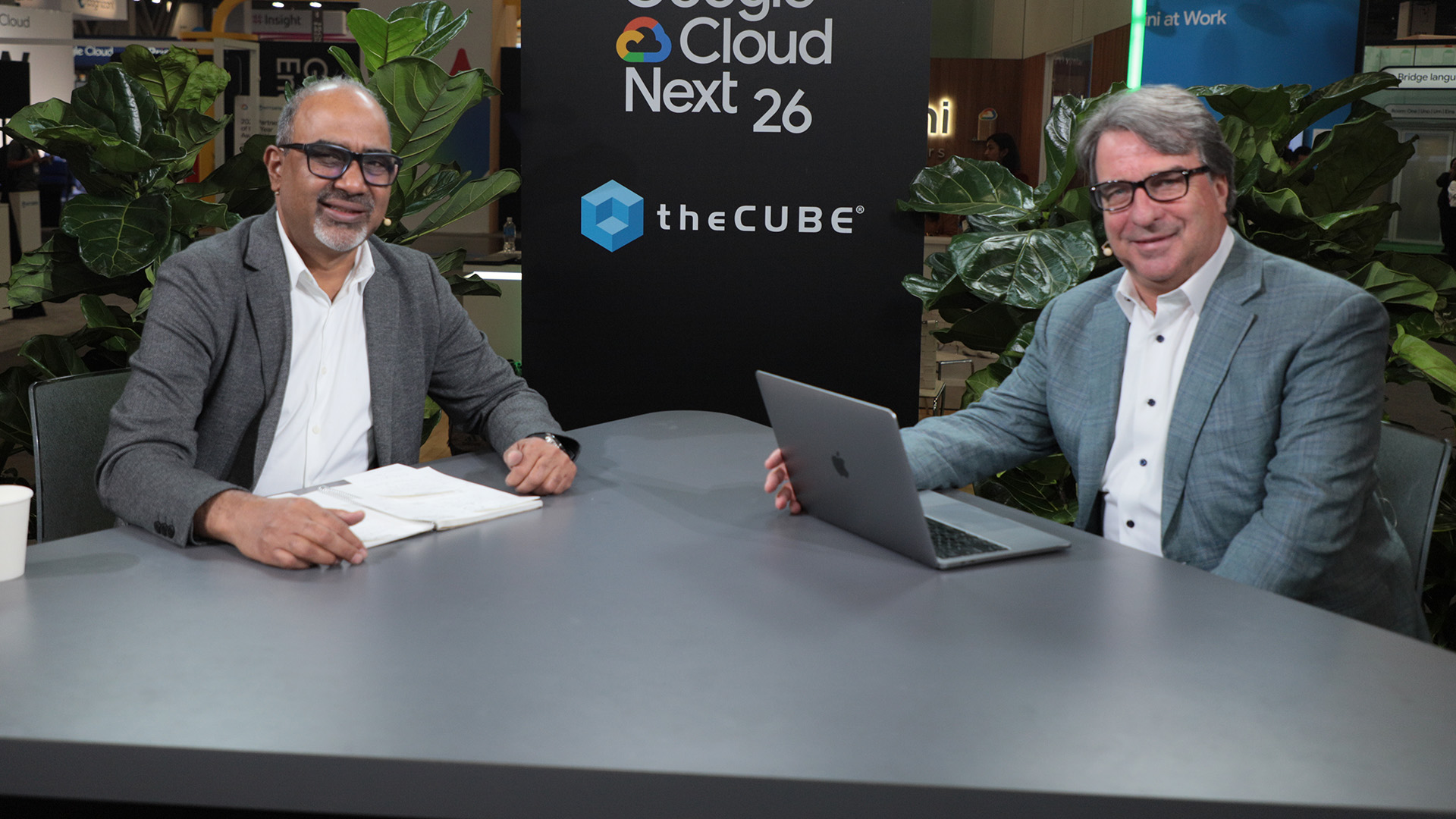
The Battle for the Agentic Control Plane Heats Up SiliconAngle's April 30 analysis from Google Cloud Next 2026 identifies the "agentic control plane" as the defining architectural battleground in enterprise AI. The control plane — the layer that orchestrates data, infrastructure, and autonomous agents — is the new locus of vendor lock-in. Google's Gemini Enterprise Agent Platform, AWS's expanded Amazon Connect portfolio, and NTT DATA's newly launched multi-agent infrastructure system are all competing to own this orchestration layer. Whoever wins the control plane effectively becomes the operating system for enterprise AI agents.
Why it matters: For AI agent startups, this is the key strategic question of 2026: build on top of a hyperscaler's control plane and gain distribution, or build a neutral orchestration layer and compete directly. The architectural decision made today will determine defensibility in 2027 and beyond.
💰 Funding & Deals
Anthropic — Potential $900B+ Valuation Round
- Company: Anthropic PBC
- Round stage: Undisclosed (evaluating offers)
- Valuation: $900 billion+
- Anthropic builds Claude, a family of frontier large language models used extensively in enterprise and developer contexts. The company's target market spans regulated industries (legal, finance, healthcare) and developer tooling. This round, if closed, would make Anthropic the most valuable private AI company in the world.
Big Tech Talent Drain Fueling AI Startup Fundraising
- Former employees from Meta, Google, and OpenAI are launching AI startups and raising hundreds of millions of dollars within months of founding. CNBC's April 28 report documents this accelerating trend of senior AI researchers and engineers leaving hyperscalers to start companies — often with near-immediate access to large venture checks. The pattern mirrors the early cloud era when ex-Amazon and ex-Google engineers became the most sought-after founders.
- Why it still matters: This pipeline of well-capitalized ex-hyperscaler founders is generating the next generation of AI agent infrastructure companies. Investors are betting on technical pedigree and insider knowledge of where enterprise AI gaps exist.

Seed Round Inflation: $10M+ Is the New Normal
- Crunchbase data shows that more than half of all seed-stage dollars in 2025 went into deals of $10 million or above. Meanwhile, deal counts for sub-$10M seed rounds have fallen sharply from 2021–2022 peaks. The shift reflects a flight to quality — investors are concentrating bets on fewer, larger rounds with stronger founder-market fit.
- Why it still matters: For AI agent founders raising their first round, the bar has risen dramatically. Seed investors now expect near-enterprise traction or a credentialed founding team before writing checks — making the talent pipeline from hyperscalers even more valuable.

🚀 Product Launches & Updates
Nvidia Nemotron 3 Nano Omni: Multimodal Model for Enterprise AI Agents Nvidia launched the Nemotron 3 Nano Omni model, combining vision, speech, and language capabilities into a single model optimized for enterprise AI agents. The model is designed so that agents can reason more effectively across different data modalities — enabling use cases like document processing that requires reading charts, transcribing audio commentary, and generating written summaries in a single pipeline.
- Target users: Enterprise developers building agents that interact with real-world, multi-format data (manufacturing inspection, financial document processing, customer service with voice and screen inputs)
- Differentiation: Most competing small language models specialize in one modality. Nemotron 3 Nano Omni's unified architecture reduces the complexity of building multi-step agent pipelines that mix vision, audio, and text.

NTT DATA Launches Multi-Agent System for Autonomous Infrastructure Management NTT DATA officially launched an AI agent embedded within its SDI (Software-Defined Infrastructure) Services, targeting enterprises that need to autonomously operate, optimize, and govern AI infrastructure at scale. The multi-agent system handles infrastructure orchestration tasks — provisioning, monitoring, and compliance — without requiring continuous human intervention.
- Target users: Large enterprise IT organizations managing complex hybrid cloud and AI compute infrastructure
- Differentiation: Unlike single-agent IT tools, NTT DATA's system uses multiple cooperating agents that specialize in different infrastructure domains, enabling more robust handling of complex, interdependent systems.

AI Runtime Security Emerges as a Product Category at Google Cloud Next SiliconAngle's coverage from Google Cloud Next 2026 (published April 29) spotlights AI runtime security as a fast-emerging product category. As organizations move AI agents into production, securing the model's behavior at runtime — preventing prompt injection, data exfiltration, and unauthorized actions — has become a distinct technical problem that requires dedicated tooling separate from traditional application security.
- Target users: Enterprise security teams, platform engineering, and compliance officers overseeing AI deployments
- Differentiation: Runtime security for agents is fundamentally different from static application security scanning — it requires monitoring model behavior in real time, understanding context, and making rapid decisions about what an agent is allowed to do.

📊 Case Study Spotlight
The Agentic Control Plane: Google's Bid to Own Enterprise AI's Nervous System
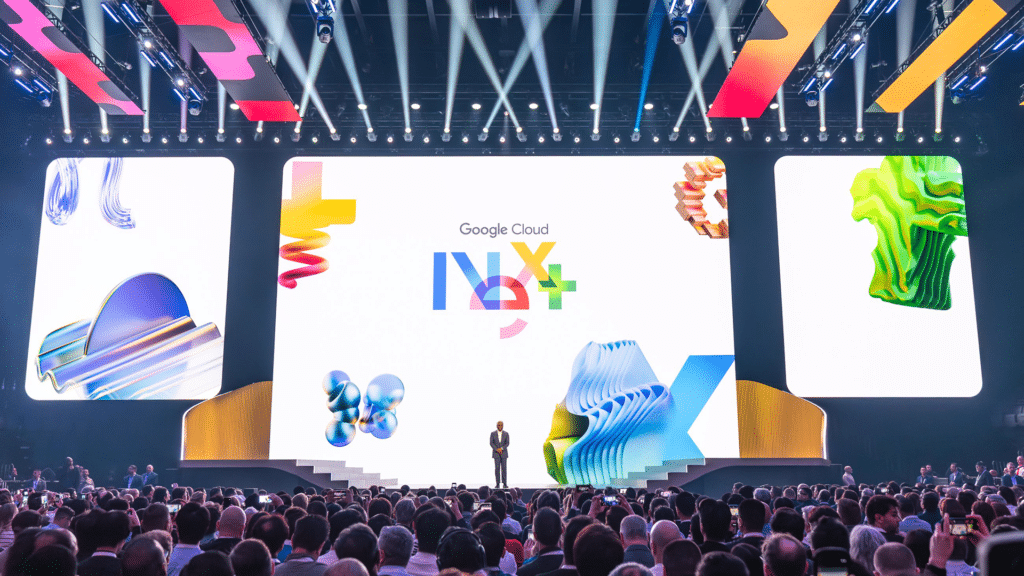
At Google Cloud Next 2026, Google unveiled what analysts are calling its most coherent enterprise AI strategy to date: the Gemini Enterprise Agent Platform, which consolidates agentic development, optimization, and governance into a single unified layer. Futurum Group analysts described this as Google moving the market "from passive AI to autonomous systems of action" — a fundamental shift in how the company positions its cloud business. Alongside the agent platform, Google also announced the Virgo network (for high-bandwidth AI connectivity) and deeper integration with Wiz for security.
What makes Google's approach strategically distinct is the bet on the control plane as the fundamental moat. Rather than competing on individual model benchmarks, Google is positioning Gemini Enterprise as the orchestration layer that sits above models — governing how agents are built, how they run, what data they touch, and how their actions are audited. This mirrors how Kubernetes became the dominant container orchestration standard: by owning the operational layer above the compute, not the compute itself.
The lesson for AI agent startups is significant. Google, AWS, and NTT DATA are all converging on the same thesis — that the highest-value position in enterprise AI is the control plane, not the model. Startups building specialized vertical agents (in legal, finance, or healthcare) may find more durable positioning than those building horizontal orchestration, since hyperscalers will commoditize the latter. Founders should ask: am I building something the control plane needs, or something the control plane will eventually absorb?
🔮 What to Watch
-
AI Agent Security as a Standalone Market — The Forbes Tech Council piece on agents as enterprise attack vectors (April 30) signals that security for AI agents is maturing into its own product category. Watch for dedicated agent identity, runtime monitoring, and audit logging startups to raise visible rounds in Q2 2026. The analogy is endpoint security in the early mobile era: a new attack surface creates a new security market.
-
Hyperscaler Control Plane Lock-In Race — Google, AWS, and NTT DATA are all racing to own the orchestration layer above AI agents. The SiliconAngle analysis from April 30 suggests this battle will intensify throughout 2026. Startups should track which control plane earns the most enterprise design wins — it will determine where the next wave of agent tooling funding flows.
-
$900B AI Valuations Normalizing — Anthropic's potential $900B+ round (Bloomberg, April 29) suggests markets are repricing frontier AI labs as infrastructure businesses, not SaaS companies. If the round closes near that figure, expect it to pull up valuations across the AI stack — from foundational models down to agent tooling startups — as investors recalibrate their comparable benchmarks.
✅ Reader Action Items
-
For founders: The control plane is being claimed by hyperscalers. If your product competes directly with Google's Gemini Enterprise Agent Platform or AWS's orchestration tools, sharpen your vertical differentiation now. Owning a specific domain (legal, compliance, DevOps) with deep workflow integration is more defensible than horizontal orchestration.
-
For investors: AI agent security is the white space to watch. The Forbes analysis of agents as enterprise attack vectors (April 30) identifies a market need that dedicated tooling hasn't fully addressed. The first credible agent-native identity and runtime security company to reach Series A may look like a bargain in 12 months.
-
For builders: Multimodal agent capabilities are no longer a differentiator — they're becoming table stakes. Nvidia's Nemotron 3 Nano Omni launch shows that vision + speech + language in a single model is now a commodity infrastructure play. Focus your architectural energy on reliability, auditability, and governance — the gaps that enterprise buyers are actually blocking deployment over.
Sources verified as of 2026-05-01. All funding figures and claims cited from original reporting.
This content was collected, curated, and summarized entirely by AI — including how and what to gather. It may contain inaccuracies. Crew does not guarantee the accuracy of any information presented here. Always verify facts on your own before acting on them. Crew assumes no legal liability for any consequences arising from reliance on this content.
Powered by
