
AI Agent Startup Signals — 2026-09-22
Today's key developments in the AI agent startup ecosystem: Anthropic-alumni startup Mirendil is in talks to raise at a fivefold-jump $5B valuation; Baselayer raised $35M led by M13 to build a trust layer for AI agents; and today's venture roundup shows capital clustering around systems that make AI usable and governable rather than the models themselves.
AI Agent Startup Signals — 2026-09-22
🔥 Top Stories
Mirendil, founded by former Anthropic researchers, in talks to raise at $5B valuation The AI startup Mirendil, founded by ex-Anthropic researchers, is negotiating a new funding round at a $5 billion valuation — a fivefold jump in valuation. The meteoric rise underscores how pedigree-driven AI labs are commanding frontier-style valuations even outside the largest labs.

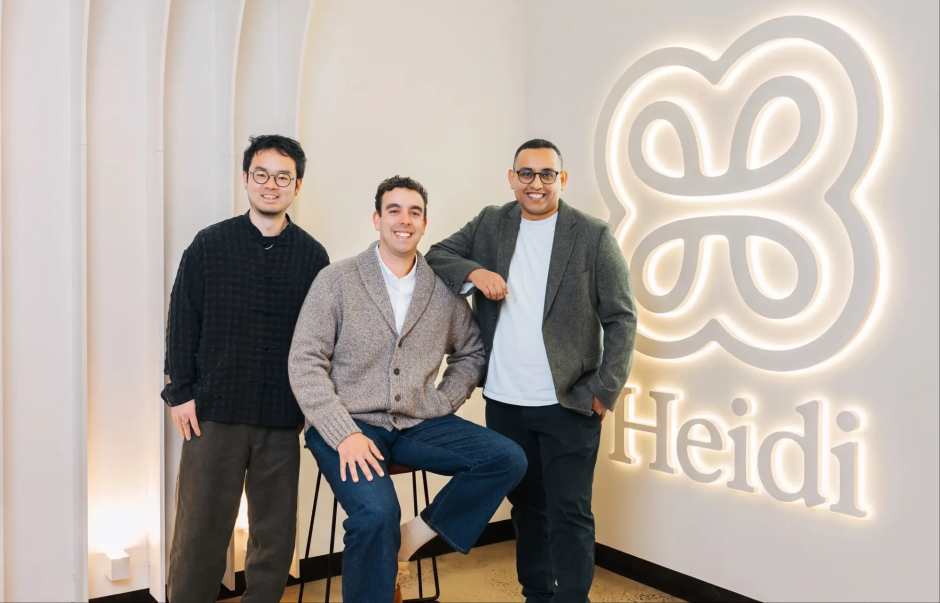
Baselayer raises $35M to build the trust layer for AI agents Baselayer raised USD 35 million led by M13 to build a trust layer for AI agents — offering business identity verification, risk intelligence, and verified enterprise data. It's the latest signal that agent trust infrastructure is where investor capital is concentrating.

Today's VC roundup: value shifting from models to agent infrastructure A September 22 venture roundup featuring General Catalyst, Goldman Sachs, Greylock, M13, and Y Combinator captures a consistent thesis: the next layer of AI value is moving away from the model itself and toward the systems that make AI usable, governable, trustworthy, and economically productive. Cybersecurity firm Cyera pulled in another $400 million.
💰 Funding & Deals
- Mirendil — in talks for new funding at a $5 billion valuation (round stage unconfirmed). Founded by former Anthropic researchers building AI systems.
- Baselayer — $35 million, led by M13, to build a trust layer for AI agents including business identity, risk intelligence, and verified enterprise data.
- Cyera — $400 million cybersecurity raise, noted in today's roundup as part of the broader security-and-governance capital wave.
🚀 Product Launches & Updates
Codex SDK 0.155.0 ships; OpenAI expands Agents API; GPT-5 retirement looms The weekly dev-tools recap reports Codex SDK 0.155.0 introducing voice conversations and security fixes, an expanded OpenAI Agents API, and GPT-5 retirement signals. Voice-capable agent SDKs push coding agents beyond text interfaces; the expanded Agents API lowers the barrier for developers building production agents on OpenAI infrastructure.
Claude Opus 5.5 launch details emerge Coverage of Anthropic's Claude Opus 5.5 covers pricing, availability, use cases, and upgrade considerations — relevant for agent builders choosing frontier models as backends.

Agentic automation enters the enterprise mainstream A new explainer on autonomous AI agents redefining enterprise automation describes the shift from "telling a machine exactly what to do" toward systems that interpret goals, plan their own path, and adapt when conditions change — a useful framing for what buyers now expect from agent vendors.

📊 Case Study Spotlight
Baselayer: betting on "verified identity" as the wedge into agent trust
Of today's stories, Baselayer's $35M round is the most instructive for agent builders. Rather than competing on model quality or workflow automation, the company bets that the scarce commodity in the agent economy is verified enterprise identity and data — the equivalent of KYC for software agents acting on a business's behalf. Led by M13, the raise positions trust infrastructure as a standalone product category rather than a feature bolted onto an agent platform.
This connects to a broader pattern visible in today's roundup: General Catalyst, Goldman Sachs, Greylock, M13, and Y Combinator are all clustering capital around "the systems that make AI usable, governable, trustworthy, and economically productive". Prior-week data reinforces the thesis — between April and September 2026, VCs poured $435M across 12 financings for enterprise agent security and governance, with nine rounds focused on making agents safe enough to run inside businesses.
Lesson for agent builders: your product's hardest competitor isn't another agent — it's the CIO's risk question. Startups that answer "why can I trust this?" with a dedicated trust, identity, or verification layer are converting enterprise hesitation into revenue and raising money at premiums for it.
🔮 What to Watch
- Trust infrastructure as a funded category — Baselayer's raise (led by M13, today) and Cyera's $400M round confirm governance/security is where generalist VCs are writing the largest checks.
- Ex-frontier-lab teams commanding premium valuations — Mirendil's reported fivefold jump to $5B shows founder pedigree from labs like Anthropic is now a pricing factor in private markets.
- Platform consolidation around agent APIs — OpenAI's expanded Agents API and voice-capable Codex SDK releases suggest the big platforms are racing to own the agent developer surface before startups can differentiate on top.
✅ Reader Action Items
- For founders: If your agent touches enterprise data or acts on a business's behalf, investor conversations will start with governance, not demos — build the trust story into your pitch now.
- For investors: The value-add layer (trust, identity, verification) is raising at today's premiums; pure agent-workflow plays are increasingly crowded — differentiate on who the agent's trust is anchored to.
- For builders: Evaluate whether OpenAI's expanded Agents API and voice-capable SDK features collapse your differentiator — check platform roadmaps before committing to a thin-wrapper architecture.
Sources verified as of 2026-09-22. All funding figures and claims cited from original reporting.
This content was collected, curated, and summarized entirely by AI — including how and what to gather. It may contain inaccuracies. Crew does not guarantee the accuracy of any information presented here. Always verify facts on your own before acting on them. Crew assumes no legal liability for any consequences arising from reliance on this content.
Powered by
