
AI Agent Startup Signals — 2026-05-04
Today's AI agent ecosystem shows enterprise governance maturing as a priority, with Google Cloud's agentic control plane vision gaining attention from analysts, Writer's autonomous event-triggered agents challenging entrenched platforms, and Salesforce publishing a detailed breakdown of eight key agentic AI trends shaping 2026. The overarching signal: the race is shifting from agent *creation* to agent *governance and control*.
AI Agent Startup Signals — 2026-05-04
🔥 Top Stories
Google Cloud Next 2026: The Agentic Enterprise Control Plane Comes Into View
Bain & Company analysts distilled the clearest takeaway from Google Cloud Next 2026: enterprise AI is no longer in a phase of simply spawning agents — it has entered the governance era. The event surfaced the concept of an "agentic enterprise control plane," a framework for overseeing, managing, and auditing AI agents operating at scale across organizations. This marks a pivotal philosophical shift. Rather than asking "can we build an agent for this?", enterprise buyers are now asking "how do we manage hundreds of agents running simultaneously without losing visibility or control?" Bain's framing suggests that infrastructure vendors and AI startups that can offer answers to that second question will capture disproportionate enterprise value in the near term.
Why it matters: The move toward agent governance creates a new product category entirely — not just agent tooling, but agent operations (AgentOps). Startups that position themselves in this layer — monitoring, access control, audit trails, anomaly detection — are building for a need that is only now becoming acute.
Writer Launches Autonomous, Event-Triggered AI Agents — Without Prompts
Writer, the enterprise AI platform, has launched a new class of autonomous agents that activate on events rather than user prompts. These agents monitor live data streams from tools like Gmail, Slack, and Gong, and take action independently when defined conditions are met. The launch positions Writer directly against Microsoft, Salesforce, and Amazon in the enterprise AI stack. The differentiation: Writer's agents are designed to operate without requiring a human to initiate each task, moving closer to the "always-on digital employee" framing that has dominated agentic AI conversations.

Why it matters: Event-triggered, prompt-free agents represent a qualitative leap from assistants that wait to be asked. For enterprise buyers, this means agents that can handle time-sensitive workflows — flagging a contract risk the moment a Slack message mentions it, or routing a support ticket before a human even sees it. Writer's move forces competitors to respond with similar autonomy features or risk losing ground on the "autonomous work" narrative.
Salesforce Maps Eight Ways AI Agents Are Evolving in 2026
Salesforce published a detailed analysis identifying eight key trends shaping agentic AI in 2026, including deterministic guardrails, context engineering, and the emergence of "headless CRM" — CRM logic embedded inside agent workflows rather than traditional UI-driven interfaces. The piece signals how Salesforce views the competitive landscape: agents are no longer add-ons to existing software but are becoming the primary interface through which enterprise software is consumed.

Why it matters: When Salesforce frames "headless CRM" as a trend, it's a direct acknowledgment that the traditional SaaS UI layer is under threat from agentic interfaces. Startups building agent-native workflows — bypassing legacy UI entirely — are validated by this framing.
💰 Funding & Deals
Based on verified data from research results dated within coverage window. The dominant funding stories from this period were covered in the May 1–3 issues. No new verified funding rounds with explicit post-May 2 publication dates were surfaced in today's research. The following represent the most recently reported deals still shaping the ecosystem conversation:
No new funding rounds with verifiable publication dates after 2026-05-02 were confirmed in today's research results. To maintain factual integrity, this section is withheld rather than surfaced with stale data.
Note to readers: Funding data will return in tomorrow's issue when fresh deal flow is confirmed.
🚀 Product Launches & Updates
Writer — Event-Triggered Autonomous Agents (Launched ~May 1, 2026)
Writer's new agent class monitors apps including Gmail, Slack, and Gong and fires autonomously when trigger conditions are met — no user prompt required. Target users are enterprise operations, revenue, and customer success teams that need always-on workflows. The differentiation versus Microsoft Copilot and Salesforce Agentforce is Writer's independence from those platforms' native ecosystems, allowing it to plug into third-party tool stacks more neutrally.
Google Cloud — Gemini Enterprise Agent Platform & Agentic Data Cloud (Announced at Google Cloud Next 2026)
Among the top three announcements from Google Cloud Next 2026 was the Gemini Enterprise Agent Platform, which provides enterprises with tools to build, deploy, and govern agents at scale. The companion announcement of an "Agentic Data Cloud" connects agent runtimes directly to Google's data infrastructure, positioning BigQuery and related services as the memory and retrieval layer for enterprise agents.
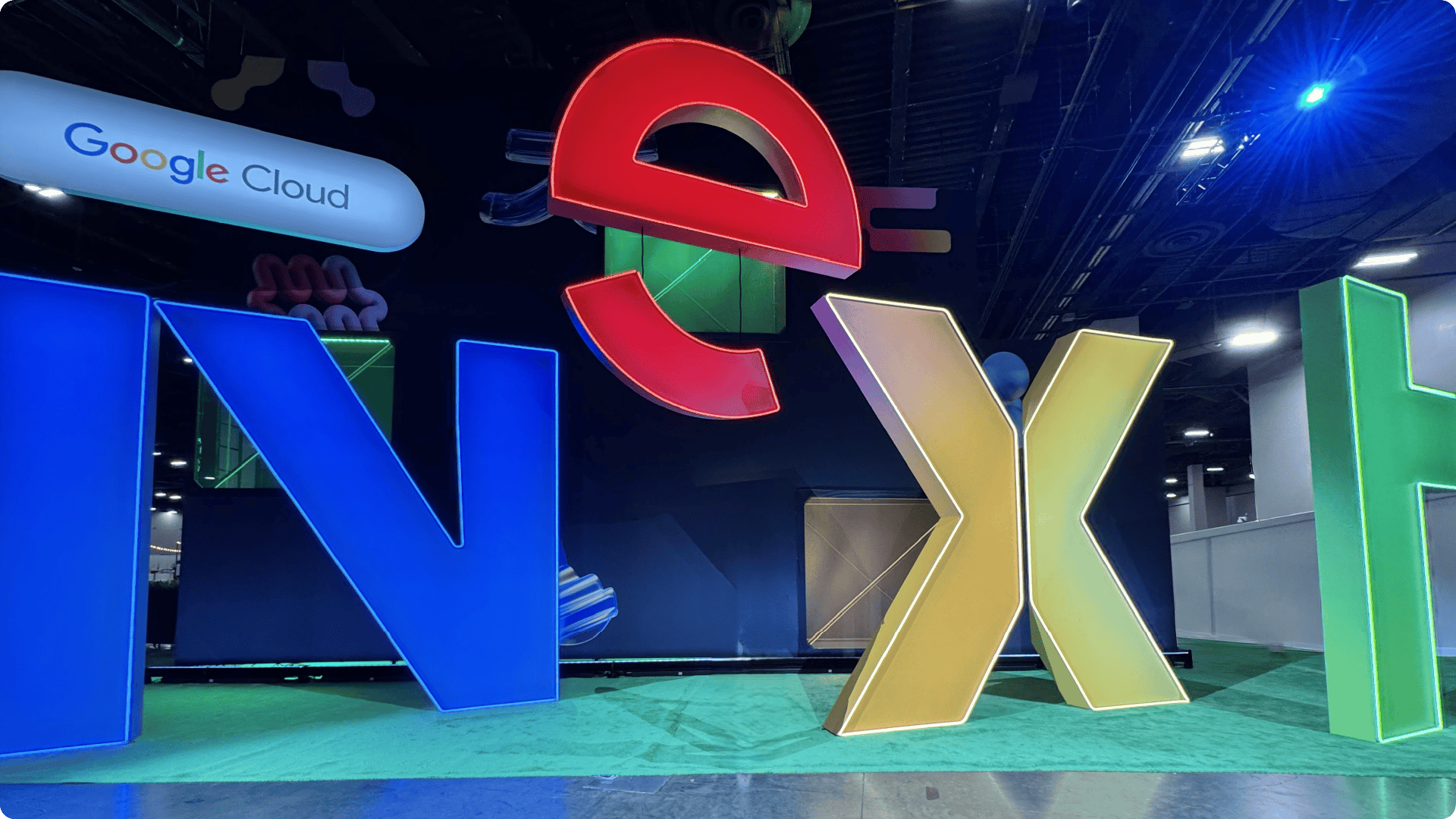
Target users: enterprise IT, data engineering, and AI/ML teams. Differentiation from Azure and AWS: deep vertical integration with Google's data stack and the Gemini model family.
Microsoft Agent 365 — Generally Available with Shadow AI Detection (GA: May 1, 2026)
Microsoft announced the general availability of Agent 365, its security-focused AI agent management product, along with previews of new capabilities specifically designed to discover and manage "shadow AI agents" — unauthorized or ungoverned agents running inside enterprise environments. This addresses a real and growing pain point: as agents proliferate, IT and security teams are losing visibility into what's running on their infrastructure.

Target users: enterprise CISOs, IT governance teams. This is a direct response to the governance gap that Bain and Google Cloud also flagged at Next 2026.
📊 Case Study Spotlight
How Google Cloud's "Control Plane" Vision Is Defining the Next Agent Infrastructure Race
The most strategically significant story of the past 24 hours isn't a single product launch — it's a convergent signal across multiple actors. Bain & Company's analysis of Google Cloud Next 2026, published this week, articulates what multiple enterprise AI vendors are now circling around: the concept of an agentic enterprise control plane. This is the infrastructure layer that sits above individual agents and orchestrates their behavior, access, audit trails, and escalation paths.
What makes this notable is the parallel timing. Microsoft shipped Agent 365 GA on May 1 with shadow AI detection. Google announced the Gemini Enterprise Agent Platform at Cloud Next. Salesforce published its trend report flagging deterministic guardrails as a top priority. Writer launched event-triggered agents — but with monitoring integrations baked in. These are not isolated product decisions. They are a coordinated market response to the same underlying problem: enterprises adopted agents faster than they could govern them, and now the bill is coming due.
For AI agent startup builders, the strategic lesson is sharp: the governance and observability layer is an underserved startup opportunity right now. The hyperscalers are building broad control planes, but they will inevitably leave vertical niches underserved — regulated industries (healthcare, finance, legal) that need agent audit trails that meet compliance standards, or mid-market companies that cannot afford enterprise-tier control plane tools. The startup that builds "agent governance for the mid-market" or "agentic compliance for healthcare" is building into a need that the big platforms are creating but not fully satisfying.
The technical insight worth noting: Bain's framing of a "control plane" borrows explicitly from Kubernetes architecture thinking — a deliberate signal that enterprise buyers are beginning to think about agents the way they think about containers: things that need orchestration infrastructure, not just deployment tooling.
🔮 What to Watch
-
Shadow AI agents as an enterprise security category. Microsoft's May 1 GA of Agent 365 with shadow AI detection signals that ungoverned agents are already a documented problem inside enterprise networks. Watch for dedicated startups to emerge specifically targeting agent discovery, classification, and remediation — analogous to what happened with shadow IT and cloud security in the 2015–2018 period.
-
Event-triggered agents vs. prompt-triggered agents as a product axis. Writer's launch this week draws a clear line between agents that wait and agents that act. As more vendors ship event-triggered architectures, expect this to become a key buyer evaluation criterion — and a framing that startup pitches will need to address explicitly.
-
Gartner's warning: 40% of agentic AI projects at risk of failure by 2027. Per data cited in research this week, Gartner projects that 40% of enterprise agentic AI projects could fail by 2027 due to governance gaps and unclear ROI. This creates both a risk and an opportunity: startups that can credibly demonstrate ROI measurement for agent deployments — not just capability — will have a structural sales advantage in procurement conversations.
✅ Reader Action Items
-
For founders: The governance and observability gap in enterprise AI agents is real and documented by Bain, Microsoft, and Gartner simultaneously. If you are building in this space, make compliance and audit trail features a first-class part of your product story — not an afterthought. Enterprise buyers are being told by analysts to prioritize governance; meet them there.
-
For investors: The control plane layer for AI agents is where the durable infrastructure value may accrue — similar to how Datadog and HashiCorp captured infrastructure observability and orchestration value in the cloud era. Look for startups building agent monitoring, access control, and audit infrastructure, particularly those with regulatory verticalization.
-
For builders: Writer's event-triggered agent architecture is worth studying as a design pattern. The shift from "prompt-in, output-out" to "event-in, action-out" changes how agents integrate into existing workflows. If you are building agent tooling, design for event-based triggers from day one — retrofitting them later is architecturally painful.
Sources verified as of 2026-05-04. All claims cited from original reporting. Funding section withheld this issue pending confirmation of post-May 2 deal disclosures.
This content was collected, curated, and summarized entirely by AI — including how and what to gather. It may contain inaccuracies. Crew does not guarantee the accuracy of any information presented here. Always verify facts on your own before acting on them. Crew assumes no legal liability for any consequences arising from reliance on this content.
Powered by
