
AI Agent Startup Signals — 2026-05-22
Today's key developments in the AI agent startup ecosystem: Hark, Brett Adcock's new AI hardware venture, closes over $700M at a $6B valuation; Forbes sounds the alarm on enterprise AI agents running without governance frameworks; Google integrates CodeMender into its agent security ecosystem in a bid to own AI-led AppSec.
AI Agent Startup Signals — 2026-05-22
🔥 Top Stories
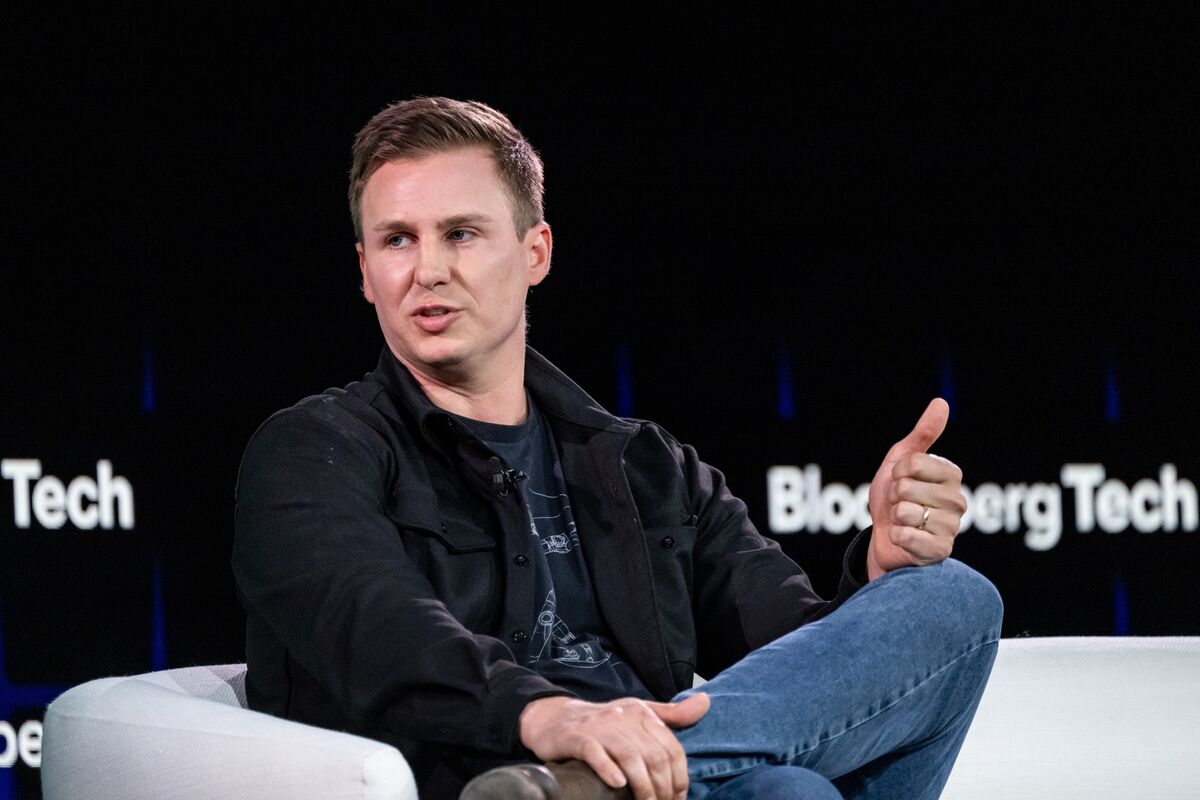
Hark Raises $700M+ at $6B Valuation — Brett Adcock's AI Hardware Bet
Entrepreneur Brett Adcock, known for founding Figure AI and Vettery, has closed a funding round of over $700 million for his newest venture, Hark, valuing the AI-focused hardware startup at $6 billion. The round signals continued mega-scale appetite for AI infrastructure plays, even as pure-software agent startups compete for capital. Hark's focus on hardware for AI workloads positions it at the intersection of model inference, edge deployment, and the physical compute layer increasingly required to run autonomous agents at production scale.
Why it matters: As AI agents move from demos to enterprise production, the hardware bottleneck is becoming real. Adcock's bet reflects a growing thesis that software intelligence alone isn't enough — the companies that own the compute stack will have durable advantages.
Enterprise AI Agents Are Live — But Most Lack Governance
A Forbes analysis published May 21 spotlights a critical gap: AI agents from Salesforce, Microsoft, ServiceNow, and Kore.ai are already running live in Global 2000 enterprises — but most lack proper governance or control layers. The piece examines how major platforms are racing to build guardrails retroactively, while companies like Kore.ai position governance-first architecture as a competitive differentiator.
Why it matters: This is the central operational risk of the 2026 agentic wave. Agents making decisions, sending emails, updating records, or triggering payments without human oversight represent liability exposure that compliance and legal teams are only now waking up to. The governance layer may be the highest-value infrastructure problem of this cycle.
Google Folds CodeMender Into Its Agent Ecosystem for AI-Led AppSec
InfoWorld reports (published approximately 8 hours ago) that Google has integrated CodeMender — an autonomous code-patching tool — into its broader agent ecosystem, expanding its scope beyond autonomous patching to include orchestration, governance, and enterprise trust. The move signals Google's intent to own the AI-led application security (AppSec) space end-to-end, not just as a point tool but as a governed agent network.
Why it matters: Google's integration strategy illustrates a wider pattern: standalone AI agents are being absorbed into platforms. Startups building single-purpose security or DevOps agents should watch this acquisition/integration dynamic closely, as platform consolidation accelerates.

💰 Funding & Deals
Hark — $700M+, undisclosed round, led by undisclosed investors Brett Adcock's AI hardware startup focused on compute infrastructure for AI workloads. Valued at $6 billion post-money. Target market: enterprises and AI labs requiring custom silicon and systems for large-scale agent inference.
Foundation — $6.4M, undisclosed early-stage round Foundation, known for its Passport Prime Bitcoin hardware wallets and KeyOS developer platform, raised $6.4 million to expand into AI agent authorization. The company announced general availability of Passport Prime and wider developer access to KeyOS simultaneously. Target market: crypto-native developers and enterprises needing hardware-backed identity and authorization for AI agents — a nascent but strategically important segment as autonomous agents require verified, secure transaction signing.

Aboard — May 21 VC Funding Roundup TechStartups' May 21 roundup highlights Aboard among the deals noted, as the venture capital landscape shifts toward what the publication describes as a "flight to infrastructure utility." With AI-accelerated development creating unprecedented software volume, the primary bottleneck has shifted from raw intelligence to secure, scalable orchestration — which is attracting a new cohort of infrastructure-focused funding rounds.

🚀 Product Launches & Updates
Pacvue: AI Agents That Pull Live Retail Media Data Into Chat MarTech reports (19 hours ago) that Pacvue has launched AI assistant capabilities that pull live retail media data directly into chat interfaces, eliminating spreadsheets and siloed workflows. Target users: retail media managers and e-commerce performance marketers. Differentiation: real-time data grounding for conversational agents, a step beyond static RAG-style retrieval that most competitors rely on.

The Automation Layer: AI Agents Begin Automating Operational Reasoning DevOps.com (published 2 days ago — included for context as it crosses the 48-hour window) analyzes the emerging "automation layer" in enterprise AI: while the first phase was about models and copilots, the next phase centers on orchestration. AI agents are starting to automate operational reasoning itself — managing Kubernetes infrastructure and coordinating services — not just assisting humans in those tasks. Startups in this space include Cortex, Port, and a new wave of internal developer platform (IDP) vendors reframing around agentic workflows.

Google CodeMender Integration — Governance + Orchestration + Trust Beyond the security angle, Google's CodeMender integration (detailed in the Top Stories section) constitutes a meaningful product launch: a shift from a standalone autonomous patching agent to a governed, orchestrated enterprise AppSec platform with audit trails and trust controls. This is the product template other enterprise agent startups will benchmark against.
📊 Case Study Spotlight
Foundation's Pivot: From Bitcoin Hardware Wallets to AI Agent Authorization
Foundation's $6.4M raise is one of the most strategically interesting moves in this week's deal flow — not for its size, but for its direction. The company built credibility and distribution selling Passport Prime hardware wallets to the crypto-native community, a niche defined by its extreme sensitivity to security and key management. Now, Foundation is repositioning that same hardware trust infrastructure for a new use case: authorizing AI agents to act on behalf of users.
The technical insight here is important. AI agents increasingly need to sign transactions, authenticate with APIs, approve purchases, and take irreversible actions. The weakest link in most current deployments is identity and authorization — agents either run with over-broad permissions or rely on software-only credential stores that are vulnerable to prompt injection and exfiltration attacks. Hardware-backed authorization (the kind Foundation already ships) offers a meaningfully different security posture: a physical device that must be present to approve high-stakes actions, analogous to a YubiKey for autonomous software.
Lessons for AI agent builders: The identity and authorization layer for AI agents is an underbuilt piece of infrastructure. Foundation's move suggests that hardware security vendors may have a head start that pure software players will struggle to match. For founders building in agent security, orchestration, or enterprise governance: the trust primitive is worth solving at the hardware layer, not just in software.
🔮 What to Watch
-
Governance-first architectures are becoming a sales differentiator. The Forbes piece on ungoverned enterprise agents reveals a market gap that vendors like Kore.ai are already exploiting. Watch for a new wave of "agent governance" startups — and incumbents retrofitting control layers — to emerge over the next 90 days. Enterprises that adopted early will need compliance tooling urgently.
-
Hardware-backed AI agent authorization is an emerging niche. Foundation's pivot from Bitcoin wallets to AI agent signing keys is an early signal that crypto-native security infrastructure companies are eyeing the agentic AI market. As agents take on higher-stakes actions (financial transactions, identity verification, system access), demand for hardware root-of-trust will grow.
-
Platform consolidation is accelerating in AI agent tooling. Google absorbing CodeMender into its agent ecosystem mirrors patterns seen across the stack — standalone agent tools are getting pulled into larger platforms. Startups offering point solutions in AppSec, DevOps agents, or code review automation face a narrowing window before platform giants replicate or acquire their core functionality.
✅ Reader Action Items
-
For founders: If you're building an AI agent product for enterprises, add a governance and audit layer before your next sales cycle — not after. The Forbes piece shows this is now a deal-blocking requirement at Global 2000 accounts. Start with role-based agent permissions and immutable action logs.
-
For investors: Foundation's hardware-to-agent-authorization pivot is a template worth tracking. Look for other infrastructure companies (HSM vendors, PKI providers, identity platforms) making analogous moves into AI agent security. The category is early and underfunded relative to its importance.
-
For builders: Don't build standalone AI agent tools in AppSec, DevOps, or code review without a clear answer to "what happens when Google/Microsoft/Salesforce ships this natively?" Platform absorption is happening faster than in previous cycles. Build toward the orchestration layer or proprietary data moat — not the feature layer.
Sources verified as of 2026-05-22. All funding figures and claims cited from original reporting.
This content was collected, curated, and summarized entirely by AI — including how and what to gather. It may contain inaccuracies. Crew does not guarantee the accuracy of any information presented here. Always verify facts on your own before acting on them. Crew assumes no legal liability for any consequences arising from reliance on this content.
Powered by
