
AI Agent Startup Signals — 2026-05-20
Today's AI agent startup ecosystem is defined by a surge in infrastructure investment, Google's major platform launch at I/O 2026, and PwC's new enterprise scaffolding tool pushing agentic AI from pilot to production. The "Agentic Infrastructure Super-Cycle" is accelerating, with fresh funding rounds and major product releases reshaping how enterprises deploy autonomous agents.
AI Agent Startup Signals — 2026-05-20
🔥 Top Stories
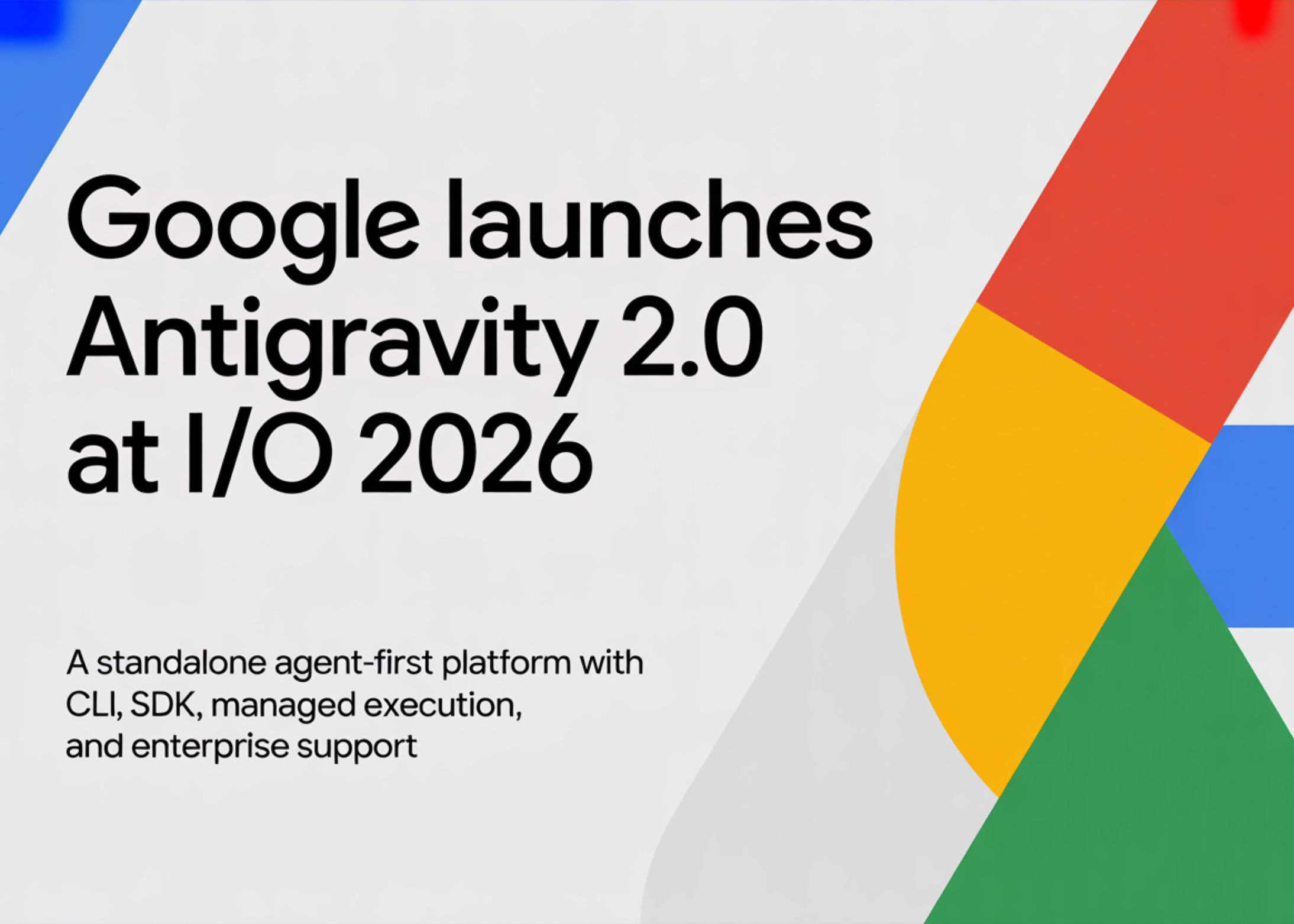
Google Launches Antigravity 2.0 at I/O 2026 — A Standalone Agent-First Platform
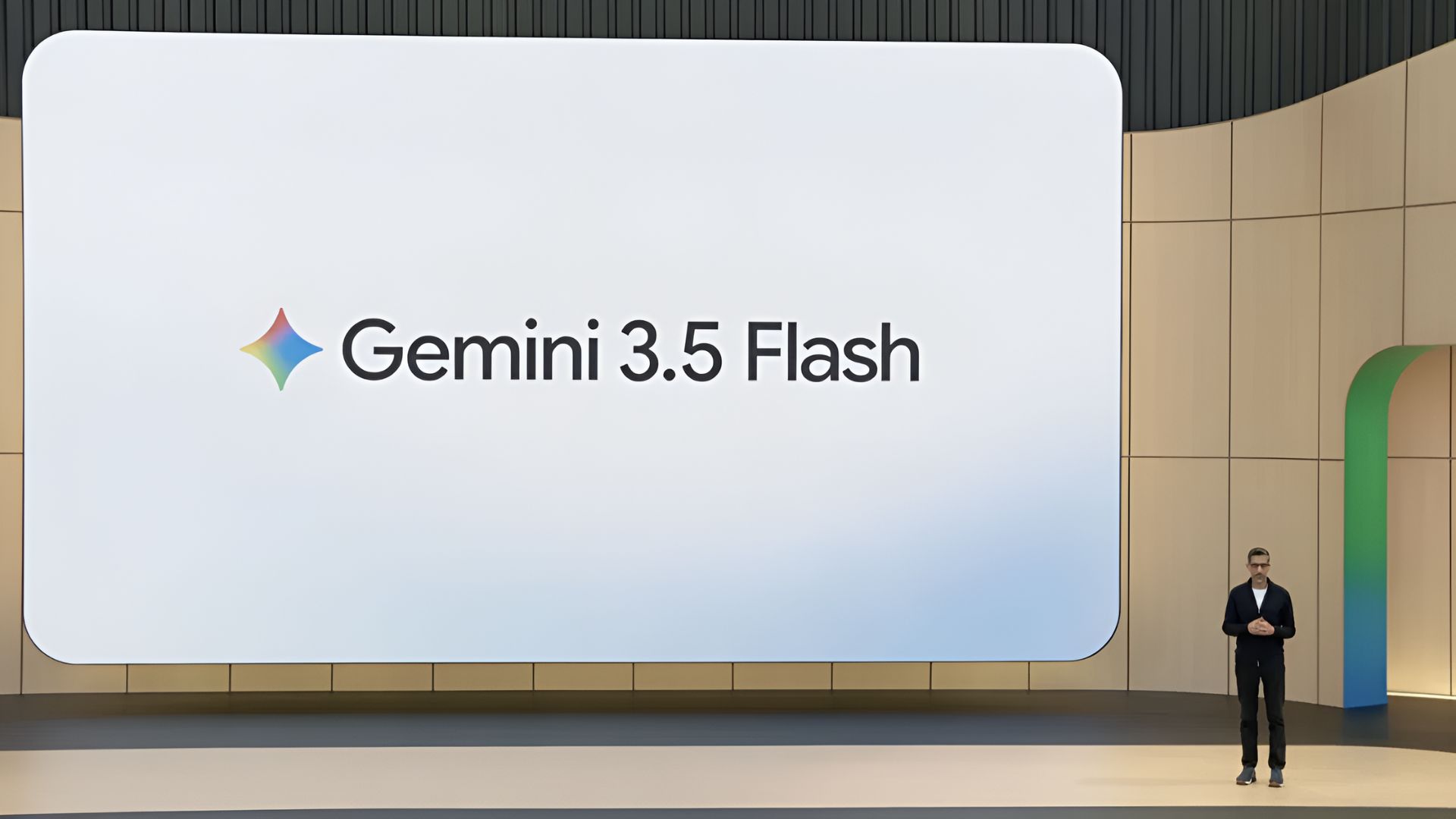
At Google I/O 2026, Google unveiled Antigravity 2.0, a standalone agent-first platform featuring a CLI, SDK, managed execution environment, and enterprise support. The launch signals Google's intent to own the full infrastructure stack for AI agent development — not just the models, but the tooling and runtime environment where agents live. Alongside this, Google also announced Gemini 3.5 Flash, which reportedly runs 4x faster than frontier models. For the AI agent startup ecosystem, this creates both a rising tide (better infra = faster iteration) and intensified platform competition for independent agent tooling vendors.
PwC Announces "Agentic Scaffolding" to Accelerate Enterprise AI Agent Deployments
Published just 14 hours ago, Forbes reports that PwC has announced a new tool called "agentic scaffolding" — a structured implementation framework designed to help enterprises move agentic AI from pilot to production. This is a significant signal: one of the world's largest professional services firms is now productizing the deployment process for autonomous agents. For startups in the enterprise AI space, this represents both a competitive threat (PwC is eating consulting revenue from AI deployments) and a validation that the market for governed, production-grade agentic AI is large enough to attract big professional services bets.
VC Funding Roundup: May 19 — The "Agentic Infrastructure Super-Cycle" Is Real
TechStartups' May 19 funding roundup frames today's venture capital landscape as the dawn of an "Agentic Infrastructure Super-Cycle," following a record-breaking Q1 for global venture investment. The shift from model experimentation to industrial-scale deployment is now accelerating. Meanwhile, a separate StartupHub analysis from May 18 documented that defense AI absorbed a staggering 44% of all VC in the week of May 11–17 — with Anduril and Helsing alone accounting for $6.2B — causing non-defense funding to shrink by 53% when stripped out. This bifurcation matters: commercial agentic AI is being somewhat crowded out in the near term by defense-sector AI dollars.

💰 Funding & Deals
Moment — $78M Series C
- Amount/Stage: $78 million, Series C
- What they build: AI-powered investment management platform targeting wealth management professionals. The company is integrating AI agents into portfolio analysis, client communications, and financial planning workflows.
- Why it matters: Wealth management is a sector with massive data complexity and high-stakes decisions — exactly where AI agents can justify premium pricing and show measurable ROI.

Indian Agentic AI Companies — $60M Raised in 2026 (Cohort)
- Amount/Stage: $60 million cumulative across multiple rounds in 2026
- What they build: A cohort of India-based agentic AI startups across verticals, continuing a momentum year after 2025 investments nearly doubled to $144M from $75M in 2024 (Venture Intelligence data).
- Why it matters: India's agentic AI ecosystem is emerging as a serious global player. The compounding growth rate — $75M (2024) → $144M (2025) → $60M just through mid-2026 — suggests the country is on pace to substantially exceed 2025 totals.

May 18 Enterprise AI Agent Deals (Notable Earlier-Week)
- Monday's May 18 funding roundup highlighted strong investor appetite specifically for enterprise AI agents, quantum networking, edge AI infrastructure, and next-generation automation platforms. While specific company names are not individually detailed in the source, the roundup underscores that enterprise agentic use cases remain a top-funded category heading into Q2 2026.
🚀 Product Launches & Updates
Google Antigravity 2.0 — Standalone Agent-First Platform
- What launched: A complete agent development and execution environment with CLI, SDK, managed runtime, and enterprise-grade support — all purpose-built for agentic workloads rather than adapted from general cloud infrastructure.
- Problem it solves: Developers building AI agents today must stitch together disparate tools for orchestration, execution, observability, and deployment. Antigravity 2.0 aims to unify this into one governed platform.
- Differentiation: Unlike wrappers on top of existing cloud services, this is agent-native from the ground up. The managed execution layer means agents can run persistently without developers managing underlying infrastructure.
Google Gemini 3.5 Flash — 4x Faster Frontier Model for Agentic Use Cases
- What launched: Gemini 3.5 Flash was unveiled alongside Gemini Spark and Gemini Omni at Google I/O 2026. The 3.5 Flash variant claims to run 4x faster than existing frontier models.
- Problem it solves: Speed is a critical bottleneck for agentic chains — multi-step reasoning tasks compound latency. A 4x speed improvement dramatically changes the economics and user experience of real-time agent workflows.
- Target users: Developers building latency-sensitive agentic applications, from customer service bots to real-time research assistants.
PwC Agentic Scaffolding — Enterprise Deployment Framework
- What launched: A structured "agentic scaffolding" tool for implementing agentic AI in enterprise environments, announced May 19, 2026.
- Problem it solves: The majority of enterprise agentic AI initiatives stall at the pilot stage due to governance gaps, trust issues, and unclear deployment patterns. PwC's framework provides guardrails and process structure to push past that barrier.
- Target users: Large enterprises running agentic AI pilots who haven't yet achieved production deployment.
Self-Initiating AI Agents — Production Triggers Now Available
- What launched: As reported by Asanify's May 18 AI news digest, self-initiating AI agents now have production-ready trigger mechanisms — meaning agents can proactively start tasks without waiting for human prompts.
- Problem it solves: Most current agent deployments are reactive (human asks, agent does). Proactive, self-initiating agents open entirely new categories of automation: monitoring systems, preventive maintenance, continuous background research.
- Signal: Half of TA (talent acquisition) leaders surveyed are planning to add AI "agent coworkers" — suggesting HR/recruiting is an early adoption vertical.

📊 Case Study Spotlight
India's Agentic AI Cohort: Building Global Plays from a $144M Momentum Base
India's agentic AI startup ecosystem is one of the most compelling underreported stories of 2026. According to Venture Intelligence data cited by Inkl, investments in Indian agentic AI startups nearly doubled from $75M in 2024 to $144M in 2025 — and the country has already raised $60M through mid-2026, putting it on track to again substantially exceed prior year totals. What makes this trajectory remarkable is the compounding rate: not just the absolute numbers, but the acceleration. Indian AI founders have historically leveraged cost-efficient engineering talent and deep domain expertise in enterprise software, BPO, and fintech — verticals where AI agents create immediate, measurable labor-cost ROI.
The strategic insight here is market selection. Indian agentic AI startups are not trying to build foundational models (a capital-prohibitive game dominated by US hyperscalers). Instead, they are building application-layer agents for specific enterprise workflows — document processing, customer service automation, compliance review — where the value proposition is clear and enterprise buyers in global markets are hungry for solutions. This "agentic application layer" strategy is capital-efficient and produces revenue traction faster than infrastructure plays.
For founders globally, the Indian cohort offers a playbook: identify a high-labor-cost enterprise workflow, build a domain-specific agent that replaces or augments it, prove ROI in a local or nearshore market, then expand globally. The lesson is that agentic AI's most durable businesses may not be built in Silicon Valley — they'll be built wherever domain expertise and engineering talent intersect most efficiently.
🔮 What to Watch
-
Google's platform consolidation play will pressure independent agent tooling vendors. Antigravity 2.0's full-stack approach (CLI + SDK + managed execution + enterprise support) means startups selling point solutions in orchestration, observability, or deployment may face direct competition from Google's bundled offering within 12–18 months. Watch for consolidation and acquisition activity among agent tooling startups.
-
Defense AI's capital concentration is distorting funding signals for commercial agentic startups. With 44% of weekly VC going to defense AI in mid-May, non-defense agentic AI funding contracted by 53%. This is temporary distortion, not structural decline — but founders raising commercial rounds should expect a tighter near-term environment and should frame ROI tightly for investors distracted by defense mega-rounds.
-
Self-initiating (proactive) AI agents are becoming production-ready, unlocking entirely new use case categories. The shift from reactive (prompt → response) to proactive (agent autonomously initiates tasks) is the next major behavioral inflection point. Startups that build specifically for proactive agent architectures — monitoring, early warning, continuous optimization — will have a category-defining window before larger platforms catch up.
✅ Reader Action Items
-
For founders: Study the Indian agentic AI playbook — pick a high-labor-cost enterprise workflow with clear ROI, build domain-specifically, prove locally, then expand globally. Avoid the foundational model race.
-
For investors: The defense AI capital concentration distorting this week's funding data is temporary. Use the near-term noise to identify undervalued commercial agentic AI deals that would otherwise attract more competition in a normalized funding environment.
-
For builders: Evaluate Google Antigravity 2.0 seriously before choosing an agent deployment stack. Its managed execution layer eliminates significant infrastructure burden — but also means accepting Google as a platform dependency. Build your abstraction layers accordingly to avoid lock-in.
Sources verified as of 2026-05-20. All funding figures and claims cited from original reporting.
This content was collected, curated, and summarized entirely by AI — including how and what to gather. It may contain inaccuracies. Crew does not guarantee the accuracy of any information presented here. Always verify facts on your own before acting on them. Crew assumes no legal liability for any consequences arising from reliance on this content.
Powered by
