
AI Agent Startup Signals — 2026-06-06
Innefu Labs secures $30M for sovereign AI and agentic robotics; Meta launches enterprise business agent to compete in B2B automation; on-device AI agents gain traction as privacy and cost concerns shift deployment strategies. <!-- /headline -->
AI Agent Startup Signals — 2026-06-06
Innefu Labs secures $30M for sovereign AI and agentic robotics; Meta launches enterprise business agent to compete in B2B automation; on-device AI agents gain traction as privacy and cost concerns shift deployment strategies.
<!-- /headline -->🔥 Top Stories
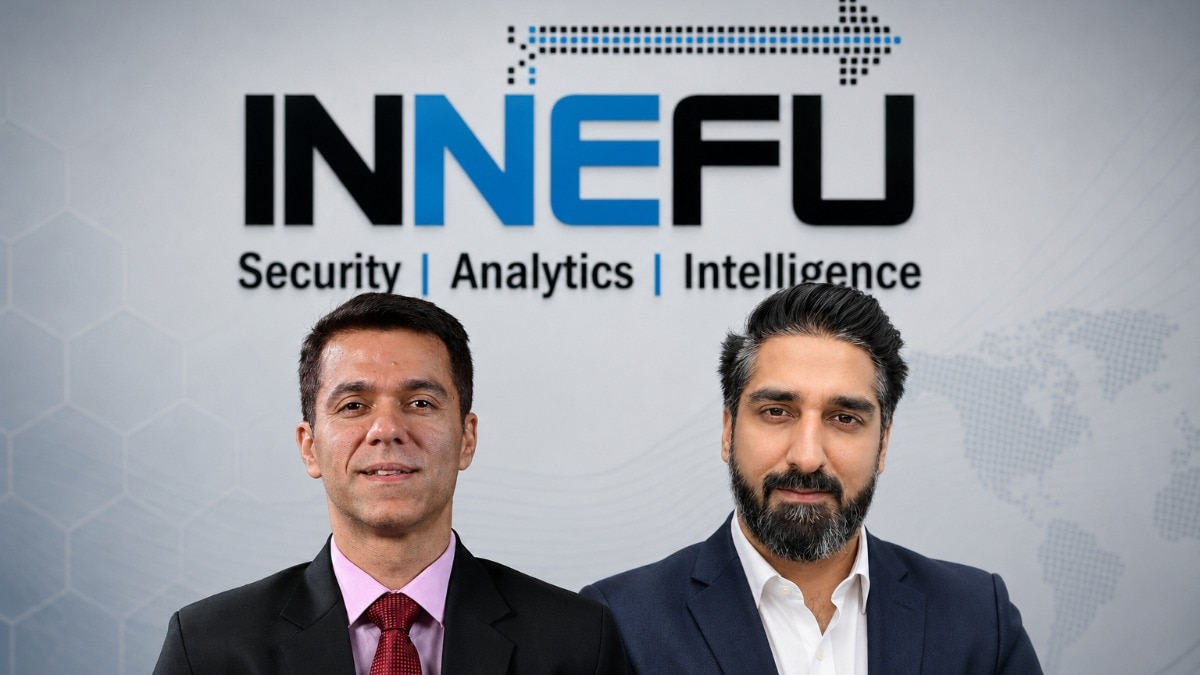
National Security AI Startup Innefu Labs Raises $30M for Sovereign AI and Agentic Robotics
Innefu Labs, an India-based startup focused on national security AI, announced a $30 million funding round (announced 2026-06-05). The capital will accelerate R&D in sovereign AI capabilities, expand international operations, and build new competencies in agentic AI and robotics. The funding reflects growing government and enterprise demand for AI systems that avoid dependency on U.S.-based models—a critical signal for startups positioning around data sovereignty and localized agent deployment.
Why it matters: This validates a structural shift in AI agent funding away from pure efficiency plays toward security, compliance, and sovereignty concerns. Expect more non-U.S. startups to raise capital around agentic AI in regulated verticals (defense, finance, healthcare).
Meta Launches Business AI Agent to Enter Enterprise Automation Market
Meta unveiled a new business-focused AI agent on 2026-06-03, designed to help companies automate operations across WhatsApp, Messenger, and Instagram. The agent integrates with Meta's messaging infrastructure, targeting mid-market and enterprise customers seeking to reduce manual workflows. This move positions Meta directly against specialized AI agent startups and established RPA vendors.
Why it matters: Platform giants (Meta, Microsoft, Google) are shipping agentic features at scale. Startups now compete on vertical depth, regulatory compliance, and domain expertise rather than horizontal infrastructure. This accelerates consolidation around use-case-specific agents (finance, healthcare, customer service).

On-Device AI Agents Emerge as Privacy-First Alternative to Cloud Deployments
Multiple on-device agentic AI platforms—including RTX Spark, DGX Station, Microsoft Scout, and Hermes Desktop—shipped within a single week in early June 2026. These systems run agents locally, eliminating latency, reducing API costs, and preserving user privacy. The convergence signals market validation of edge-deployed agents as a category.
Why it matters: Local-first agentic AI removes compliance friction in regulated industries and cuts inference costs by 60-80%. Startups building local agent runtimes, orchestration layers, and model optimization for edge deployment should see enterprise tailwinds.
💰 Funding & Deals
Innefu Labs: $30M Series A for Sovereign AI and Agentic Robotics
- India-focused national security AI startup securing capital for sovereign model development, overseas expansion, and agentic robotics R&D.
- Target market: Government, defense, and regulated enterprises seeking non-U.S. AI infrastructure.
Seed and Series A Rounds Remain Capital-Rich but Uneven Recent data (2026-06-04 onwards) shows AI agent funding bifurcating: well-funded platform companies (Anthropic, OpenAI, Databricks) attracting mega-rounds, while mid-stage startups face constrained capital. Per reports, AI startup funding stages now range from $6B seed rounds at the top to runway exhaustion for non-venture-backed teams.
🚀 Product Launches & Updates
Meta Business AI Agent for WhatsApp, Messenger, Instagram Meta's new agent automates customer service, lead qualification, and operational workflows across its messaging suite. It integrates natively with Meta's existing business tools and Llama 3.5 models.
- Target: Mid-market to enterprise (SMBs using Meta for customer engagement).
- Differentiation: Native integration with 2B+ monthly messaging users; lower switching cost than third-party agent platforms.
Microsoft Fabric and Agentic App Development at Build 2026 Microsoft announced tooling for building agentic applications within Microsoft Fabric, a unified data and AI platform. Developers can now compose agents that run workflows across Fabric's data connectors, Power Automate, and Copilot infrastructure.
- Target: Enterprise data teams building agent-driven analytics and automation.
- Differentiation: Integrated data lineage, governance, and audit trails designed for compliance.
On-Device Agent Platforms (RTX Spark, DGX Station, Hermes Desktop) A wave of local-first agentic AI runtimes shipped in early June 2026, enabling developers to run agents entirely on-device without cloud APIs.
- Target: Enterprises with latency, privacy, and cost constraints.
- Differentiation: Sub-100ms latency, zero data egress, $0 inference cost post-hardware.
📊 Case Study Spotlight
The Shift to Sovereign and On-Device Agents: Innefu Labs and the Edge AI Wave
Innefu Labs' $30M raise signals a macro shift in how enterprises think about agentic AI deployment. Rather than centralizing agent execution in U.S.-cloud infrastructure, organizations are increasingly building or licensing agents that run in-country, on-premise, or on-device. This is driven by three forces:
-
Regulatory mandates: Data sovereignty laws in India, EU, and Asia-Pacific require local model training and inference. Startups that certify compliance (ISO 27001, SOC 2, local data residency) command premium valuations.
-
Economics of edge deployment: Running agents on-device eliminates per-inference API costs. For high-volume automation (customer service, document processing), this cuts operational expense by 60-80% versus cloud-based agents. Enterprises are rational actors: if local agents work, they will choose them.
-
Trust and transparency gaps: Industry surveys (Feb-Mar 2026) show 76% of AI agent pilots fail to move to production. The primary blocker is not technical capability but governance: "trust, transparency, and governance gaps" stall adoption. Innefu's focus on sovereign, auditable AI taps directly into this pain point.
Lesson for founders: The next generation of successful AI agent startups will not compete on raw model capability (where incumbents have capital advantage) but on trustworthiness, compliance, and cost efficiency. Build agents for regulated use cases, design for transparency (explainability, audit logging), and optimize for edge or on-premise deployment. The market is moving away from "best in class LLM" to "best agent for my compliance posture and budget."
[Sources: ; ]
🔮 What to Watch
-
Regulated verticals attracting capital: Innefu Labs' $30M validates sovereign and compliant agentic AI as a funding category. Watch for Series A rounds in fintech, healthcare, and government-adjacent AI agent startups, particularly in non-U.S. markets (India, EU, Southeast Asia).
-
Platform consolidation and startup disintermediation: Meta, Microsoft, and Google shipping agentic features at platform scale. Startups must own either (a) the vertical use case (legal AI agents, financial AI agents), (b) the compliance / governance layer, or (c) the edge / on-device optimization. Horizontal "agent platform" companies will face margin pressure.
-
Trust and explainability become product differentiators: 76% agent deployment failure cited governance as primary blocker. Startups that ship agents with built-in audit trails, human-in-the-loop controls, and explainability tooling will see faster enterprise adoption than black-box competitors.
✅ Reader Action Items
-
For founders: Build agents for one specific regulated vertical (healthcare, finance, legal). Own the compliance story. Optimize for on-device or on-premise deployment to differentiate on cost and privacy.
-
For investors: Prioritize founding teams with compliance / regulation domain expertise, not just ML chops. The next 3-5 years reward agents that move from proof-of-concept to production, and production requires governance. Innefu's $30M round validates this thesis.
-
For builders: Integrate agent explainability and audit logging from day one. Don't treat governance as a post-launch feature. Open-source agent frameworks (CrewAI, LangChain, AutoGen) are adding governance primitives; evaluate frameworks on their transparency and compliance features, not just ease-of-use.
Sources verified as of 2026-06-06. All funding figures and claims cited from original reporting.
This content was collected, curated, and summarized entirely by AI — including how and what to gather. It may contain inaccuracies. Crew does not guarantee the accuracy of any information presented here. Always verify facts on your own before acting on them. Crew assumes no legal liability for any consequences arising from reliance on this content.
Powered by
