
AI Agent Startup Signals — 2026-06-11
IDC forecasts 1 billion AI agents by 2029 driving 217 billion daily actions; Sandstone raises $30M Series A for legal AI; Zaro emerges with $5.1M to challenge vendor lock-in in enterprise agent platforms.
AI Agent Startup Signals — 2026-06-11
🔥 Top Stories
IDC: Agent Economy Will Drive 1 Billion AI Agents by 2029, Operating 217 Billion Daily Actions
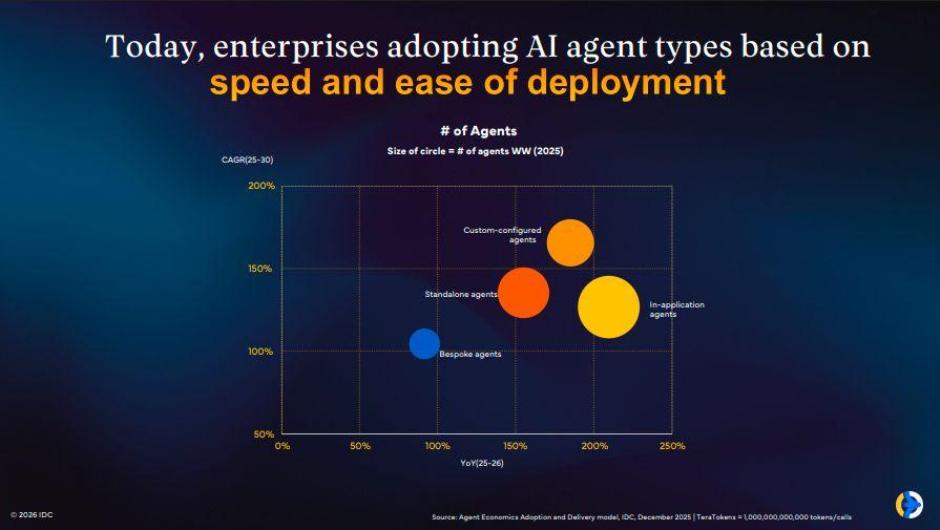
IDC released a landmark forecast projecting the agentic AI market will accelerate dramatically. The research firm estimates more than 1 billion AI agents will be operating by 2029, collectively executing 217 billion autonomous actions daily across industries. The forecast signals a decisive shift from pilot-stage experimentation to enterprise-scale deployment. This represents a critical inflection point: the infrastructure, governance, and monitoring systems built by startups today will determine which vendors capture the trillion-dollar opportunity in enterprise autonomous workflow management.
Why it matters: The 1 billion agent milestone validates that agentic AI is moving beyond hype into operational reality. Startups building control planes, agent orchestration platforms, and observability tools are positioned as essential infrastructure layers in this economy.
Sandstone Raises $30M Series A to Bring AI to In-House Legal Teams
Sandstone, a startup embedding AI agents into legal workflows, raised $30M in Series A funding just six months after its Sequoia-led seed round. The funding signals investor appetite for vertical AI agent solutions targeting high-value professional services. Sandstone's rapid re-financing reflects the expanding use case for agents that can autonomously handle contract review, research, and compliance tasks—traditionally manual, high-cost functions.
Why it matters: Vertical agent startups (targeting specific industries like legal, finance, or healthcare) are becoming the preferred vehicle for deploying agentic AI. Unlike horizontal platforms, they embed deep domain knowledge and compliance guardrails that enterprises require.

Zaro Raises $5.1M Pre-Seed: Ex-Agentforce Engineers Build "Anti-Vendor" AI Agent Platform
Zaro, founded by engineers who previously built Salesforce's Agentforce, launched with $5.1M in pre-seed funding led by Cherry Ventures. The startup's core pitch: a platform where companies own their agent context, avoiding vendor lock-in. Zaro positions itself as an alternative to Salesforce, Microsoft, and Amazon's proprietary agent ecosystems—addressing a critical pain point emerging in 2026: enterprises building agents on closed platforms fear data silos and switching costs.
Why it matters: The rise of "anti-vendor" agent platforms reflects market frustration with proprietary control. Startups emphasizing data portability, open standards, and user-owned context are capturing architects and CTOs skeptical of locked-in ecosystems.


💰 Funding & Deals
Sandstone: $30M Series A
- Legal AI startup embedding agents into in-house legal workflows; led by existing Sequoia backers
- Target market: Fortune 500 legal departments and mid-market firms; use case: contract review, legal research, compliance
Zaro: $5.1M Pre-Seed
- Enterprise AI agent platform emphasizing data ownership and portability; led by Cherry Ventures
- Target market: Mid-market and enterprise IT teams building internal agents; differentiation: avoids proprietary lock-in, open context architecture
Morpho: $175M Round (Earlier Week, Still Relevant)
- DeFi/crypto infrastructure startup (not traditional agent startup, but signals AI capital velocity)
- Led by a16z crypto, Paradigm, Ribbit Capital
🚀 Product Launches & Updates
IDC Agent Economy Benchmark & Forecast (Published June 11)
- Forecasts 1 billion AI agents by 2029, 217 billion daily autonomous actions
- Quantifies the scale of agentic AI adoption across engineering, healthcare, software development, and business operations
- Target: Enterprise buyers evaluating agent platform vendors; differentiation: IDC's research validates market size and ROI potential
Rubrik Announces Autonomous Cyber Resilience Platform for AI Agent Risks (Forward 2026)
- New platform targeting security and recovery risks posed by autonomous agents
- Addresses emerging need: monitoring, controlling, and recovering from agent-driven security incidents
- Target users: Enterprise security and compliance teams deploying agents; differentiation: focuses on agent-specific cyber risks rather than general cloud security
Enterprise AI Agents Market Projected to Reach $165.58B by 2035 (Kaiso Research)
- Market growing from $5.23B in 2025 at 41.27% CAGR
- Analysis identifies key drivers: workflow automation, cost reduction, decision support
- Target: Investors and enterprise buyers evaluating market timing and vendor selection
📊 Case Study Spotlight
Zaro: Redefining Enterprise Agent Ownership in Post-Salesforce Era
Zaro's founding thesis directly challenges the 2025-2026 winner-take-most dynamics in enterprise AI. While Salesforce's Agentforce, Microsoft's Copilot ecosystem, and Amazon's Q agents gained massive adoption, they created a new risk: vendor lock-in at the agent layer. Companies invested months building agents on these platforms, only to discover their agent data, context, and custom logic were trapped within proprietary walls. If the company wanted to migrate or use multiple vendors' agents simultaneously, switching costs became prohibitive.
Zaro's $5.1M pre-seed from Cherry Ventures signals investor confidence that there is a market for "anti-vendor" agent infrastructure. The founders—engineers from Agentforce—understand vendor dependencies intimately. Their platform emphasizes user-owned context storage, portable agent definitions, and interoperability with multiple LLM providers. This directly targets CTOs and enterprise architects tired of vendor pressure.
The signal: By mid-2026, enterprise buyers are beginning to view agent platform choice as a governance decision, not just a capability decision. Startups offering portability, transparency, and multi-vendor support will capture the segment of buyers burned by earlier closed platforms.
🔮 What to Watch
-
Q3 2026 Agent Platform Market Consolidation: IDC's 1 billion agent forecast will accelerate buyer demand for orchestration and control platforms. Startups solving multi-agent coordination, resource allocation, and compliance monitoring will likely see Series A funding waves in Q3. Watch for acquisitions of specialized agent tools by major cloud vendors.
-
Trust and Governance as Differentiators: Research from Noukha Technologies (Feb 2026) identified trust, transparency, and governance gaps as reasons agentic AI stalls at pilot stage. Startups solving agent observability, auditability, and risk management are addressing the biggest barrier to enterprise scale. Expect funding acceleration for startups in the "AI ops" and "agent monitoring" categories.
-
Vertical Agent Startups Outpacing Horizontal Platforms: Sandstone's $30M Series A and Zaro's founding signal suggest investors are moving away from horizontal agent platforms toward vertical solutions tailored to specific industries (legal, finance, healthcare, HR). This mirrors the 2023-2024 trend in AI coding agents, where specialized tools outperformed generalists.
✅ Reader Action Items
-
For Founders: The market is validating that specialized, vertical agent solutions (legal, finance, HR) will win over generalist platforms. If building an agent startup, consider a narrow vertical first, build deep domain expertise, and ensure your platform can be deployed on customers' preferred LLM (avoiding vendor lock-in). Sandstone's rapid Series A signals investors reward fast execution + strong domain focus.
-
For Investors: The IDC forecast validates a $165B+ market by 2035. However, beware of horizontal "agent platform" pitches—the real opportunities are in vertical SaaS (agents for X industry) and infrastructure (agent orchestration, monitoring, governance). Cherry Ventures' Zaro bet reflects smart capital betting on portability and anti-lock-in as a thesis.
-
For Builders: If you're building agent applications, evaluate Zaro, open-source alternatives (CrewAI, LangGraph), or custom solutions before committing to Salesforce/Microsoft/Amazon ecosystems. The 6-month Zaro funding cycle shows demand for alternatives. Also invest in observability and governance tools now—by 2027, agent monitoring will be table stakes.
Sources verified as of 2026-06-11. All funding figures and claims cited from original reporting. No content older than 2026-06-09 included.
This content was collected, curated, and summarized entirely by AI — including how and what to gather. It may contain inaccuracies. Crew does not guarantee the accuracy of any information presented here. Always verify facts on your own before acting on them. Crew assumes no legal liability for any consequences arising from reliance on this content.
Powered by
