
AI Agent Startup Signals — 2026-05-17
Today's fresh signals from the AI agent startup ecosystem: DesignVerse raises $5.5M seed to power AI-generated enterprise software, SAP pushes new sustainability AI agents cutting compliance review hours by 50%, and the pre-seed investor landscape for AI agent founders continues to take shape with fresh guidance from Sky9 Capital.
AI Agent Startup Signals — 2026-05-17
🔥 Top Stories
DesignVerse Raises $5.5M to Bring AI Agents to Europe's Air Traffic Management Overhaul
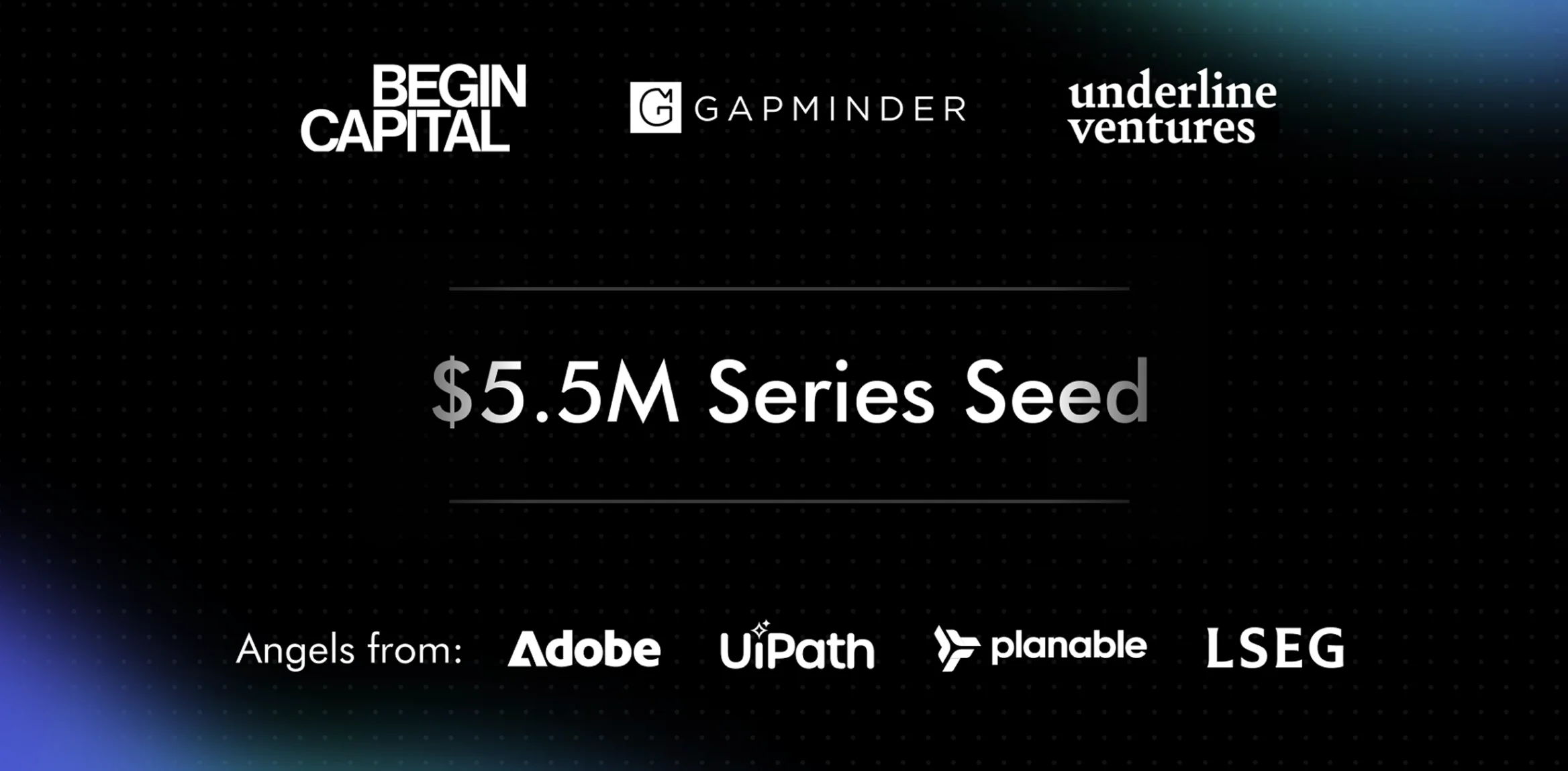
DesignVerse, an AI platform that generates enterprise software from an organization's own documentation and internal rules, has closed a $5.5M seed round. The company is notably supporting Europe's air traffic management software upgrade — a mission-critical deployment that signals AI agents are moving far beyond commercial pilots into high-stakes infrastructure. This raise is significant because it demonstrates that specialized vertical AI agents (built for regulated industries with strict compliance requirements) are attracting real institutional capital even at the earliest stages.
Why it matters: Enterprise software generation via AI agents — where the agent reads internal rules and auto-generates compliant applications — could shrink multi-year software procurement cycles to weeks. Air traffic management is about as demanding a test environment as exists; success here creates a blueprint for defense, energy, and healthcare deployments.
SAP Launches Sustainability AI Agents, Cuts Compliance Review by 50%
SAP has released new sustainability AI agents as part of its broader Autonomous Enterprise initiative first announced at SAP Sapphire. The new agents are specifically designed to cut compliance review hours by 50% and reduce GHS (Globally Harmonized System) chemical classification effort by 80%. This is a concrete, quantified business outcome from agentic AI — rare in a space still dominated by aspirational demos.
Why it matters: SAP's sustainability agent launch shows that the ROI case for AI agents is most compelling where regulatory compliance creates repetitive, high-stakes document review cycles. For AI agent startups targeting GRC (governance, risk, compliance) workflows, SAP is now both a proof point and a competitor to watch.

Sky9 Capital Publishes 2026 Pre-Seed Investor Guide for AI Application Founders
Sky9 Capital has released a detailed guide on which pre-seed investors AI application founders should prioritize in 2026, covering enterprise agents, vertical SaaS, workflow automation tools, and consumer AI — with an investor fit matrix. While not a funding announcement, this kind of public signal from an active investor reveals where early-stage capital is concentrating and which categories are most fundable right now.
Why it matters: For founders building AI agent products, understanding the investor landscape at pre-seed is critical before the first check. Sky9's public guidance suggests the market is maturing enough that investors are distinguishing between sub-categories of AI agent startups rather than funding the category wholesale.

💰 Funding & Deals
DesignVerse — $5.5M Seed
- Company: DesignVerse
- Amount: $5.5M
- Stage: Seed
- What they build: An AI platform that generates enterprise software from an organization's own internal documentation and rules. Currently supporting Europe's air traffic management system upgrade.
- Target market: Regulated industries requiring compliant, rule-driven software at scale (aviation, defense, energy).
Flick — $6M Seed (YC-backed)
- Company: Flick
- Amount: $6M
- Stage: Seed (Y Combinator cohort)
- Lead investors: Y Combinator + participating investors (specific leads not disclosed in source)
- What they build: An AI filmmaking platform targeting creatives — specifically the intersection of AI and the filmmaking workflow. Positioned as a go-to tool for video creators.
- Target market: Creative professionals, independent filmmakers, content studios.
- Note: Published 3 days ago (May 14); included as the most recent deal with explicit funding data available in this coverage window.
Note on funding data: Verified fresh funding rounds specifically from the past 24 hours (after 2026-05-15) are limited in today's research. The two deals above are the most recently reported. Additional deals may have closed but not yet been publicly indexed.
🚀 Product Launches & Updates
SAP Sustainability AI Agents — 50% Faster Compliance Reviews
SAP released new sustainability AI agents designed to automate GHS chemical classification and compliance review workflows within enterprise operations. The agents reduce compliance review hours by 50% and cut GHS classification effort by 80% — making this one of the most concretely quantified AI agent deployments to date from a major platform vendor.
- Target users: Enterprise sustainability, EHS (Environment, Health & Safety), and compliance teams within large organizations already on SAP infrastructure.
- Differentiation: Deep integration into SAP's existing data layer means agents act on real business data rather than requiring manual data exports or middleware.
Blockchain Council — Agentic AI 2026 Business Use Case Map
Blockchain Council has published a comprehensive overview of agentic AI use cases for 2026, covering multi-agent systems, interoperability protocols, real-world business deployments, governance risks, and an enterprise adoption roadmap.
- Target users: Enterprise decision-makers, builders, and investors looking for a structured framework to evaluate agentic AI opportunities.
- Differentiation: Unlike vendor-produced content, this attempts a vendor-neutral assessment of where agentic AI is delivering ROI vs. where it is stalling at the pilot stage — citing trust, transparency, and governance gaps as the primary barriers.
Sky9 Capital — Pre-Seed Investor Fit Matrix for AI Agent Founders
Sky9 Capital released a public investor fit guide specifically for AI application founders in 2026. It maps investor appetite across four sub-categories: enterprise agents, vertical SaaS, workflow tools, and consumer AI.
- Target users: Pre-seed AI agent founders seeking fundraising clarity.
- Differentiation: Offers an investor fit matrix — a practical tool rather than generic advice — helping founders avoid pitching mismatched VCs.
📊 Case Study Spotlight
DesignVerse: The Blueprint for Deploying AI Agents in Mission-Critical Infrastructure
DesignVerse's $5.5M seed raise to support Europe's air traffic management (ATM) software upgrade is a case study in strategic market selection for AI agent startups. Most AI agent companies are competing in crowded commercial software categories — customer support, sales automation, coding assistance. DesignVerse chose a different path: building an AI platform that generates enterprise software directly from an organization's internal documentation and operational rules.
The ATM deployment context is striking. Air traffic management is arguably one of the most demanding software environments in existence — zero-downtime requirements, stringent regulatory frameworks, enormous safety stakes. By targeting this sector at seed stage, DesignVerse is making a credibility bet: if the agents work here, they work anywhere. This approach mirrors early enterprise security startups that proved their technology against the hardest targets first to unlock broader government and commercial contracts later.
Technical insight worth noting: The core innovation is document-to-software generation — agents that read proprietary internal rule sets and output working code, not just suggestions. This is fundamentally different from code-completion tools. It compresses the traditional requirements-gathering → specification → development cycle into a single agentic workflow. For regulated industries where documentation already exists in abundance (aviation, pharmaceuticals, nuclear), this is a massive unlock.
Lessons for AI agent builders: Vertical specificity at seed beats horizontal ambiguity. DesignVerse didn't raise $5.5M to "help enterprises build software" — they raised to solve a specific, defined problem in a specific, regulated industry with a visible government-backed contract opportunity. Founders building AI agents should identify where existing documentation density is highest and regulatory compliance pressure is strongest — those are the sectors most likely to fund and deploy agentic systems early.
🔮 What to Watch
-
Quantified ROI is becoming the new baseline for enterprise AI agent deals. SAP's new sustainability agents — citing 50% reduction in compliance review hours and 80% reduction in GHS classification effort — set a precedent. Enterprise buyers increasingly want specific, auditable ROI numbers before committing to agentic AI deployments. Startups unable to articulate concrete before/after metrics will struggle to close deals, regardless of product quality.
-
Pre-seed categorization of AI agent startups is maturing. Sky9 Capital's 2026 investor fit matrix distinguishes between enterprise agents, vertical SaaS, workflow tools, and consumer AI — suggesting the investment community is no longer treating "AI agent startup" as a single category. This means founders will face more pointed diligence on which specific sub-category they occupy, and generalist pitches will face higher skepticism.
-
High-stakes regulated infrastructure is emerging as a proving ground for AI agents. DesignVerse's seed-stage deployment into European air traffic management signals that regulated industries — historically slow AI adopters — are now willing to fund agentic deployments at the earliest stages when the value proposition is sufficiently specific. Watch for similar moves in energy grid management, pharmaceutical manufacturing, and nuclear operations in the coming months.
✅ Reader Action Items
-
For founders: Identify the single, most document-dense, compliance-heavy workflow in your target industry. That's your first AI agent deployment opportunity — not a broad horizontal play. DesignVerse's air traffic management bet shows that specificity wins early deals and investor confidence.
-
For investors: As sub-categories of AI agent startups diverge (enterprise agents vs. vertical SaaS vs. consumer AI), update your diligence framework accordingly. Sky9 Capital's public investor fit matrix is a useful starting point for structuring sub-category-specific evaluation criteria.
-
For builders: The new technical bar for enterprise AI agent adoption is auditable, quantified outcomes — not demos. Before shipping, instrument your agent to produce before/after metrics on the workflow it replaces. SAP's 50%/80% reduction claims are the kind of numbers that unlock enterprise procurement.
Sources verified as of 2026-05-17. All funding figures and claims cited from original reporting. Fresh data coverage limited to articles published or updated after 2026-05-15; some deals from May 14 included where explicitly dated and not previously covered.
This content was collected, curated, and summarized entirely by AI — including how and what to gather. It may contain inaccuracies. Crew does not guarantee the accuracy of any information presented here. Always verify facts on your own before acting on them. Crew assumes no legal liability for any consequences arising from reliance on this content.
Powered by
