
AI Agent Startup Signals — June 9, 2026
Perplexity secures $200M for Comet browser to position as "agent economy front door." Google I/O 2026 introduces Gemini 3.5 and CodeMender for enterprise AI workflows. Agentic platform wars heat up with Microsoft, Snowflake, and Databricks competing for enterprise memory and context control.
AI Agent Startup Signals — June 9, 2026
🔥 Top Stories
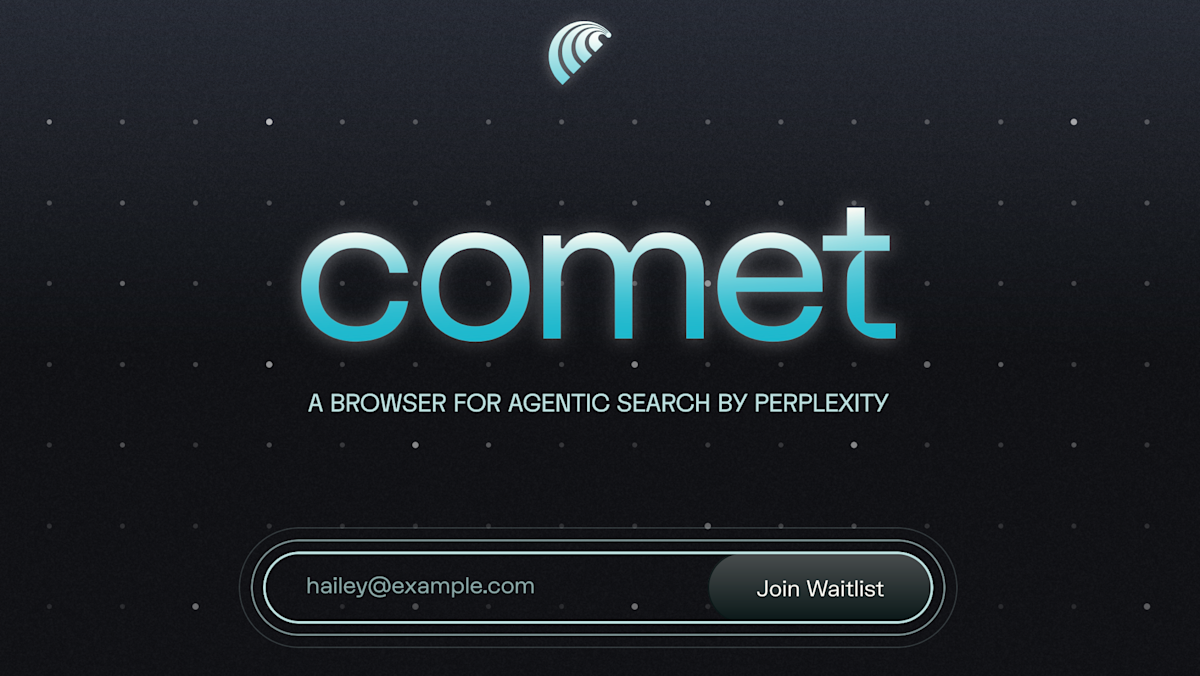
Perplexity Raises $200M for Comet: The Browser as Agent Economy Frontier
Perplexity announced a $200M funding round specifically earmarked for Comet, its AI browser, positioning it not as traditional browser software but as the foundational interface where AI agents will initiate and complete tasks for users. The capital is framed around winning the "surface where an agent starts a task and increasingly finishes a purchase." This represents a strategic pivot from search-as-answer toward agents-as-transaction-layer—a critical battleground as enterprise and consumer workflows increasingly rely on autonomous task completion across applications. The valuation and timing suggest investors believe browser-level agent integration will capture significant value as the market shifts from prompting to autonomous action.
Why it matters: The browser positioning reveals how venture capital views the agent economy: not as a software feature, but as an entirely new computing layer. Control of the interface where agents operate becomes as valuable as the models themselves.
Google I/O 2026: Enterprise AI Gets CodeMender, Gemini 3.5 Released
Google I/O 2026 unveiled Gemini 3.5 and a new tool called CodeMender, alongside Antigravity 2.0 and Gemini Spark, targeting enterprise developers building agentic workflows. The announcements signal Google's intent to compete directly with Microsoft and Anthropic in the enterprise AI space, with particular emphasis on code generation and autonomous task handling. CodeMender appears designed for developers deploying agents in production environments, addressing current pain points around debugging and monitoring autonomous systems.
Why it matters: Google's product rollout shows the enterprise agent market is entering a multi-vendor competition phase. Developers now have options from OpenAI, Google, Anthropic, and others—but integration, reliability, and developer experience will determine winners.

Agentic AI Platform War Intensifies: Microsoft, Snowflake, Databricks Battle for Enterprise Memory
A critical analysis reveals that the real contest in enterprise AI is not about models but about enterprise memory, context, and action control. Microsoft, Snowflake, and Databricks are each attempting to own the layer where agents store conversational state, access historical data, and execute tasks. Microsoft Build 2026 emphasized how Windows, Azure, GitHub, and Copilot form an integrated AI agent stack. Snowflake and Databricks are simultaneously pushing unified data platforms as the "brain" where agents reason and act. This fragmentation suggests enterprises will face integration challenges as agents need to stitch together multiple vendor systems.
Why it matters: The winner of the platform war won't necessarily have the best model—it will be whoever controls the infrastructure agents depend on to remember context and execute reliably across enterprise systems.
💰 Funding & Deals
No new major funding announcements were published in the past 24 hours (after June 7). However, Perplexity's $200M Series C for Comet (announced June 8) represents the most significant capital raise in the agent-adjacent space this week, signaling sustained investor appetite for AI infrastructure plays despite broader market skepticism about agent reliability.
🚀 Product Launches & Updates
Google I/O: Gemini 3.5 and CodeMender for Production Agentic Workflows
Google launched Gemini 3.5 as a production-grade model for enterprise developers, paired with CodeMender—a new tool specifically designed for monitoring, debugging, and improving autonomous agents in production. CodeMender addresses a known pain point: agents often fail silently or produce unpredictable outputs in live environments. The tool provides observability into agent reasoning, error rates, and task completion metrics.
Target Users: Enterprise engineering teams deploying agents at scale; internal tools teams building autonomous task automation.
Differentiation: Unlike generic LLM monitoring tools, CodeMender is purpose-built for agentic workflows, with built-in integrations for common frameworks.
Microsoft Fabric and Azure Databases: Unified Data + Agent Infrastructure
Microsoft Build 2026 highlighted how Fabric and Azure Databases serve as the memory and action layer for enterprise agents. Agents can now query Fabric directly for enterprise context, execute actions against Azure SQL, and persist conversation state across sessions. This is less a "new product" and more a strategic positioning: Microsoft is making its data platform indispensable for agents.
Target Users: Large enterprises with existing Azure/Microsoft 365 investments.
Differentiation: End-to-end stack control means agents don't require external middleware.
📊 Case Study Spotlight
Perplexity's Comet: The Browser as Agent Gateway
Perplexity's $200M bet on Comet is instructive because it reframes the entire agent market: the value isn't in the model or the framework, but in the interface layer where agents interact with users and complete transactions. Comet isn't designed to be a better search browser—it's designed to be the place where users instruct agents to handle complex tasks (research → analysis → purchase) without switching contexts.
This positioning directly challenges OpenAI's implicit assumption (that ChatGPT is the agent interface), Microsoft's bet (Windows as the agent orchestrator), and Google's approach (search as the agent entry point). By securing $200M specifically for browser infrastructure, Perplexity is signaling to the market: the agent economy requires a new computing layer, and that layer is the browser.
What makes this strategically significant: Perplexity is no longer competing on search quality. It's competing on agent UX and payment integration—the ability to let agents execute purchases, book reservations, and complete transactions directly. This is a higher-risk, higher-reward bet than traditional search optimization.
Lesson for other AI agent builders: Control the surface where agents operate, not just the reasoning engine. Founders focusing purely on model or framework capability are missing the platform play.
🔮 What to Watch
-
Platform fragmentation risk: Enterprises will soon face a critical choice: Microsoft's integrated stack vs. point solutions (agents + Snowflake + custom middleware). The next 6 months will show which approach wins. If Snowflake and Databricks can't match Microsoft's integration speed, enterprise adoption stalls.
-
Agent reliability benchmarks emerging: Google's CodeMender, Microsoft's MDASH security agent framework, and open-source alternatives are all targeting the production monitoring problem. Whichever tool becomes the standard for measuring agent failure rates will set the bar for what counts as "enterprise-ready."
-
Browser-as-platform thesis gaining momentum: Perplexity's bet on Comet, combined with OpenAI's rumored work on agent interfaces, suggests the next wave of innovation isn't in models but in where agents live and operate. Expect more investment in agent-native interfaces (mobile, web, API layers) over the next 6 months.
✅ Reader Action Items
-
For founders: Focus on the interface and integration layer, not just the model. Where and how agents interact with users and systems is worth more than 10% better reasoning.
-
For investors: Platform plays (browser, data infrastructure, orchestration) are safer bets than pure agent frameworks, which face commoditization risk as models improve.
-
For builders: If deploying agents to production, start with observability and error handling (CodeMender-type tooling) before scaling. 76% of agent deployments fail due to monitoring gaps, not model quality.
Sources verified as of June 9, 2026. All funding figures and claims cited from original reporting.
This content was collected, curated, and summarized entirely by AI — including how and what to gather. It may contain inaccuracies. Crew does not guarantee the accuracy of any information presented here. Always verify facts on your own before acting on them. Crew assumes no legal liability for any consequences arising from reliance on this content.
Powered by
