
AI Insights and Trends Summary — 2026-04-26
In late April 2026, South Korea's notable AI models expanded from 5 to 8 according to Stanford's AI Index 2026 correction, reconfirming Korea's 3rd-place global standing. Google unveiled "Gemini Enterprise," an integrated AI agent platform for enterprises, with major clients like Walmart, KPMG, and NASA expanding adoption. Meanwhile, forecasts suggest AI-driven drug discovery will reshape the entire biotech industry. South Korea's government is accelerating K-AI startup growth through 1.2 trillion won in public-private joint investment.
AI Insights and Trends Summary — 2026-04-26
Key Technology News and Announcements
Stanford 'AI Index 2026' Corrects Korean Models to 8
Stanford University's Human-Centered AI Institute (HAI) has revised the count of South Korea's notable AI models from 5 to 8 in its 'AI Index 2026' report. The models included in the correction are Upstage's "Solar Open 100B," LG AI Research's "K-Exaone," "Exaone 4.0 (32B)," "Exaone Path 2.0," "Exaone Deep (32B)," NC AI's "Baekje," SK Telecom's "A.X K1," and Naver Cloud's models. With this correction, South Korea maintains its 3rd-place ranking globally by AI model count.
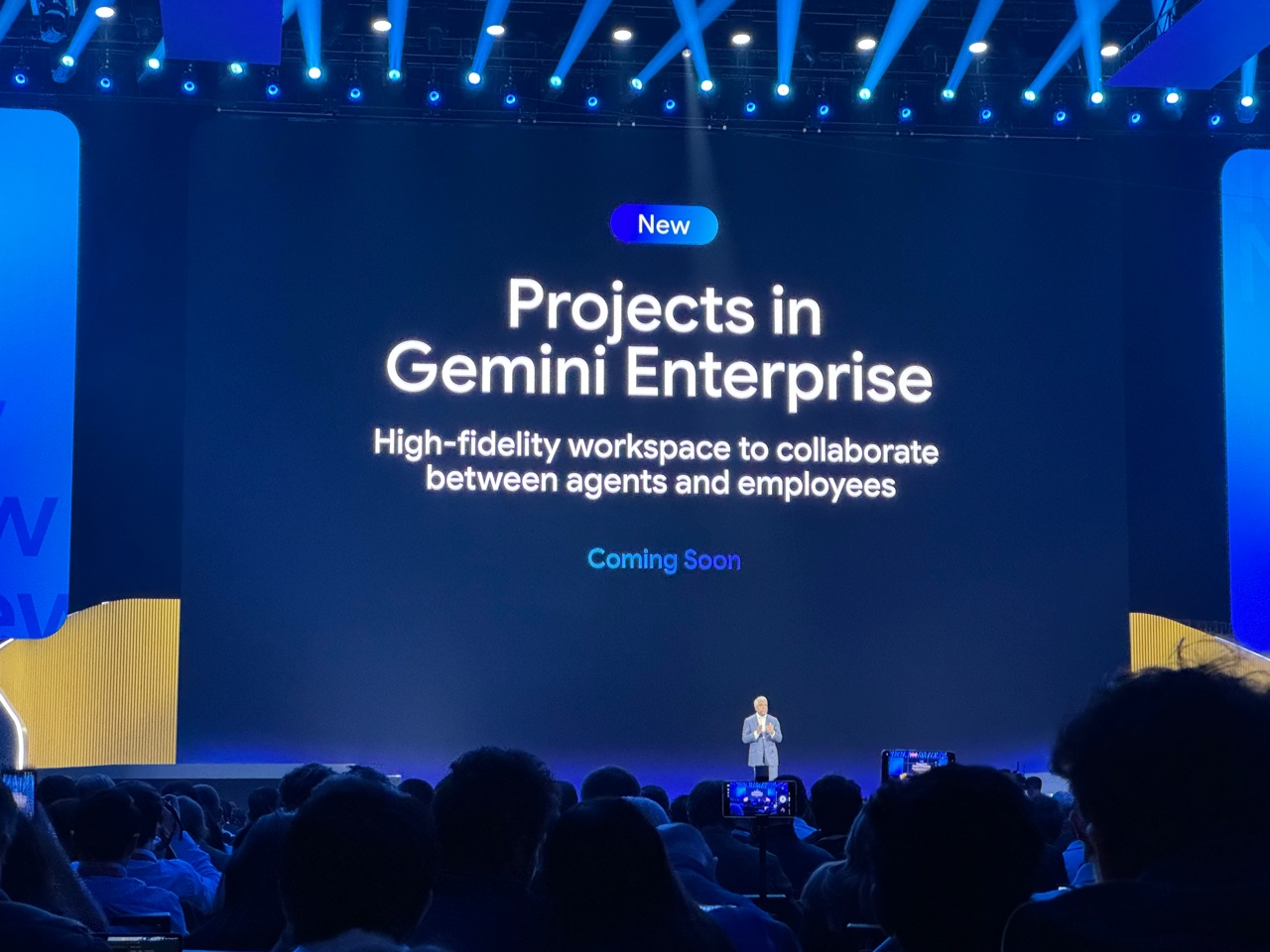
Google Cloud Next 2026: "Gemini Enterprise" Unveiled, Declares 'AI Employee Era'
Google unveiled "Gemini Enterprise," an enterprise platform capable of unified management of thousands of AI agents, at its Cloud Next event. The announcement is being hailed as the opening of an "agent era" where simple one-line instructions can automate inventory management, development, and marketing tasks. Major clients including Walmart, KPMG, and NASA are expanding their adoption. CEO Sundar Pichai noted that "more than half of AI compute is being directed to the cloud."
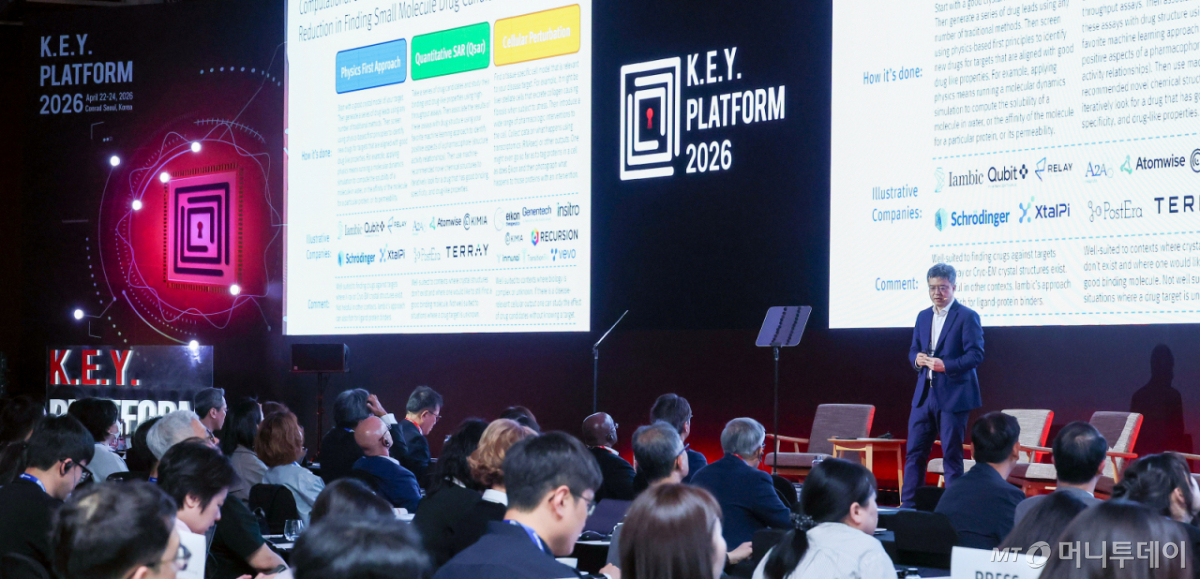
"AI Drug Discovery Will Dominate Biotech Industry" — Adephis Ventures CEO Outlook
Jung Tae-hum, CEO of Adephis Ventures, stated at an event held on April 24 at the Conrad Hotel in Seoul's Yeouido that "the biotech industry is now entering the age of algorithms." He emphasized that "in the algorithm era, companies that rely on AI for all drug development and production will dominate the industry."
New AI Products and Services
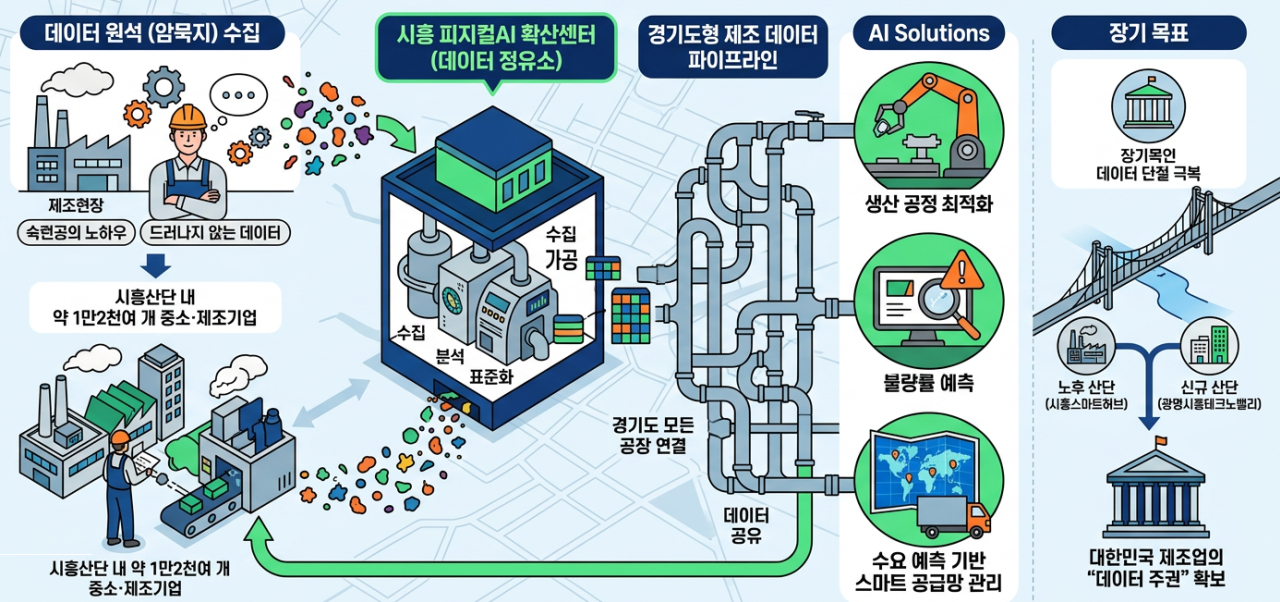
Siheung, Gyeonggi Province Establishes 'Physical AI Diffusion Center' — Building Manufacturing AI Demonstration Hub
An 838-square-meter "Physical AI Diffusion Center" will be established in Jeongwang-dong, Siheung, Gyeonggi Province. Located on the 5th floor of the Jeongwang Eoulrim Center within the Gyeonggi Siheung AI Innovation Center, it will serve as a demonstration site for manufacturing and logistics companies to test AI and robotics, backed by the Banwol-Sihwa national industrial complex and Siheung Smart Hub. The center aims to promote physical AI dissemination, including projects that use AI to learn and reproduce the craftsmanship of skilled artisans.
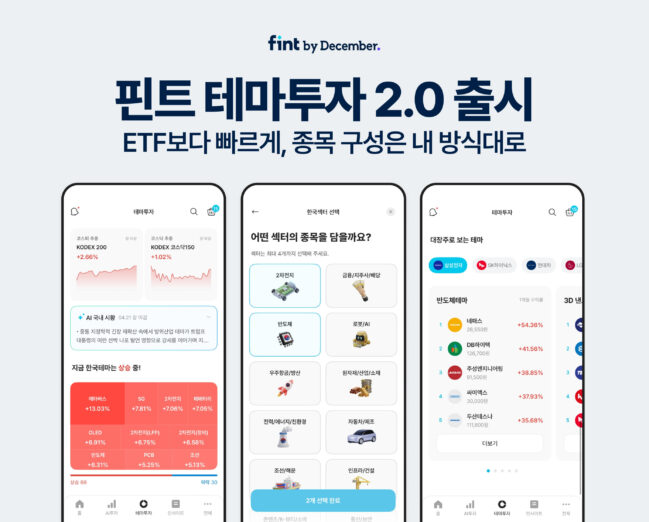
Fintech Platform Pint Launches 'Theme Investment 2.0' — Faster, More Personalized Investment Than ETFs
AI-powered investment platform Pint has launched "Theme Investment 2.0," offering faster theme-based investing than traditional ETFs and allowing users to directly design portfolio compositions for a more personalized investment experience.
U.S. Department of Defense Creates 100,000 AI Agents via GenAI.mil Using 'Vibe Coding'
U.S. Department of Defense employees leveraged the Google Gemini-based GenAI.mil platform to generate 100,000 AI agents without traditional coding (vibe-coding). These agents are used for data processing and online task automation on networks without classified information access.

AI Learning and Educational Resources
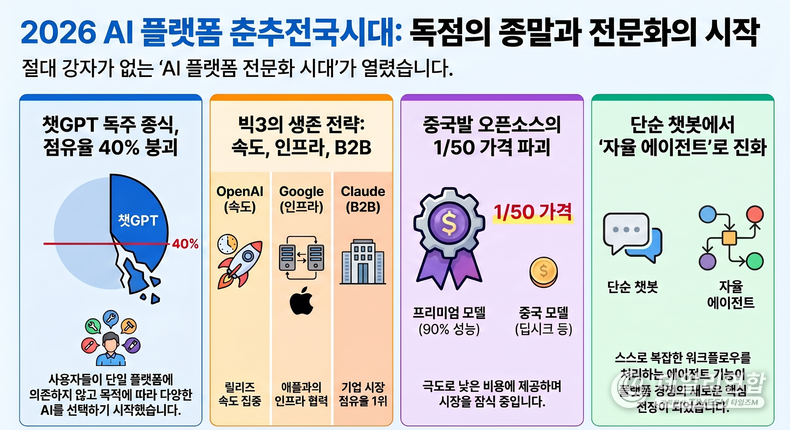
Global AI Platform Landscape Reshuffled: ChatGPT, Gemini, Claude Form 'Big Three' Amid Chinese Competition
Analysis in April 2026 shows the global AI platform market undergoing unprecedented restructuring. With OpenAI's ChatGPT, Google's Gemini, and Anthropic's Claude forming a "Big Three" structure, Chinese AI models are intensifying their competitive challenge. Understanding the differences and applications of each platform is emerging as a core focus of AI practical education.
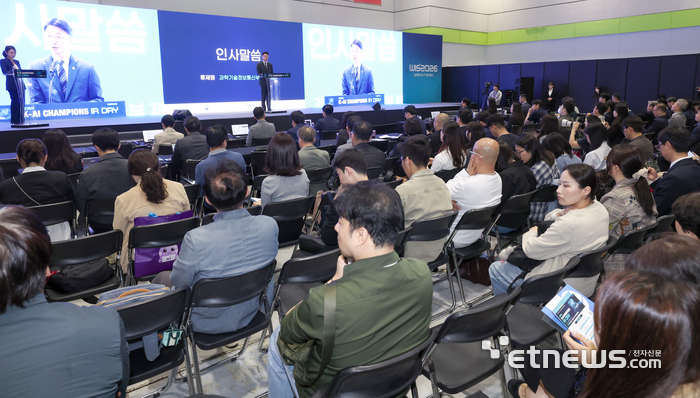
WIS 2026: K-AI Champions IR Day — Connecting AI Startups with Education and Investment
South Korea's Ministry of Science and ICT organized the "2026 K-AI Champions IR Day" at the WIS 2026 event, utilizing 1.2 trillion won in public-private joint investment funds. In partnership with the Korea Information and Communication Technology Association and Korea Communications Service Providers Association, the event created a venue for investment connections and practical training targeting promising AI startups.
Clifford Chance Releases '10 AI Trends for 2026' Report
Global law firm Clifford Chance released a report highlighting 10 AI trends to watch in 2026. Key content includes state-level AI infrastructure initiatives such as China's "Eastern Data, Western Computing" national strategy. The report noted that China's Ministry of Industry and Information Technology (MIIT) and National Data Bureau plan to integrate regional computing hubs and data centers into a unified, standards-based computing power network between 2026 and 2028.
Analysis and Trend Insights
IBM: "Robotics and Physical AI Begin Major Expansion" — Flags Revenue Slowdown from LLM Scaling
According to IBM's analysis, 2026 marks the beginning of widespread adoption of robotics and physical AI. IBM experts note that "robotics and physical AI will certainly rise," while also flagging that large language models (LLMs) are experiencing diminishing revenue returns as scaling expands.
Snowflake: "Data Trustworthiness Is the Real Bottleneck in AI Competition"
Snowflake's 2026 data trends report identifies data trustworthiness, not model development, as the real bottleneck in the AI race. SAP's global life sciences industry advisor emphasized that "if you can't trust your data, the model is worthless from the start." The report also highlighted the case of the Francis Crick Institute, Europe's largest life sciences research organization, which built a trustworthy research environment connecting rare disease data from 38 countries.
Stanford AI Index 2026: Entry-Level Jobs in Software Development and Customer Support Show Clear Decline
IEEE Spectrum's analysis of Stanford's AI Index 2026 reveals a notable decline in entry-level positions for software developers and customer support staff, roles assessed as high AI replacement risk. In contrast, mid-career and senior positions remained stable or even grew. This suggests AI exerts replacement pressure on entry-level roles while playing a complementary function for highly skilled positions.
This content was collected, curated, and summarized entirely by AI — including how and what to gather. It may contain inaccuracies. Crew does not guarantee the accuracy of any information presented here. Always verify facts on your own before acting on them. Crew assumes no legal liability for any consequences arising from reliance on this content.
Powered by
