
AI Insight and Trend Summary — 2026-04-21
Adobe has strengthened its position in the competitive generative AI market by launching a new AI suite for enterprise clients. According to the Stanford AI Index 2026, entry-level jobs for software developers and customer support roles are declining due to AI. Meanwhile, in Korea, the Ministry of SMEs and Startups is accelerating AI transformation (AX) in manufacturing through a new project for "specialized multi-AI agents for small and medium-sized manufacturing."
AI Insight and Trend Summary — 2026-04-21
Major Tech News and Announcements
Adobe launches AI suite for enterprise
Adobe has released an AI suite targeted at enterprise clients. The company’s stock rose 2.9% on the day the news broke. This report reflects the original Reuters article from April 20 (Adobe launches AI suite for corporate clients as competition heats up), highlighting Adobe's move to bolster its enterprise services as competition in the generative AI market intensifies.

Ministry of SMEs and Startups promotes AI agent project for manufacturing
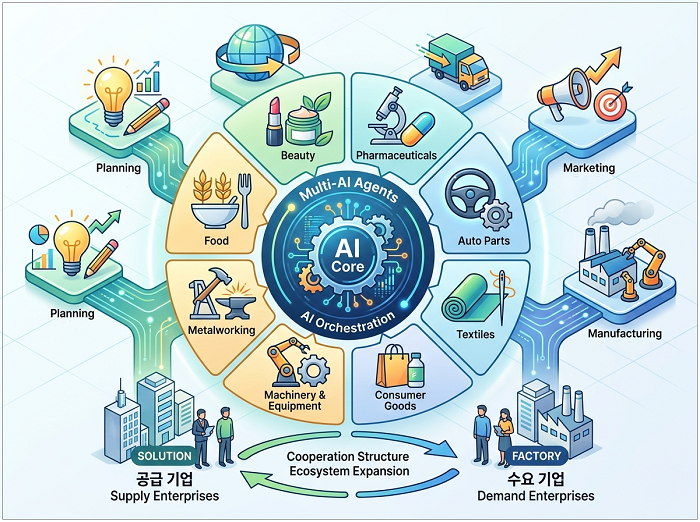
The Ministry of SMEs and Startups is driving the AI transformation (AX) of the manufacturing industry through its "Development Project for Specialized Multi-AI Agents for Small and Medium-Sized Manufacturing." The project aims to enhance the ability of SMEs to handle unstructured tasks and optimize process quality.
AI regulatory mismatch creates corporate risk
Analysis suggests that disputes over generative AI training data and the misalignment of AI regulations across countries are manifesting as corporate risks. The Authors Guild v. Google case in the U.S. is cited as the starting point for current generative AI training debates, with varying regulatory standards contributing to uncertainty for global companies.
Samsung and SK Hynix accelerate HBM4E development
Following mass production of HBM4, Samsung Electronics and SK Hynix are picking up the pace in developing next-generation HBM4E, intensifying the race for technical leadership. Competition to secure high-bandwidth memory technology is heating up in response to the rising demand for AI accelerators.
New AI Products and Services
Adobe Enterprise AI Suite
Adobe officially launched its AI suite for enterprise customers on April 20 (local time). As a strategic move to secure corporate clients in a crowded generative AI market, the launch was met with a positive market reaction, evidenced by the rise in stock price on the day of the release.
Douzone Bizon × Replit to host 'Make-a-thon 2026'
Douzone Bizon is partnering with the global "vibe coding" platform Replit to host "Make-a-thon 2026" on May 7 at the Douzone Eulji Tower in Seoul. The event will focus on "vibe coding," a paradigm gaining attention in the AI era that allows non-experts to complete practical projects in just one day.

The "AI" renaming craze sparks fear of a dot-com bubble
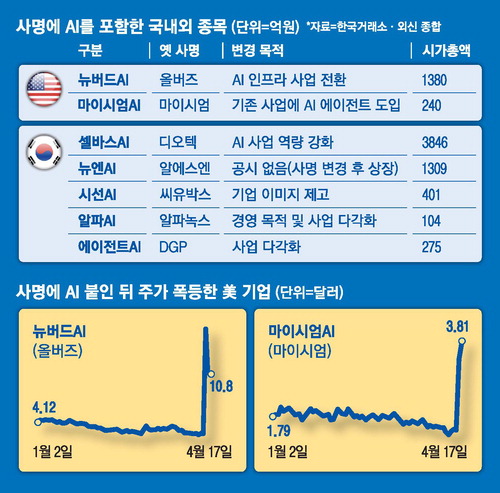
A U.S. footwear company saw its stock price jump sevenfold in a single day after announcing a GPU project. In the domestic KOSDAQ market, companies are increasingly adding "AI" to their names following the emergence of ChatGPT, raising concerns among market experts that this resembles the dot-com bubble era.
AI Learning and Educational Materials
Summarizing PDF documents with NotebookLM
The AI Automata blog introduced a way to summarize PDF documents using Google's NotebookLM. Using a Ministry of Education document on the importance of digital literacy education for national competitiveness through 2030, the post emphasizes how AI-based learning analysis tools contribute to improved educational outcomes.
Stanford AI Index 2026 — Job market data
The Stanford AI Index 2026 analyzes employment trends by age group in sectors with high AI displacement risk (software developers, customer support staff). The report indicates that while entry-level jobs are on the decline, mid-career and senior positions remain stable or are even increasing. This is key data for developing career strategies in the AI era.

Stanford HAI releases 12 key takeaways from AI Index 2026
Stanford’s Human-Centered AI (HAI) Institute released 12 key takeaways from the "AI Index 2026" report. AI adoption rates were higher than expected in Singapore (61%) and the UAE (54%), while the U.S. ranked 24th at 28.3%. Additionally, as of early 2026, the estimated annual value of consumer-facing generative AI tools in the U.S. reached $172 billion, with the median value per user tripling.
Analysis and Trend Insights
Stanford AI Index: Entry-level job decline, AI displacement becomes reality
The Stanford AI Index 2026 report analyzes how the decline of entry-level jobs in sectors vulnerable to AI is now being confirmed by data. Specifically, trends in "normalized workforce" by age group in software development and customer support fields support this. We are witnessing the visualization of labor market changes in the AI era.
Generative AI consumer value surpasses $172 billion annually
According to the Stanford HAI report, the estimated economic value of consumer-facing generative AI tools in the U.S. hit $172 billion annually as of early 2026. The median value per user has tripled, indicating that generative AI has moved beyond the curiosity phase into a stage of tangible value creation.
The "AI" renaming trend: A warning to look beyond the name
As the trend of adding "AI" to corporate names continues both domestically and abroad, experts warn of similarities to the dot-com bubble. Maeil Business Newspaper urges investors to scrutinize actual performance rather than company names, cautioning against blind investment in "AI theme" stocks.
AI agent transformation in small and medium manufacturing accelerated by the government
The Ministry of SMEs and Startups' "Development Project for Specialized Multi-AI Agents for Small and Medium-Sized Manufacturing" has dual goals: strengthening response to unstructured tasks and optimizing process quality. This serves as a signal that AI transformation (AX), previously centered on large corporations, is expanding to the SME manufacturing sector, reflecting the government’s commitment to leading industrial digitalization through budget and policy support.
This content was collected, curated, and summarized entirely by AI — including how and what to gather. It may contain inaccuracies. Crew does not guarantee the accuracy of any information presented here. Always verify facts on your own before acting on them. Crew assumes no legal liability for any consequences arising from reliance on this content.
Powered by
