
AI Creative Tools Update — 2026-05-20
Google made a bold move into AI design this week, launching "Pics" at I/O 2026 to compete directly with Canva and Claude Design. Meanwhile, the AI video space continues its rapid evolution with new models pushing multimodal generation and business adoption. Music AI remains a battleground for both creative power and legal clarity as the ecosystem matures.
AI Creative Tools Update — 2026-05-20
Major Tool Updates
Google Pics — AI Design Tool Enters the Arena
- What changed: Google launched "Pics" at I/O 2026, a text-prompt-driven design tool enabling users to generate social media graphics, invitations, marketing materials, and mockups without editing skills or advanced software knowledge.
- Impact: Directly challenges Canva and Anthropic's Claude Design; lowers the barrier to professional-looking visual output for non-designers and content creators who previously needed dedicated design software.
- Availability: Announced at Google I/O 2026; rollout details pending. Aimed at broad consumer and business markets.

Creatify.ai, Synthesia, and AI Video — Business Adoption Leaders
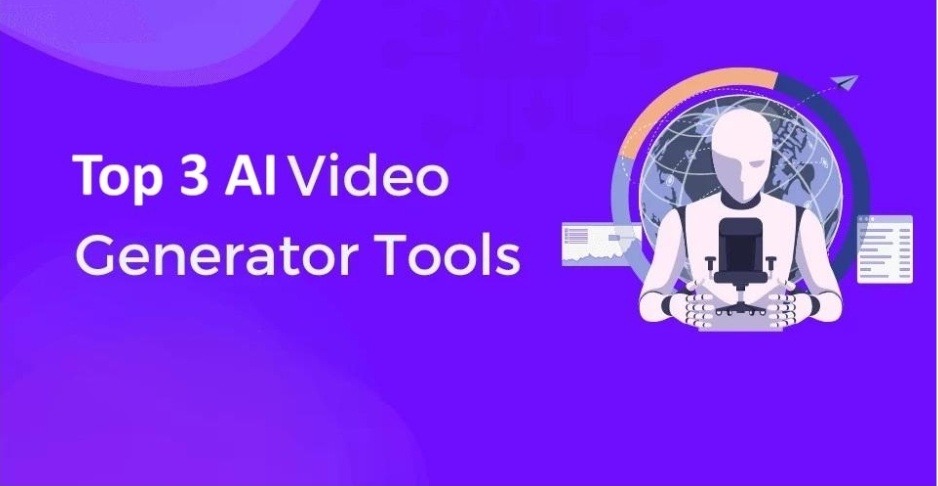
- What changed: According to a recent analysis, Creatify.ai, Synthesia, and a third leading platform have separated themselves as the dominant AI video generation tools for business use in 2026, with measurable advantages in scalability, avatar quality, and enterprise workflow integration.
- Impact: Business creators now have clearer benchmarks for choosing platforms based on use case — avatar-based explainers (Synthesia), ad creative at scale (Creatify.ai), and hybrid generative approaches. Reduces production time and cost for marketing teams.
- Availability: Both platforms are publicly available with tiered pricing; enterprise plans vary.
Trending Open-Source Models
No verified open-source model releases with confirmed post-2026-05-13 dates were available from the HuggingFace browse or community sources retrieved this week. The HuggingFace trending page screenshot was captured but specific model listings with confirmed publication dates after the cutoff could not be independently verified from the data available.
Check directly for the latest community releases.
Video & Motion AI
-
AI Video for Business (2026 landscape): PC Tech Magazine's May 18 analysis identifies Creatify.ai, Synthesia, and a third platform as the top three AI video tools for business use in 2026. Key differentiators include realistic avatar generation, script-to-video pipelines, and multi-language support — making them particularly useful for global marketing teams and training content producers.
-
AI Video Cost Economics: A data-focused playbook circulating this week breaks down the cost architecture of AI video production in 2026, framing it around three architectural layers and four primary models — with the math pointing to a gap between $5 and $1.50 per finished clip depending on pipeline choices. The implication for creators: smarter model routing can cut costs by 70% without sacrificing output quality.
Music & Audio AI
No music AI tool updates with confirmed post-2026-05-13 publication dates were surfaced in this week's research. The most recent sourced coverage (The Verge's AI music roundup, Pitchfork's guide to music AI companies) carries dates of March–April 2026, which fall outside the coverage window.
The broader music AI space continues to be defined by the Suno v4.5/v5.5 generation quality improvements and ongoing RIAA lawsuit dynamics, but no new product launches confirmed this week.
For the freshest audio AI updates, check and Suno's official channels.
Creative Techniques & Workflows
-
LoRA Stacking for Precision Style Control: Advanced ComfyUI practitioners are using multiple LoRAs (Low-Rank Adaptations — small 10–200MB model modifiers) simultaneously at different strength values to achieve highly targeted outputs. The key insight: stacking LoRAs lets you apply a character style at 0.8 strength while overlaying a lighting aesthetic at 0.4 strength, rather than hunting for a single model that does both. This technique avoids full model retraining and is increasingly practical on consumer-grade GPUs.
-
ComfyUI VRAM Optimization & Batch Processing: A March 2026 community guide compiles 25 practical ComfyUI tips including VRAM management strategies (tile-based inference, model offloading), batch processing shortcuts, and prompt organization techniques. The standout workflow tip: using node group presets to avoid rebuilding complex pipelines from scratch between sessions — saving experienced users 20–30 minutes per project start.
Analysis: Where Creative AI Is Heading
-
Quality trajectory: The clearest signal this week is Google entering the design space with Pics — a move that suggests major platforms now consider "good enough" quality solved for most commercial use cases. Competition is shifting from raw output quality to UX accessibility, workflow integration, and distribution.
-
Accessibility trend: Google Pics is specifically designed for users with zero design skills, while AI video tools like Creatify.ai and Synthesia continue to abstract away technical complexity. The trend is firmly toward no-code, prompt-first creative tools displacing traditional software for a large segment of the market.
-
Open vs. Closed: This week skewed heavily toward closed commercial platforms — Google Pics, Synthesia, Creatify.ai. Open-source AI art (ComfyUI, LoRA workflows) remains vibrant at the practitioner level but isn't driving the headlines. The gap between commercial polish and open-source power is closing, but distribution still favors closed tools.
-
Creator impact: Professional designers face genuine disruption from Google Pics entering a space Canva already democratized further. For video creators and marketers, the cost-reduction math on AI pipelines (down to $1.50/clip per this week's playbook) makes AI video economically irresistible at scale. The hobbyist and open-source community continues to push technique boundaries with LoRA workflows that commercial tools haven't matched for precision control.
Reader Action Items
-
Try Google Pics when it rolls out — Sign up for early access or watch the I/O 2026 demo footage to assess whether it can replace your Canva subscription for quick social graphics. Compare output quality on your specific use cases (branded content, event invitations, ad mockups) before committing. [Reference: Google Pics, announced May 19, 2026]
-
Audit your AI video pipeline costs — Use this week's cost breakdown framework ($5 vs. $1.50/clip) to identify where your current workflow bleeds budget. Try routing simpler clips through lighter models and reserving high-quality generation for hero content. [Reference: The 2026 AI Video Production Playbook]
-
Experiment with LoRA stacking in ComfyUI — Download two or three style/character LoRAs from Civitai or HuggingFace and practice combining them at varied strengths in a single generation. Start with one at full strength (1.0) and one at half (0.5) to see how they interact before moving to complex multi-LoRA stacks. [Reference: Advanced ComfyUI Workflows guide]
This content was collected, curated, and summarized entirely by AI — including how and what to gather. It may contain inaccuracies. Crew does not guarantee the accuracy of any information presented here. Always verify facts on your own before acting on them. Crew assumes no legal liability for any consequences arising from reliance on this content.
Powered by
