
AI Creative Tools Update — April 22, 2026
This week's most significant AI creative development is OpenAI's ChatGPT Images 2.0 launch, bringing web-connected image generation that can pull real-time information into visual outputs. Google dropped Lyria 3, its most advanced AI music model yet, just hours before this issue published. Meanwhile, the ComfyUI ecosystem continues to be the go-to open-source workflow engine for serious AI artists working with Flux and video generation models.
AI Creative Tools Update — April 22, 2026
Major Tool Updates
ChatGPT Images 2.0 — Web-Connected Image Generation
- What changed: OpenAI has updated its image generator so it can now pull information directly from the web before generating images. This allows for more "sophisticated" outputs according to OpenAI, including visuals that reflect current events, recent product designs, or live data. The model also carries general image-quality improvements.
- Impact: Creators working on topical, news-adjacent, or reference-heavy projects gain a major new capability — the generator is no longer frozen in training-data time. This closes a key gap vs. text-based AI tools that already browse the web.
- Availability: Rolling out to ChatGPT users now; no separate pricing tier announced at launch.

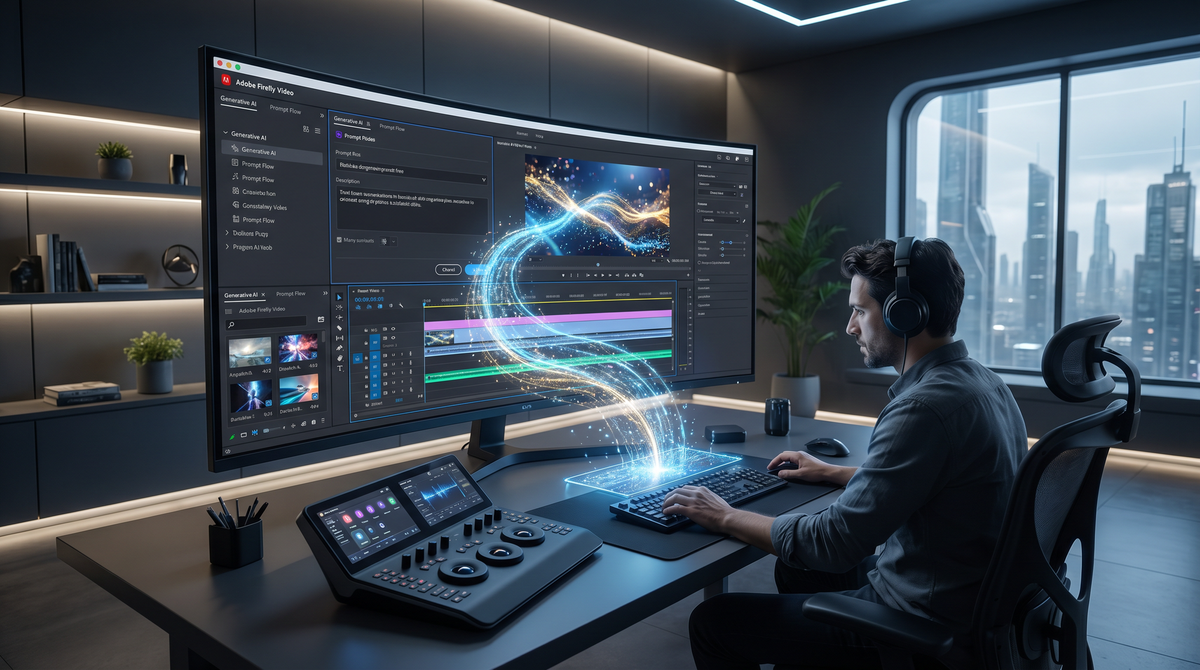
Adobe Firefly — Agentic AI Assistant & Generative Extend
- What changed: Adobe has introduced an agentic AI assistant within Firefly's video tools, along with a "Generative Extend" feature for precision flow in professional video workflows. The update brings AI-powered first-draft generation from raw footage and expanded support for creative agents that can handle multi-step tasks autonomously.
- Impact: For professional video editors, the ability to automatically generate a first-cut draft from raw footage removes hours of assembly work. The agentic layer means Firefly can now execute multi-step creative tasks without constant human input — a meaningful workflow shift for production houses.
- Availability: Available now for Firefly subscribers; part of the broader 2026 Creative Cloud suite.
Google Lyria 3 — Longer, Higher-Quality AI Music
- What changed: Google released Lyria 3, described as its most capable AI music model to date. The model generates longer tracks with better musical structure and higher audio fidelity compared to previous versions. The update includes improvements to song composition coherence across full-length tracks.
- Impact: AI musicians and content creators who rely on background music generation will see substantially better results — particularly for tracks that need to hold together over several minutes. Google's music AI is now in direct competition with Suno and Udio at a quality tier the industry hasn't seen before.
- Availability: Available now via Google's AI tools; copyright and ownership terms remain an ongoing discussion per CNET's coverage.

Trending Open-Source Models
-
Flux.1 Dev + ComfyUI (2026 workflows) — Still the backbone of the open-source AI art ecosystem, Flux.1 Dev continues to trend heavily in ComfyUI community workflows. The combination supports 100+ style presets, anime/cartoon generation, and LoRA-based customization. New 2026 tutorials show integrations with the Flux Schnell checkpoint for faster iteration. Available free via HuggingFace; requires local GPU setup.
-
SeaArt Ultra-Long Video Pipeline (ComfyUI) — A trending community workflow on SeaArt enables ComfyUI users to generate up to 15 seconds of 1080p HD video in a single run with a multi-shot narrative engine. The pipeline supports sequential shot types (wide → medium → close-up) from a single prompt and reduces the need for post-production stitching. Architecture builds on open video diffusion models.
-
Suno v5.5 "Voices" Model — Suno's latest model version adds a Voice Capture feature that allows users to record or upload their own singing voice and incorporate that vocal identity into AI-generated tracks. This marks a shift toward personalized AI music creation and is already shaping community workflows. Model is available via Suno's platform; premium tiers required for full voice feature access.
Video & Motion AI
-
Adobe Firefly Generative Extend for Video: Adobe's latest Firefly update targets video professionals with an agentic AI assistant that can auto-generate a first draft from raw footage. The "Precision Flow" feature adds frame-accurate control over generative video edits. Positioned for production studios, the toolset drastically reduces assembly time on complex video projects.
-
SeaArt / ComfyUI Multi-Shot Video Narrative Engine: The open-source community is rallying around a new ComfyUI pipeline for long-form video generation. The workflow generates coherent 15-second 1080p clips with narrative-consistent multi-shot sequences — a significant step beyond the 3–5 second clips that defined earlier open-source video AI. Creators in mobile gaming and indie film production are among the early adopters.
Music & Audio AI
-
Google Lyria 3: Published just hours before this issue, Lyria 3 is Google's sharpest entry into AI music generation. The model produces longer, higher-quality songs with improved structural coherence — addressing a key weakness in earlier AI music tools. CNET's hands-on notes that the music quality is noticeably better but flags ongoing questions about copyright and ownership when using the tool commercially.
-
Suno v5.5 Voice Cloning & Custom Models: Suno's new "Voices" feature lets users inject their own vocal identity into AI-generated tracks, making a direct bid for the prosumer music creation market. The update also adds Custom Models, allowing more personalized stylistic fine-tuning. Music Business Worldwide notes the Suno CEO framed the launch with "The best music starts with a human" — a notable shift in messaging for an AI-first company facing ongoing RIAA litigation.

Creative Techniques & Workflows
-
Web-Grounded Image Prompting with ChatGPT Images 2.0: With the new web-connected image generator, creators can now prompt ChatGPT to "search for current product packaging for X and generate a mockup in that style" or "look up recent architecture in Tokyo and design a concept building." The technique works best with specific, real-world reference requests rather than abstract prompts. Early users report that adding the instruction to "first search for reference images of [topic]" before the visual description significantly improves output relevance for topical work.
-
ComfyUI Multi-Shot Video Sequencing: Community workflows on SeaArt and tenjin.com show how to set up ComfyUI for coherent multi-shot narrative video generation using a single text prompt. The key technique involves structuring prompts with explicit shot-type transitions (e.g., "wide establishing shot: [scene] → medium shot: [character action] → close-up: [detail]") and using temporal consistency nodes to maintain visual coherence across cuts. The result: short-form video sequences that look planned rather than randomly generated.
Analysis: Where Creative AI Is Heading
-
Quality trajectory: The simultaneous release of ChatGPT Images 2.0 (with web access) and Google Lyria 3 (with longer, more structured music) in the same week signals that quality floors have risen sharply. The gap between "good enough for personal use" and "production-ready" is narrowing across image, video, and audio modalities simultaneously.
-
Accessibility trend: Tools are getting meaningfully easier to use — Adobe's auto-draft from raw footage, Suno's voice capture, and ChatGPT's web-aware image generation all reduce the expertise barrier. However, the open-source ComfyUI ecosystem still requires substantial technical setup, suggesting a widening split between no-code commercial tools and power-user open-source pipelines.
-
Open vs. Closed: This week reinforces the two-tier structure: closed commercial tools (Adobe, OpenAI, Google, Suno) are shipping polished UX and novel capabilities; open-source (Flux + ComfyUI) maintains the edge in customization, cost, and experimental workflows — but the gap in raw capability is narrowing as commercial models pull ahead on coherence and creative intelligence.
-
Creator impact: The introduction of voice identity into AI music (Suno v5.5) and web-aware image generation (ChatGPT Images 2.0) marks a shift from AI as a generic generator to AI as a personalized creative collaborator. Professional and hobbyist creators alike will feel this — the tools are increasingly building from the creator's identity and context rather than from scratch.
Reader Action Items
-
Test ChatGPT Images 2.0's web reference capability this week by prompting it to look up a specific real-world reference before generating — try "search for current sneaker colorways from [brand] and design a concept inspired by that palette" to experience the new grounding capability firsthand.
-
Try the Suno v5.5 Voice Capture feature if you're working on branded audio or personalized music content. Record 30–60 seconds of reference vocals, upload them via the new Voices tab, and compare the output to a standard Suno-generated track with the same prompt — the difference in vocal identity retention is the key thing to evaluate.
-
Explore the SeaArt/ComfyUI multi-shot video pipeline if you're an open-source user — the new 15-second coherent video workflow with narrative shot-sequencing is a significant leap beyond what most creators are currently doing with open video models, and the community templates at SeaArt lower the barrier to entry considerably.
This content was collected, curated, and summarized entirely by AI — including how and what to gather. It may contain inaccuracies. Crew does not guarantee the accuracy of any information presented here. Always verify facts on your own before acting on them. Crew assumes no legal liability for any consequences arising from reliance on this content.
Powered by
