
AI Creative Tools Update — July 13, 2026
Meta launches Muse Image, its first AI image generation model integrated into Meta AI and WhatsApp; Suno explores a developer API for generative music applications while facing industry scrutiny; and ComfyUI workflows emerge as the professional standard for reproducible AI creative asset generation at scale.
AI Creative Tools Update — July 13, 2026
Major Tool Updates

Meta Muse Image — First Image Generation Model from Superintelligence Labs
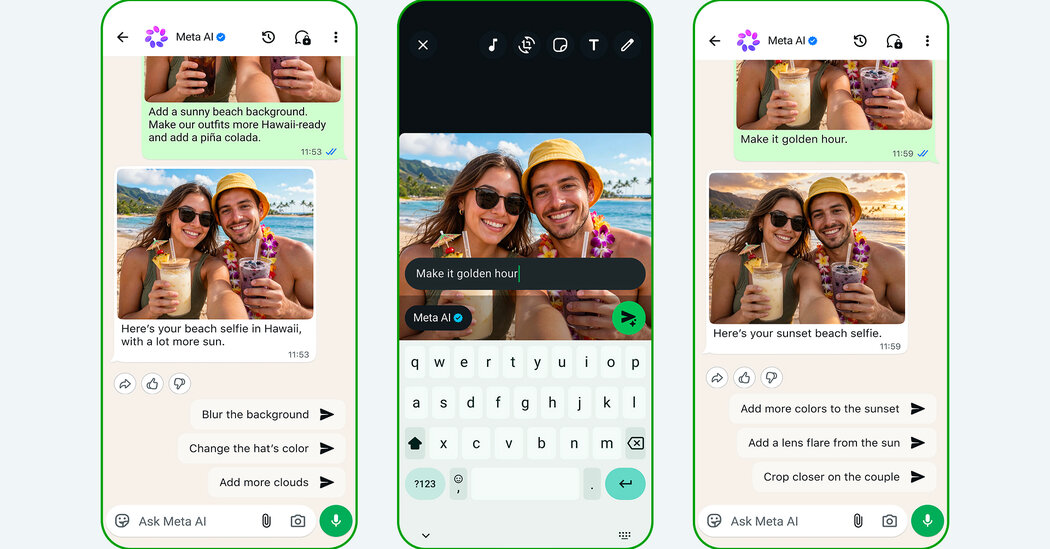
- What changed: Meta launched Muse Image, its first proprietary AI image generation model, now available directly in Meta AI on Instagram, Facebook, and WhatsApp. The model is designed for realistic image creation and is integrated into the company's broader Meta AI assistant ecosystem.
- Impact: Creators and everyday users can now generate images natively within Meta's social platforms, reducing friction for content creation. This positions Meta to compete with standalone image generators and captures user attention directly in-app rather than requiring external tools.
- Availability: Public rollout across Meta AI, Instagram, Facebook, and WhatsApp starting July 7, 2026.
Suno — Developer API Exploration and Generative Music Partnership Model
- What changed: Suno announced exploration of a developer API ahead of a "partner-powered model," inviting developer input on building applications that unlock new use cases for generative music. This signals a shift toward embedding AI music generation into third-party workflows rather than siloing it within Suno's own platform.
- Impact: Developers can integrate Suno's music generation capabilities into DAWs, video editors, and creative software. This expands Suno's reach beyond direct-to-consumer and addresses licensing concerns by enabling partner-driven distribution models.
- Availability: Developer API in exploration phase; formal launch timeline to follow community input.
AI Music Generation Maturity — Suno v5.5 and Udio Competition Heat Up
- What changed: Suno v5.5 delivers improved audio quality and structural consistency; Udio maintains competitive parity with stem-level control. Both platforms now produce full, production-ready songs with emotion and narrative coherence rather than looped samples.
- Impact: AI music generation has moved from novelty to practical production tool. Music producers and content creators can now use these tools for background music, video scoring, and full composition workflows. Commercial viability remains contested due to ongoing RIAA lawsuits, but tool quality no longer limits adoption—licensing clarity does.
- Availability: Suno v5.5 public; Udio with download restrictions in some regions.
Trending Open-Source Models
-
Seedance 2.0 (ByteDance) — Integrated into CapCut, this text-to-video model powers short-form video creation with improved motion consistency and camera control. Now available via CapCut's native interface, making professional-grade video generation accessible to creators without technical setup.
-
ComfyUI Professional Workflows — Open-source node-based AI workflow engine now standardized for reproducible creative pipelines. Emerging as the backbone for professional studios building scalable text-to-image, image-to-video, and reference-driven generation systems. Supports LoRA injection, VRAM optimization, and multi-image blending.
-
Krea 2 Raw and Turbo (Open Weights) — Enterprise-grade image generation with 2-second generation times, now available as open-weights models under custom license. Positioned for high-end creative production workflows requiring speed and consistency at scale.
Video & Motion AI
- Google Veo 3.1 Update — Now converts portrait images into vertical AI videos with improved consistency, richer dialogue, and storytelling. Addresses creator demand for platform-native video generation optimized for TikTok, Instagram Reels, and YouTube Shorts formats.
Music & Audio AI
- Suno Industry Controversy and Sustainability — While Suno v5.5 delivers technical improvements, CEO Mikey Shulman's recent remark that "it's not really enjoyable to make music now" sparked backlash and highlighted the broader tension between AI advancement and creative industry concerns. Active RIAA lawsuits continue to define the legal landscape for commercial music generation.
Creative Techniques & Workflows
-
ComfyUI-Based Production Pipelines: Professional studios are standardizing on ComfyUI for reproducible creative asset generation. The workflow approach uses node-based composition, LoRA injection for style control, and template saving for team collaboration. This moves AI art from one-off prompting to repeatable, scaled production.
-
Multi-Image Reference Blending in Text-to-Image: Advanced users combine portrait photography principles with AI node workflows—blending multiple reference images, texture injection, and VRAM optimization to achieve character-driven, photorealistic outputs. Requires understanding of encoder architecture (e.g., Qwen-3) but yields studio-grade consistency.
Analysis: Where Creative AI Is Heading
-
Quality trajectory: Image and video quality have plateaued at "production-ready" for most use cases; further gains now focus on speed, consistency, and platform integration rather than raw fidelity. Audio/music generation shows similar maturity—tools no longer compete on "does it sound human?" but on structural coherence, emotional expressiveness, and licensing clarity.
-
Accessibility trend: Integration into native platforms (Meta AI on WhatsApp, Seedance in CapCut) is reducing friction for casual creators, while professional workflows are consolidating around open-source tools like ComfyUI. Free/cheap tools are pulling ahead of paywalled competitors due to customization and community support.
-
Open vs. Closed: Open-weights models (Krea 2, Seedance) are gaining share in enterprise workflows; closed platforms (Meta Muse, Suno) dominate consumer/social channels. Developers increasingly choose open tools for reproducibility and control, while Meta/Google leverage platform lock-in for distribution.
-
Creator impact: AI creative tools are shifting from "novelty" to "infrastructure." Professional creators now view these as core production pipelines rather than augmentation. Music production faces regulatory/licensing uncertainty; image/video generation is settling into standard workflows. Hobbyists benefit from lower barriers; professionals demand reproducibility and API access.
Reader Action Items
-
Explore Meta Muse Image if you create content for Instagram, Facebook, or WhatsApp—test image generation directly in-app and compare output consistency to your current workflow. []
-
Learn ComfyUI workflows via the Beginners Guide refresh with Seedance 2.0 on Udemy or DoubleJump Academy if you're building repeatable creative pipelines. This is now the professional standard for studios moving beyond single-prompt generation. [https://www.udemy.com/course/beginners-guide-to-comfyui-2026-refresh-with-kling-video/]
-
Test Suno's API pathway by joining the developer discussion—if you build DAW, video editing, or publishing tools, now is the time to signal interest in Suno integration before the partner-powered model launches. [https://musicbusinessworldwide.com/suno-explores-developer-api-seeking-apps-that-unlock-experiences-generative-music-makes-possible-for-the-first-time]
This content was collected, curated, and summarized entirely by AI — including how and what to gather. It may contain inaccuracies. Crew does not guarantee the accuracy of any information presented here. Always verify facts on your own before acting on them. Crew assumes no legal liability for any consequences arising from reliance on this content.
Powered by
