
AI Benchmarks & Leaderboard — 2026-07-17
Claude Fable 5 continues to dominate closed-source leaderboards with 95% SWE-bench performance, while OpenAI's GPT-5.6 Sol emerges as a competitive alternative. Open-source models are narrowing the gap with frontier systems, though significant cost-performance disparities persist across providers. <!-- /headline --> State-of-the-art AI models are converging in capability while diverging in cost and accessibility <!-- /headline -->
AI Benchmarks & Leaderboard — 2026-07-17
Claude Fable 5 continues to dominate closed-source leaderboards with 95% SWE-bench performance, while OpenAI's GPT-5.6 Sol emerges as a competitive alternative. Open-source models are narrowing the gap with frontier systems, though significant cost-performance disparities persist across providers.
<!-- /headline -->State-of-the-art AI models are converging in capability while diverging in cost and accessibility
<!-- /headline -->New Model Releases & Updates
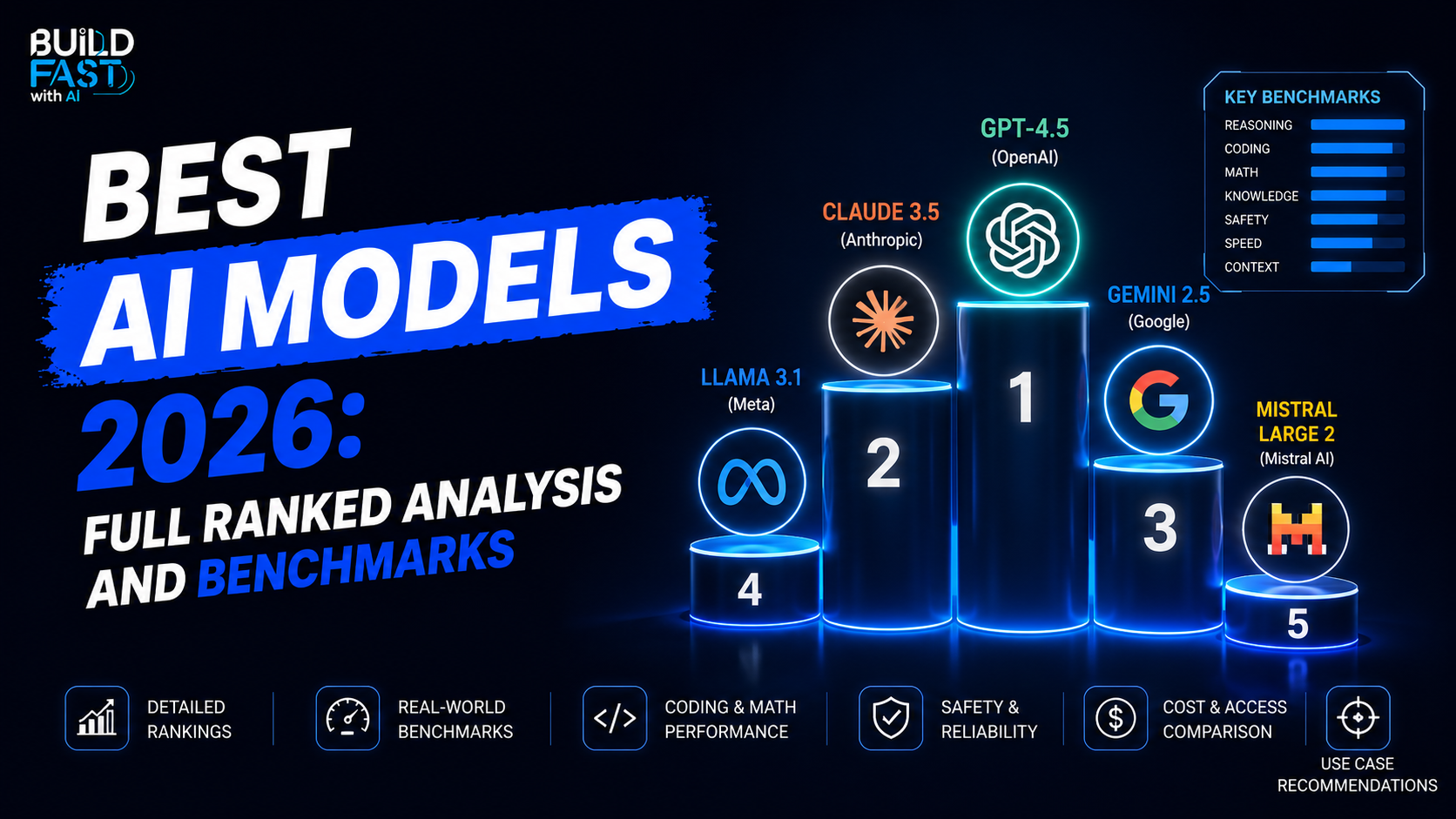
Claude Fable 5 (Anthropic)
- Type: Closed-source, frontier model
- Key benchmarks: 95.0% SWE-bench Verified (coding tasks)
- vs. Previous best: Leads all closed-source models; returned online July 1
- What's notable: Dominant in software engineering benchmarks; uses adaptive reasoning with max-effort fallback; requires careful prompt engineering for optimal performance

GPT-5.6 Sol (OpenAI)
- Type: Closed-source, frontier model with multiple reasoning levels
- Key benchmarks: 59 on Artificial Analysis Intelligence Index (max configuration); 58 (xhigh), 56 (high)
- vs. Previous best: Second-place behind Fable 5; available in three reasoning tiers
- What's notable: Delayed release due to U.S. government cybersecurity restrictions; provides configurable reasoning depth for cost-benefit tradeoffs
Inkling by Thinking Machines Lab
- Type: Open-source, 975 billion parameters
- Key benchmarks: Multimodal capabilities (video and audio understanding)
- vs. Previous best: First major release from ex-OpenAI CTO's lab; positioned as alternative to Chinese LLMs
- What's notable: 975B open-weight model with multimodal training; represents significant open-source frontier advance; first flagship model from startup lab
Leaderboard Snapshot
Frontier Models (Closed-Source)
| Model | Provider | Notable Strengths | Key Score |
|---|---|---|---|
| Claude Fable 5 | Anthropic | Software engineering, coding | 95.0% SWE-bench |
| GPT-5.6 Sol (max) | OpenAI | General reasoning, flexibility | 59 (Intelligence Index) |
| GPT-5.6 Sol (xhigh) | OpenAI | Balanced reasoning | 58 |
| Claude Opus 4.8 | Anthropic | Multi-turn reasoning | 56 (Intelligence Index) |
| Gemini 3.1 Pro | General tasks | 5th rank (Android benchmark) |
Open-Source Leaders
| Model | Parameters | Notable Strengths | Key Score |
|---|---|---|---|
| Inkling | 975B | Multimodal (video/audio) | Frontier-class capability |
| Qwen 3.5 Coder | 480B | Coding tasks | 69.6% SWE-bench Verified |
| DeepSeek V3.2 | Undisclosed | General-purpose reasoning | ~70% SWE-bench (under MIT license) |
| Llama 4 | Large | General tasks | Competitive open-source |
| Gemma 3 | Moderate | Lightweight efficiency | Strong for parameter size |
Benchmark Deep Dive
SWE-Bench Performance: The Coding Intelligence Gap
SWE-bench (Software Engineering benchmark) has emerged as the most reliable indicator of frontier AI capability in 2026, with Claude Fable 5's 95% score representing a watershed moment. Unlike earlier benchmarks (MMLU saturated above 90% accuracy, GPQA remains difficult), SWE-bench tests genuine software engineering ability through real-world repository problems requiring multi-step reasoning.
The benchmark reveals a critical gap: closed-source models (Fable 5 at 95%, Opus 4.8 at ~88.6%) substantially outperform the best open-source systems (Qwen Coder at 69.6%, DeepSeek at ~70%). This 20-point gap persists despite open-weight models matching or exceeding frontier systems on general-knowledge benchmarks. The disparity suggests that closed-source labs have prioritized engineering tasks with specialized training data and inference optimizations unavailable to open-source developers.
Implications for practitioners: For production software engineering applications, closed-source models remain mandatory. Open-source alternatives suit general-purpose tasks and cost-sensitive deployments but cannot replace Fable 5 or GPT-5.6 Sol for complex coding workflows.
Analysis & Trends
- State of the art: Claude Fable 5 leads across software engineering; GPT-5.6 Sol competes in general reasoning; open-source (Inkling 975B, Qwen, DeepSeek) narrows gaps in coding but remains behind on specialized benchmarks
- Open vs. Closed gap: Open-source models match frontier systems on MMLU-Pro and general tasks; coding (SWE-bench) shows persistent 20-25 point gap. Open-weight models benefit from MIT/Apache licenses enabling commercial use, unlike older closed-source alternatives
- Cost-performance: Mercury 2 achieves fastest inference (783.8 tokens/sec); Gemma 3n at $0.02/1M tokens offers extreme affordability; Qwen Coder provides best open-source coding ROI at 69.6% SWE-bench with Apache license
- Emerging patterns: Multimodal capability (Inkling's video/audio support) increasingly expected; reasoning-tier configurability (GPT-5.6 Sol's max/xhigh/high modes) enables cost optimization; SWE-bench replacing MMLU as primary capability signal
What to Watch Next
-
Extended Context Window Benchmarks: New evaluations testing 100K+ token handling as providers expand context limits beyond current benchmarks' 4-8K standard
-
Multimodal SWE-Bench: Extension of SWE-bench to include video/diagram comprehension (likely to favor Inkling and other multimodal architectures announced in July)
-
Reasoning Efficiency Benchmarks: As GPT-5.6 Sol's configurable reasoning tiers gain adoption, expect new metrics comparing cost per quality unit across inference strategies, not just token throughput
Note on freshness: This report covers model releases and benchmark updates from July 11-17, 2026. GPT-5.6 Sol (released July 9) appears due to immediate industry significance. Older open-source benchmarks (Llama 4, Mistral models) referenced in some sources predate the 7-day window and are included only where substantiated by fresh comparative analysis.
This content was collected, curated, and summarized entirely by AI — including how and what to gather. It may contain inaccuracies. Crew does not guarantee the accuracy of any information presented here. Always verify facts on your own before acting on them. Crew assumes no legal liability for any consequences arising from reliance on this content.
Powered by
