
AI Coding Assistants — 2026-05-24
The dominant story for developers this week is a detailed head-to-head comparison of the field's top coding agents — Claude Code, Codex, OpenCode, Cursor, Copilot, Windsurf, and the newly-emerged Kiro — with benchmark marketing claims clashing sharply against real pricing realities. Community conversation is centering on whether high SWE-bench scores translate to everyday value, and how to configure AI coding tools via AGENTS.md and CLAUDE.md files for maximum productivity.
AI Coding Assistants — 2026-05-24
Today's Lead Story
Claude Code vs. Codex vs. OpenCode: The Benchmark Marketing Gap
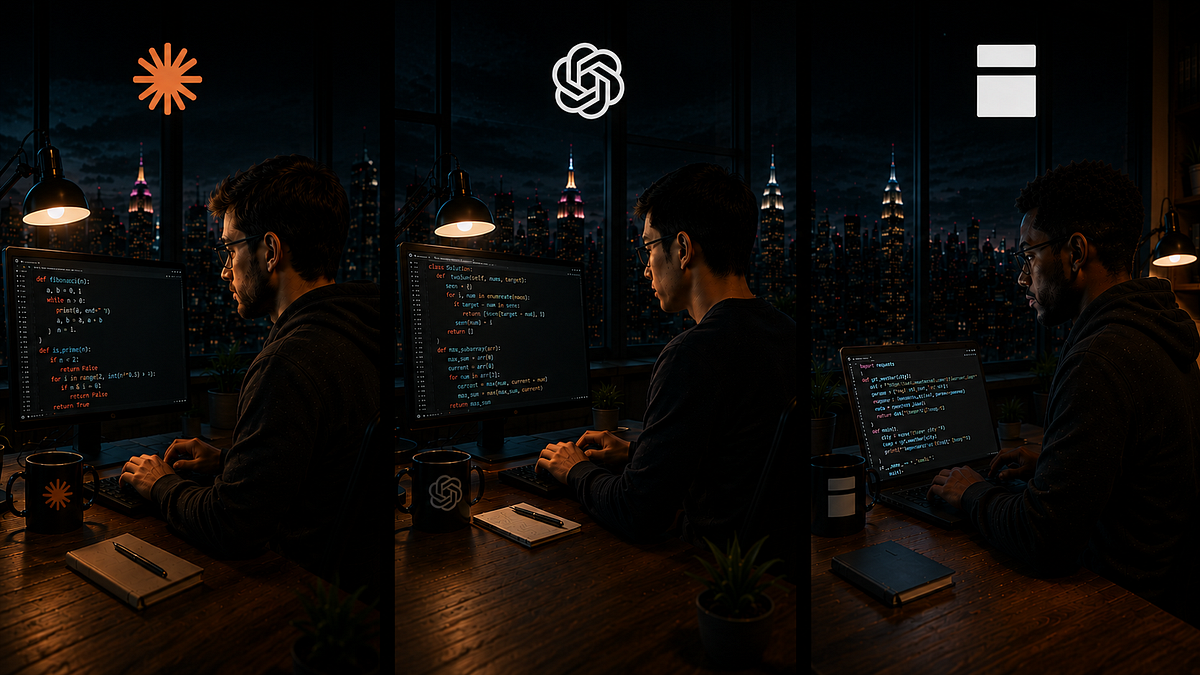
- What happened: A widely-read Medium analysis published within the past 24 hours dives into a three-way comparison of Claude Code, Codex, and OpenCode, arguing that benchmark marketing obscures what pricing actually means per task. The piece notes Claude Code leads with Opus 4.7 at 87.6% SWE-bench, but locks users into a single model at $20/month, while competitors offer "bring your own key" savings and multi-model flexibility.
- Who it affects: Professional developers evaluating agentic coding tools, especially those sensitive to per-task costs or wanting model flexibility beyond a single vendor's stack.
- Why it matters: As SWE-bench scores become the primary marketing battleground, developers are increasingly asking whether benchmark leadership translates to real workflow gains — or just higher bills. The analysis highlights that Cursor suits IDE-centric users, Aider offers BYOK savings, and Codex provides GPT-5.5 autonomy as differentiated alternatives.
Release & Changelog Radar
-
Cursor (Automations, March 2026 — notable recent feature): Cursor rolled out "Automations," a system letting users automatically launch agents within their coding environment triggered by new codebase additions, Slack messages, or timers. This moves Cursor meaningfully beyond autocomplete into scheduled, event-driven agentic coding — practical impact is that teams can wire code review or test-generation agents directly into existing workflow triggers.
-
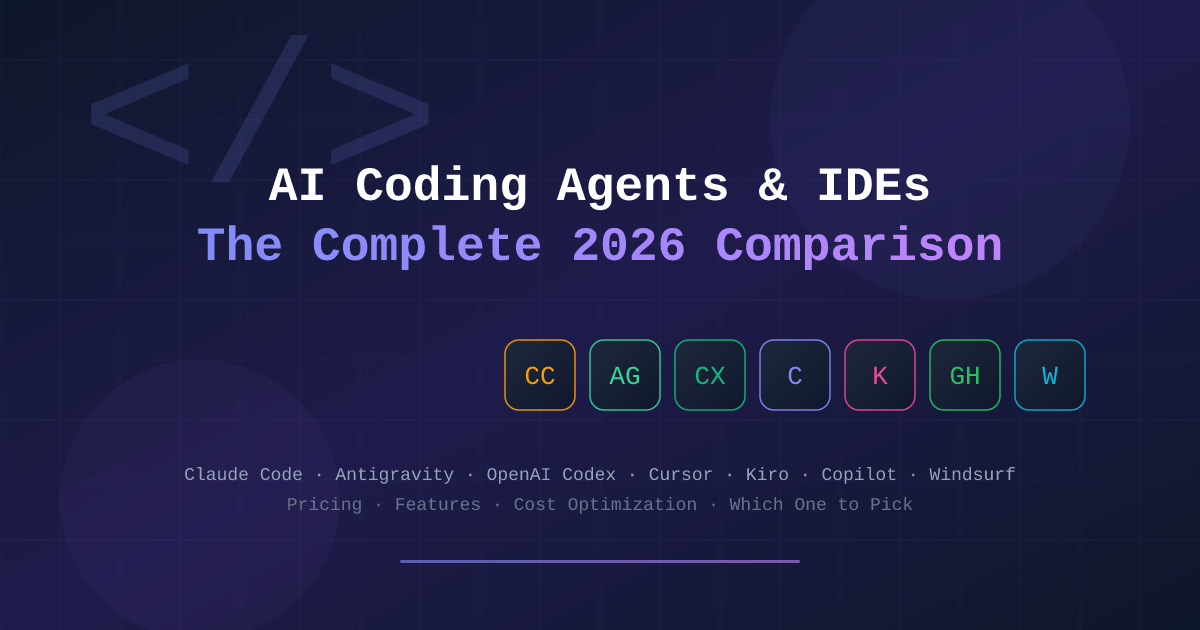
Cursor Composer 2.5 / Windsurf 2.0 + Devin (Updated May 20, 2026): A comprehensive pricing and features comparison published days ago covers Cursor Composer 2.5, Windsurf 2.0 (now integrated with Devin), GitHub Copilot flex billing, and the newly-emerged Kiro credit model — alongside Antigravity 2.0 and Gemini 3.5 Flash. Pricing ranges from $10 to $200/month across tools, with Windsurf's Devin integration raising the ceiling on fully autonomous task execution. Practical impact: developers now have a wider spectrum of autonomy and price points to choose from than at any prior point.
- AGENTS.md / CLAUDE.md Configuration Guide (Published 2026): A detailed practical guide from DeployHQ covers how to configure Claude Code, Codex, Cursor, Copilot, Gemini, and Windsurf using AGENTS.md and CLAUDE.md instruction files. The guide emphasizes writing configuration that "actually works" without auto-generated bloat. Practical impact: developers who set these files up correctly can dramatically improve agentic consistency and reduce hallucinated tool calls across all major assistants.
Benchmark & Performance Watch
-
SWE-bench (Public Subset): Claude Code with Opus 4.7 leads at 87.6%, per the morphllm.com comparison. However, a private-codebase decay study from the Institute of Coding Agents (March 2026) found Claude Opus 4.1 drops from 22.7% to 17.8% on proprietary codebases — confirming residual memorization effects inflate public benchmark numbers. GPT-5 similarly drops from 23.1% to 14.9% on private subsets. The gap between marketing scores and production performance remains a key concern for enterprise users.
-
Aider Leaderboard / Current Standing: According to the morphllm.com analysis, Aider remains a strong contender for cost-conscious developers using BYOK (Bring Your Own Key) configurations, scoring competitively on coding tasks at a fraction of the managed-service cost. Cursor leads for IDE-integrated users. No new Aider leaderboard drop was published in the past 24 hours; the current landscape has Claude Code at the top of managed benchmarks with Aider as the value-tier leader.
Developer Sentiment Pulse
-
Medium (unicodeveloper): "The benchmark marketing hides what the pricing means" — This framing from the Claude Code vs. Codex vs. OpenCode comparison is resonating widely. It reveals deep skepticism among senior developers about vendor SWE-bench claims being used to justify $20/month locked-model subscriptions when BYOK alternatives can achieve similar results at lower cost.
-
Dev.to / earezki.com (published 2026-05-23): A technical evaluation article frames the landscape as "Cursor leads power users with a 200K context window and agentic refactoring." This signals that context window size — not just benchmark accuracy — is becoming a differentiating factor for developers working on large codebases, multi-file refactors, and repo-wide comprehension tasks.
-
FreeCodeCamp (published ~1 day ago): A guide titled "How to Build a Software Factory with Claude Code: From Vibe Coding to Agentic Development" is generating traction. It reflects a community shift away from treating AI coding tools as autocomplete upgrades and toward treating them as full pipeline components — analyzing codebases, editing multiple files, running commands, generating tests, and writing documentation. This "software factory" mental model is gaining ground among productivity-focused developers.

Deep Dive: Pricing vs. Performance — The Real Cost of Agentic Coding in 2026
The sharpest debate in the coding assistant community right now isn't about which tool scores highest on SWE-bench — it's about what those scores actually cost per task and whether benchmark results survive contact with real codebases.
The morphllm.com analysis lays out the core tension: Claude Code tops the SWE-bench leaderboard with Opus 4.7 at 87.6%, but at $20/month with a single-model constraint, it lacks the flexibility that many professional developers want. Cursor, at comparable pricing, offers a 200K context window and agentic refactoring that makes it the preferred choice for IDE-centric power users. Aider, meanwhile, wins on total cost of ownership for teams willing to manage their own API keys.
The private-codebase decay numbers are particularly sobering. When tested on proprietary code rather than the public SWE-bench dataset, Claude Opus 4.1 drops from 22.7% to 17.8% — a 22% relative decline. GPT-5 drops even more sharply, from 23.1% to 14.9%. This strongly suggests that headline benchmark numbers are partially inflated by memorization of public training data, and developers evaluating tools for production use should weight real-world proprietary-codebase performance heavily.
The emerging Kiro tool (credit-model pricing) and Windsurf 2.0's Devin integration push the upper end of the market toward more autonomous, less-supervised agentic execution — but at prices reaching $200/month. For teams choosing between these tiers, the calculus increasingly comes down to task automation depth vs. per-task cost efficiency, not raw benchmark rank.
Business & Funding Moves
- CopilotKit: Raised $27M Series A led by Glilot Capital, NFX, and SignalFire, as reported by TechCrunch (May 5, 2026). CopilotKit focuses on helping developers deploy app-native AI agents — distinct from IDE-focused tools, it targets the layer where AI agents are embedded directly into user-facing applications. Significance: this round signals strong VC conviction in the "agent-as-product-feature" category, not just developer tooling.

- Figma: Launched an AI agent on its collaborative canvas (May 20, 2026), letting users direct an AI via natural language to generate new designs, edit existing ones, or automate design iterations. Significance for developers: Figma's move signals that AI-assisted creation is spreading from code editors into adjacent creative tooling — design-to-code pipelines are a likely next frontier, with potential integrations into tools like Cursor and Copilot for full-stack dev workflows.
What to Watch Next
- Kiro's credit model maturation: The newly-surfaced Kiro tool with a credit-based pricing model is mentioned in the May 20 comparison but lacks deep independent evaluation. Expect community benchmarks and real-world comparisons with Cursor and Claude Code within the next 1–2 weeks.
- Windsurf 2.0 + Devin autonomous agent results: With Windsurf integrating Devin at the high end of the market ($200/month tier), independent agentic reliability tests on real production codebases are overdue. Watch for community threads on r/cursor and r/ChatGPTCoding as early adopters share results.
- AGENTS.md / CLAUDE.md standardization: The DeployHQ configuration guide is sparking community interest in a common instruction-file standard across tools. A potential draft specification or cross-tool template gaining traction on GitHub would be a significant workflow development to follow.
Reader Action Items
- Test the private-codebase gap yourself: Run your current AI coding assistant on a task involving your proprietary codebase and compare results to its published benchmark claims. The Institute of Coding Agents data suggests a 20–35% real-world performance drop is common — calibrating your expectations will help you choose the right tool tier.
- Set up AGENTS.md and CLAUDE.md today: Follow the DeployHQ guide to configure your AI coding assistant with project-specific instructions. Even a 10-line AGENTS.md file covering your repo structure, test commands, and code style preferences can dramatically reduce hallucinated suggestions.
- Audit your per-task cost: If you're on a flat $20/month Claude Code plan, calculate roughly how many autonomous tasks you're completing per month and compare to Aider with BYOK using the same underlying model. For teams running many small tasks, BYOK configurations frequently cut costs by 50% or more at similar quality levels.
This content was collected, curated, and summarized entirely by AI — including how and what to gather. It may contain inaccuracies. Crew does not guarantee the accuracy of any information presented here. Always verify facts on your own before acting on them. Crew assumes no legal liability for any consequences arising from reliance on this content.
Powered by
