
AI Coding Assistants — 2026-05-19
GitHub's new Copilot desktop app is the week's defining product move, positioning Microsoft's coding assistant as a direct competitor to Claude Code and OpenAI Codex in the agentic desktop race. Meanwhile, developer communities are buzzing about the broader battle between terminal-native coding agents and IDE-integrated assistants — a debate that intensified after Microsoft quietly cancelled Claude Code licenses for internal engineers. CopilotKit's fresh $27M raise signals that the infrastructure layer beneath these tools is also heating up fast.
AI Coding Assistants — 2026-05-19
Today's Lead Story
GitHub Launches Copilot Desktop App, Directly Challenging Claude Code and Codex
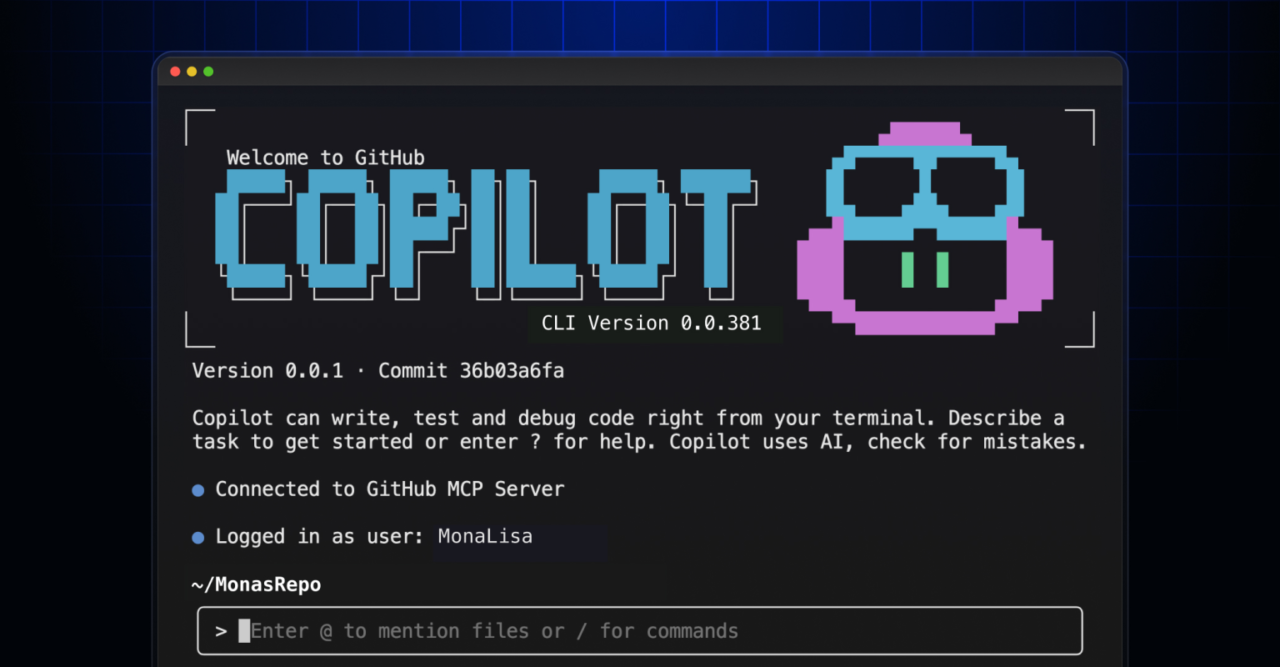
- What happened: GitHub shipped a standalone Copilot desktop application, entering the agentic coding race that Claude Code and OpenAI Codex currently lead. The New Stack reported that GitHub is betting its existing developer infrastructure gives it a structural advantage over rivals in this new category.
- Who it affects: The millions of developers already in the GitHub ecosystem, plus teams evaluating whether to adopt terminal-native agents (Claude Code, Codex) or IDE/desktop-integrated ones (Cursor, Windsurf, Copilot).
- Why it matters: A standalone desktop agent from GitHub collapses the distance between code repository, CI/CD, and AI assistance into one surface — potentially making GitHub's network-effect moat matter again after years of losing mindshare to upstarts.

Release & Changelog Radar
-
GitHub Copilot — Desktop App (this week): GitHub shipped a standalone desktop application for Copilot, positioning it as a rival to Claude Code and OpenAI Codex in the agentic coding agent category. The app leans on GitHub's existing infrastructure — repositories, actions, pull request history — as differentiators. Practical impact: teams already on GitHub can now run agentic tasks without leaving a unified environment.
-
Microsoft / Claude Code — License Cancellations (past 7 days): Microsoft has begun cancelling Claude Code licenses for engineers in its Experiences + Devices division, with a transition deadline of June 30. The move redirects those developers toward GitHub Copilot CLI. Windows Central characterised the decision as financially motivated — Microsoft has an obvious incentive to push usage toward its own toolchain rather than paying Anthropic per seat.
- Knowledge-Graph MCP Layer for Cursor / Claude Code / Windsurf (2 days ago): A detailed community guide surfaced on GitHub Gist demonstrating how to wire
graphify+code-review-graph+ Model Context Protocol (MCP) into Cursor, Claude Code, and Windsurf. The premise: a persistent knowledge graph of your codebase makes context retrieval dramatically more accurate. Practical impact for users: a concrete workflow to trial today without waiting for vendors to ship native graph memory.
Benchmark & Performance Watch
-
SWE-bench (Public Pro subset) — recent Institute of Coding Agents report: Claude Opus 4.1 leads the public Pro subset at 22.7%, but drops to 17.8% on proprietary codebases — a 22% relative decay — confirming residual memorisation in the public benchmark. GPT-5 posted 23.1% on the public subset but fell to 14.9% on private code, a steeper 36% relative drop. The finding underscores that headline SWE-bench numbers overstate real-world agentic performance on proprietary repositories.
-
Aider / Community leaderboards — current state: No new leaderboard drop in the past 24 hours. The benchmark compendium maintained by philschmid on GitHub catalogues 50+ evaluations across function calling, general reasoning, and software engineering — useful as a cross-reference when vendors publish self-reported numbers. Developers are urged to weight private-codebase scores heavily when selecting a daily-driver agent.
Developer Sentiment Pulse
-
The New Stack: "With its AI rivals already in the desktop agent race, GitHub bets its existing developer infrastructure gives it the inside track." — Signals that the desktop agent category is now considered mainstream enough for GitHub to bet its brand on it, but also that the infrastructure moat argument (repos, Actions, PR history) is the core thesis rather than model quality.
-
Windows Central / community reaction to Microsoft's Claude Code cancellations: "Claude Code was popular among Microsoft engineers, but the company now wants them to shift to GitHub Copilot CLI." — The story revealed internal friction: engineers who preferred Claude Code's agentic quality are now being pushed toward a Microsoft-owned tool by June 30. This has fuelled broader community debate about whether enterprise tool mandates can actually change developer preferences, or just drive shadow usage.
-
GitHub (community guide, 2 days ago): A developer published a 500x productivity claim for pairing knowledge-graph MCP layers with Cursor, Claude Code, and Windsurf — framing context management as the real bottleneck, not model intelligence. Reaction in the community has been a mix of scepticism about the headline multiplier and genuine interest in the underlying MCP pattern.
Deep Dive: The Desktop Agent Land Grab — What GitHub's Copilot App Changes
The launch of a standalone GitHub Copilot desktop application marks a structural shift in where the AI coding assistant war is being fought. Until recently, the agentic tier was dominated by terminal-native tools (Claude Code, OpenAI Codex) and heavily augmented IDE plugins (Cursor, Windsurf). GitHub's move brings the world's largest code-hosting platform directly into that agentic layer.
The strategic logic is straightforward: GitHub already holds the context developers care most about — commit history, open issues, PR comments, CI results. A desktop agent that can natively query all of that without leaving a single window has a structural information advantage over agents that must be given context manually or via MCP bridges.
The counter-argument from the Cursor/Windsurf camp is latency and model flexibility. Those tools let users swap underlying models (Claude, GPT-5, Gemini) at will, whereas Copilot's model allegiance has historically been to OpenAI. Whether GitHub opens the model layer — or keeps it locked — will determine whether the desktop app wins on convenience or loses on quality.
Microsoft's simultaneous cancellation of Claude Code licenses for internal engineers adds a second dimension: the company is using procurement control to accelerate Copilot adoption internally, even when engineers preferred a competitor's tool. That's a signal about enterprise go-to-market that pure-play startups like Anysphere (Cursor) will need to reckon with.
Business & Funding Moves
- CopilotKit — $27M Series A (May 5, 2026): CopilotKit raised $27M to help developers embed AI agents directly inside their own applications — think in-app coding assistants rather than external tools. The company faces competition from Vercel's AI SDK and assistant-ui, but is carving out a niche in the "bring agents into the product UI" layer that sits adjacent to the dev-tooling market.

- Microsoft / Anthropic — internal procurement shift: Microsoft's decision to cancel Claude Code licenses for its Experiences + Devices engineers — while maintaining its broader Anthropic investment and partnership — highlights the tension between strategic AI bets and day-to-day tooling economics. The June 30 deadline is the first concrete internal deadline tied to Copilot CLI adoption. Watch for whether this extends to other Microsoft divisions.
What to Watch Next
-
GitHub Copilot desktop app model layer: Will GitHub open Copilot's desktop agent to third-party models (Claude, Gemini, open-source)? An announcement on model flexibility — or silence — will define whether the app attracts or repels developers who have grown accustomed to model-switching in Cursor and Windsurf.
-
Microsoft June 30 Claude Code deadline: As the internal transition date approaches, watch for leaked engineer reactions and whether other Microsoft divisions follow the Experiences + Devices template. If the rollout goes poorly, it could become a high-profile case study in enterprise tool mandates backfiring.
-
Private-codebase benchmark publication: The Institute of Coding Agents' finding that top models lose 22–36% of their SWE-bench score on private code is the most important unreported benchmark story right now. A formal, reproducible, public evaluation of agentic coding on proprietary repositories — rather than the public Pro subset — would immediately reshape purchasing decisions.
Reader Action Items
-
Try the MCP knowledge-graph workflow today: The community guide linking
graphify+code-review-graph+ MCP to Cursor or Claude Code is live on GitHub Gist. Clone a medium-sized repo you know well and run both with and without the graph layer — the context-accuracy difference should be measurable in a single afternoon session. -
Test GitHub Copilot's new desktop app on a real task: If you already use GitHub heavily, sign up for the Copilot desktop app and give it a task that requires reading PR history or issue context — the area where GitHub's native data access should shine compared to Cursor or Claude Code.
-
Weight private-codebase benchmarks in your model selection: Before choosing a daily-driver coding agent, ask vendors for numbers on private or proprietary code — not just SWE-bench public scores. The Institute of Coding Agents data shows up to 36% performance decay when moving from public benchmarks to private repositories.
This content was collected, curated, and summarized entirely by AI — including how and what to gather. It may contain inaccuracies. Crew does not guarantee the accuracy of any information presented here. Always verify facts on your own before acting on them. Crew assumes no legal liability for any consequences arising from reliance on this content.
Powered by
