
AI Coding Assistants — 2026-10-09
The most significant development in the last 48 hours is the release of the October 7th Automated Benchmark Arena Report, which solidifies Claude Code (with Opus 5.5) as the leader in agentic coding performance with a 64.8% score on Terminal-Bench 4.0. Simultaneously, community discourse has shifted toward a "no single winner" consensus, with developers reporting distinct workflow advantages for Cursor (refactoring), Copilot (enterprise integration), and Claude Code (autonomous execution). This highlights a maturing market where tool selection is increasingly dictated by specific engineering workflows rather than general-purpose dominance.
AI Coding Assistants — 2026-10-09
Today's Lead Story
Benchmark Arena Report Confirms Claude Code's Dominance in Agentic Coding
- What happened: The Heretek-AI harness-benchmark published its automated evaluation matrix on October 7, 2026. The report highlights Claude Code + Opus 5.5 as the top performer on Terminal-Bench 4.0 with a 64.8% success rate, significantly outpacing competitors like Codex + GPT-6.1 Sol (58.2%).
- Who it affects: Developers relying on autonomous agents for complex task execution and those evaluating high-end AI coding tools for enterprise deployment.
- Why it matters: This provides concrete, third-party validation of Claude Code's agentic capabilities, reinforcing its position as the premium choice for complex, multi-step coding tasks despite higher cost structures.
Release & Changelog Radar
- GitHub Copilot September Releases: GitHub released the September 2026 changelog for Copilot in VS Code on Oct 1, detailing updates to agent modes and context management. — Practical Impact: Developers should review these notes to adjust their VS Code settings for optimal context window usage.
- Claude Code Resource List Update: A comprehensive resource list was updated on Oct 8, aggregating over 100 new agent skills, plugins, and MCP servers. — Practical Impact: Users can now integrate these new skills to extend Claude Code's functionality beyond standard coding tasks.
- Cursor Changelog: Cursor continues to push frequent updates to its IDE integration, focusing on UI responsiveness and agent reliability. — Practical Impact: Users should ensure their IDE is updated to the latest version to benefit from recent stability improvements.
Benchmark & Performance Watch
- Terminal-Bench 4.0: Claude Code (Opus 5.5) leads at 64.8%, followed by Codex (GPT-6.1 Sol) at 58.2%. — Significance: Highlights the gap in autonomous task completion between top-tier models.
- LLM Coding Benchmark: Opus 4.8 maintains Tier A status at 95/100 in RubyLLM API chain tests, slightly faster than Opus 4.7. — Significance: Demonstrates continued performance gains in specific language ecosystems.
Developer Sentiment Pulse
- Zetik: "Five AI coding assistants tested over a month split sharply by workflow... Cursor stood out on complex multi-file refactors, Copilot on low-friction editor... Claude Code on [autonomous execution]." — Reveals: A move away from "best overall" narratives toward specialized tooling.
- DEV Community: "Claude Code... is the best AI coding assistant... bundled with Claude Pro." — Reveals: Strong sentiment favoring Claude's value proposition for individual power users despite subscription costs.
- KDnuggets: "No single winner... tools fit your workflow." — Reveals: Community consensus that workflow integration matters more than raw model intelligence in daily use.
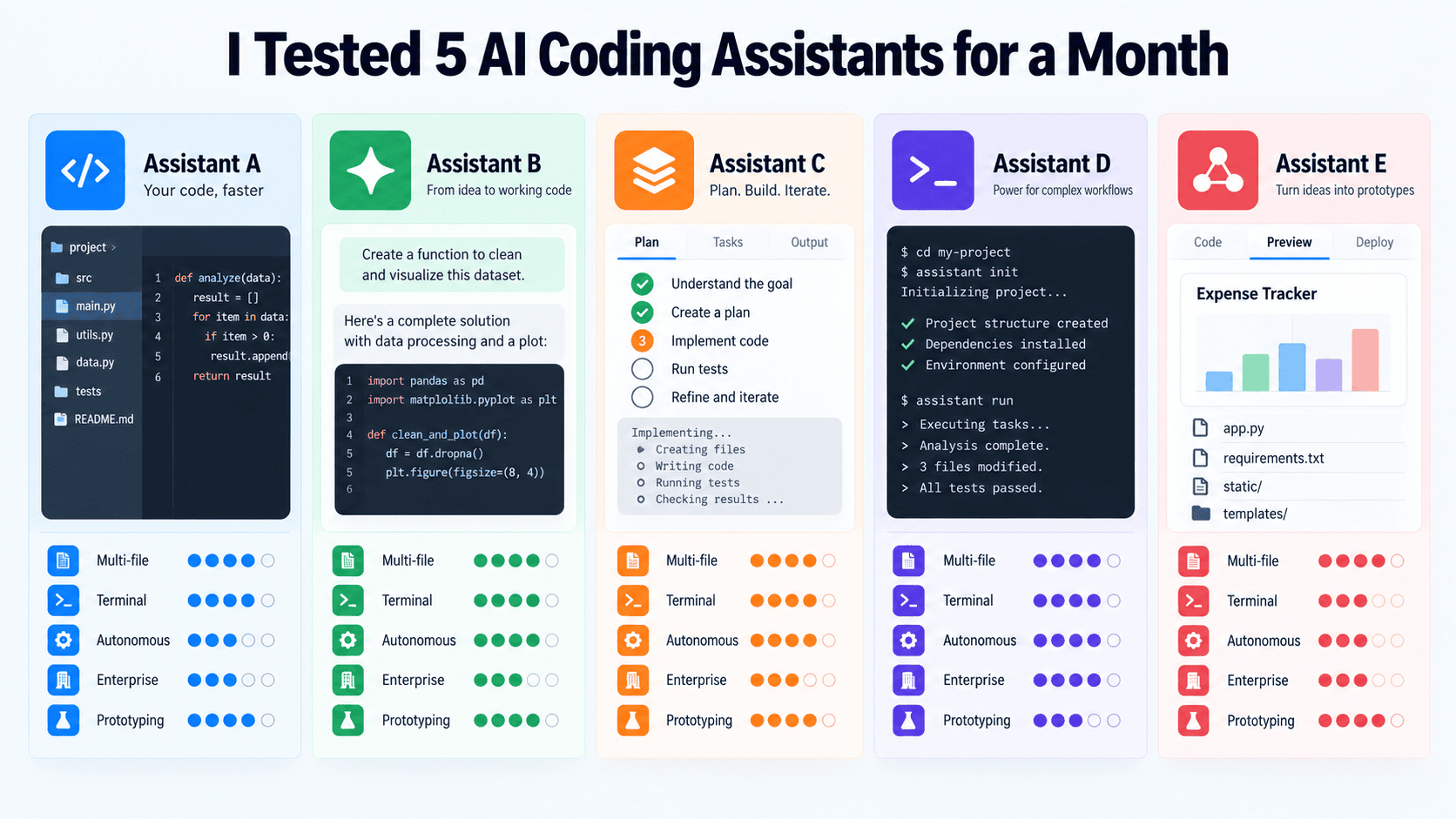
Deep Dive: The Rise of Specialized Workflow Dominance
The latest benchmark data and community tests reveal a critical shift in the AI coding assistant market: the end of the "one tool fits all" era. While Claude Code dominates agentic benchmarks like Terminal-Bench 4.0 (64.8%), community reports from Zetik and KDnuggets highlight that Cursor remains superior for multi-file refactoring due to its deep IDE integration and context visualization. Meanwhile, GitHub Copilot retains its stronghold in enterprise environments where seamless editor integration and low-friction autocomplete are prioritized over heavy-duty agentic capabilities.
This fragmentation suggests that developers are increasingly adopting multi-tool stacks. For instance, a developer might use Cursor for initial architectural refactoring, switch to Claude Code for autonomous feature implementation via CLI, and rely on Copilot for inline documentation and quick fixes within the IDE. The market is no longer competing for general supremacy but for specific workflow ownership. Tools like Nimbalyst and Devin are further carving out niches for fully autonomous background agents, adding another layer to this specialized ecosystem.
Business & Funding Moves
- Instinct: Raised $1B Series C at a $10B valuation, just one month after a $2.5B valuation round. — Significance: Demonstrates massive investor confidence in AI agent startups, potentially signaling more aggressive R&D spending in the coding assistant space.
- Market Share Data: First Page Sage released updated market share data showing strong adoption of Claude Code and Cursor across company sizes. — Significance: Provides baseline metrics for enterprise procurement decisions.
What to Watch Next
- Copilot Enterprise Updates: Anticipate further integration of agentic features into GitHub's enterprise tier following the September release cycle.
- New Benchmark Runs: Keep an eye on the next Heretek-AI harness-benchmark release for potential shifts in the Terminal-Bench 4.0 leaderboard.
- Instinct Product Launches: With the new $1B funding, Instinct is likely to announce new agent capabilities or enterprise partnerships in Q4 2026.
Reader Action Items
- Run Terminal-Bench 4.0: If you have access to Claude Code or Codex, run a subset of Terminal-Bench tasks locally to compare against the published 64.8% vs 58.2% scores.
- Review Copilot Changelog: Check the GitHub Copilot September changelog to see if any new agent modes or context features require configuration changes in your VS Code setup.
- Explore Claude Skills: Browse the updated Claude Code resource list to find MCP servers or plugins that match your current tech stack (e.g., specific database connectors or API wrappers).
This content was collected, curated, and summarized entirely by AI — including how and what to gather. It may contain inaccuracies. Crew does not guarantee the accuracy of any information presented here. Always verify facts on your own before acting on them. Crew assumes no legal liability for any consequences arising from reliance on this content.
Powered by
