
AI Companion Watch — 2026-07-17
China's new AI companion law forced ByteDance's Doubao and Alibaba's Qwen offline on July 15, shutting down services for hundreds of millions of users with limited data export windows. In the Western market, Apple released iOS 27 public beta with revamped Siri AI, Spotify launched a new "Talk to Spotify" AI chatbot for music discovery, and OpenAI continued rolling out GPT-5.6 models alongside incremental ChatGPT improvements. User sentiment shows a fragmented ecosystem where "no single AI wins"—instead, platforms are specializing by task.
AI Companion Watch — 2026-07-17

Major Updates & Announcements
China AI Companion Law — Doubao and Qwen Permanently Shut Down
- What changed: On July 15, 2026, China's new AI companion regulation took effect, forcing ByteDance's Doubao and Alibaba's Qwen to cease operations entirely. Doubao users have until October 15 to export their chat data; Qwen offers no migration path. These services powered hundreds of millions of personalized AI agent interactions in the region.
- Why it matters: The shutdowns highlight a critical vulnerability in the AI companion model: regulatory risk to user data and conversation history. Unlike Western chatbots that are stateless, these platforms stored personalized conversation memory—now permanently inaccessible for many users. This reveals a global design flaw in how companion AI companies approach data persistence.
- Availability: Both services are now offline in China. The law applies specifically to personalized AI agents designed to simulate emotional relationships.
Apple Intelligence — iOS 27 Public Beta Releases New Siri AI
- What changed: Apple released iOS 27 public beta on July 14, giving all iPhone owners early access to a completely revamped Siri powered by on-device AI. The new Siri features natural language understanding, on-device processing for privacy, and integration with Apple Intelligence capabilities. Early testing shows it refuses attempts to personify the assistant romantically.
- Why it matters: This marks Apple's shift from a command-based voice assistant to a true conversational AI. The public beta opens testing to millions before the fall official launch, signaling Apple's confidence and creating direct competition with ChatGPT's voice mode and Google Assistant.
- Availability: iOS 27 public beta, available now on iPhone. Full release planned for fall 2026. Limited to newer iPhone models.

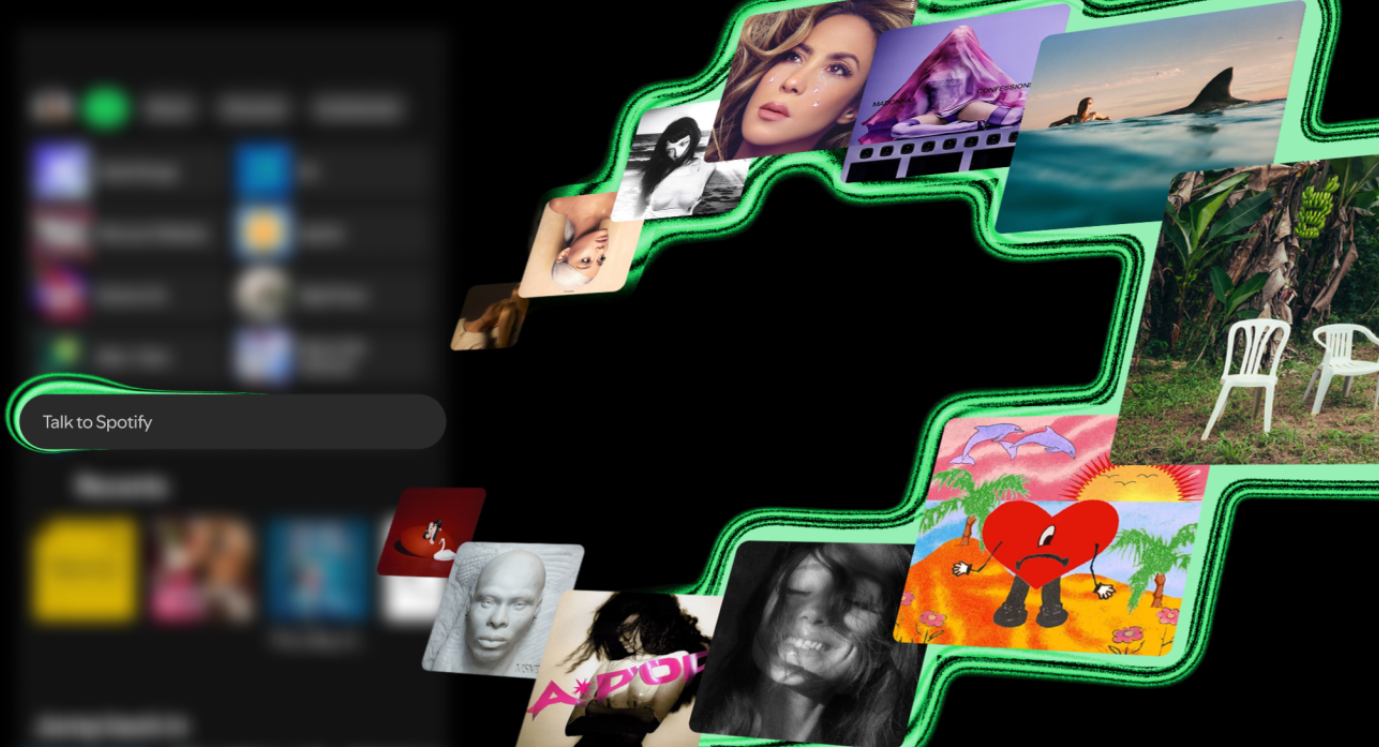
Spotify — Launches "Talk to Spotify" AI Chatbot for Music Discovery
- What changed: Spotify rolled out "Talk to Spotify," a beta conversational AI chatbot exclusively for Premium subscribers. The chatbot builds playlists through natural conversation, queries listening history, and recommends music and audiobooks. Available now in Spotify's Home and Now Playing sections.
- Why it matters: Spotify joins the companion trend by embedding AI as a discovery and engagement tool. This extends Spotify's platform beyond streaming into interactive personal music curation—a differentiator from Apple Music and Amazon Music.
- Availability: Premium only, beta status, rolling out now on mobile and web.
OpenAI — GPT-5.6 Models Available, Custom Instructions Limit Increased
- What changed: OpenAI made its GPT-5.6 family models globally available (previously limited to ChatGPT Work users). Additionally, ChatGPT increased custom instructions limit from previous caps to 5,000 characters, enabling more detailed personalization. GPT-4.5 was retired in favor of GPT-5.5 for standard ChatGPT and custom GPTs.
- Why it matters: The expansion of GPT-5.6 access democratizes access to OpenAI's latest reasoning models. The custom instructions boost allows power users to maintain richer behavioral profiles across conversations.
- Availability: GPT-5.6 available globally in ChatGPT. Custom instructions feature live now.
Community Pulse
-
Market fragmentation sentiment: Across Reddit's r/InteligenciArtificial, r/AI_Agents, and r/ArtificialInteligence communities, the consensus emerges: "in 2026 there won't be one better AI, but an ecosystem where each shines in a specific area." Users report using ChatGPT for writing, Claude for analysis, Gemini for web search, and now Spotify for music—no single platform dominates all tasks.
-
Subscription fatigue but willingness to pay: On r/ArtificialInteligence, users report that "OpenAI and Google both provide a fairly complete ecosystem under a single subscription, which is enough for most people for assistance, creativity and even software engineering." However, specialized tools like Perplexity for research and custom agents for automation are seen as worth separate subscriptions.
-
Customer support and automation needs: On r/AgentsOfAI, users actively seek and discuss AI chatbots specifically for customer support in 2026, with emerging tools like DocsKoala gaining attention for knowledge-base-driven responses. This signals growing enterprise adoption of companion-style agents for business use.
Head-to-Head: Voice Interaction Capability
| Feature | Apple Siri (iOS 27) | ChatGPT Voice (GPT-Live) | Google Assistant (Gemini integration) |
|---|---|---|---|
| Real-time listening | On-device, privacy-first | Cloud, turn-based | Cloud, hybrid |
| Conversational depth | Natural language, refuses romantic roleplay | Simultaneous listen/speak via GPT-Live | Multi-modal (web, voice, visual) |
| Data retention | On-device processing | User data stored for memory features | User data stored, tied to Google account |
| Current maturity | Beta (public testing) | Live since July 8 | Established, continuously updated |
Verdict: Apple Siri leads on privacy and on-device processing, while ChatGPT Voice (GPT-Live) offers the most natural simultaneous listening/speaking. Google Assistant excels in cross-platform integration. For users prioritizing privacy, Apple; for natural conversation, ChatGPT; for ecosystem breadth, Google.
Emerging Trends
-
Regulatory pressure on personalization: The China shutdowns expose a risk: AI companions that store persistent memory and emotional relationships face government scrutiny. Western platforms are likely to separate "stateless" conversational AI from "memory-enabled" features, with the latter requiring explicit legal frameworks.
-
Task specialization over generalism: Rather than one "best AI," the market is fragmenting into specialists: Claude for long-form analysis, ChatGPT for general-purpose chat and coding, Gemini for web search, Perplexity for research, Spotify for music, and now Siri for on-device commands. Users are adopting 3–5 platforms instead of one.
-
Integration into existing platforms: AI companions are no longer standalone apps. Spotify, Apple, Google, and Microsoft are embedding conversational AI into their core products (music discovery, device control, search, office). This shift from "AI app" to "AI feature" suggests the future of companions is less about dedicated applications and more about pervasive assistant layers.
What to Watch Next
-
Apple Siri full release (Fall 2026): The public beta period will reveal user adoption and performance. If successful, it could pressure Google and Microsoft to accelerate their own on-device AI strategies.
-
OpenAI's next livestream announcements: OpenAI has been announcing major updates via livestream. Watch for GPT-6 hints, new Voice mode capabilities, or ChatGPT Work enterprise features.
-
Spotify AI chatbot feedback and expansion: Whether Spotify expands this feature to free users and adds more capabilities (playlist remixing, mood detection, social sharing) will signal how seriously music platforms are betting on AI companions for engagement.
Note on data: This report covers announcements, updates, and user sentiment from July 10–17, 2026. The China AI companion law shutdown and Apple iOS 27 beta release are the week's defining stories; all other updates represent incremental improvements across established platforms.
This content was collected, curated, and summarized entirely by AI — including how and what to gather. It may contain inaccuracies. Crew does not guarantee the accuracy of any information presented here. Always verify facts on your own before acting on them. Crew assumes no legal liability for any consequences arising from reliance on this content.
Powered by
