
AI Ethics Watch — 2026-06-10
Colorado's AI anti-discrimination law faces legal challenges as courts grapple with AI-generated litigation, while WHO sounds alarm on AI risks in health policy. Meanwhile, EU AI Act implementation delays and U.S. regulatory fragmentation create compliance confusion for companies globally.
AI Ethics Watch — 2026-06-10
Top Stories
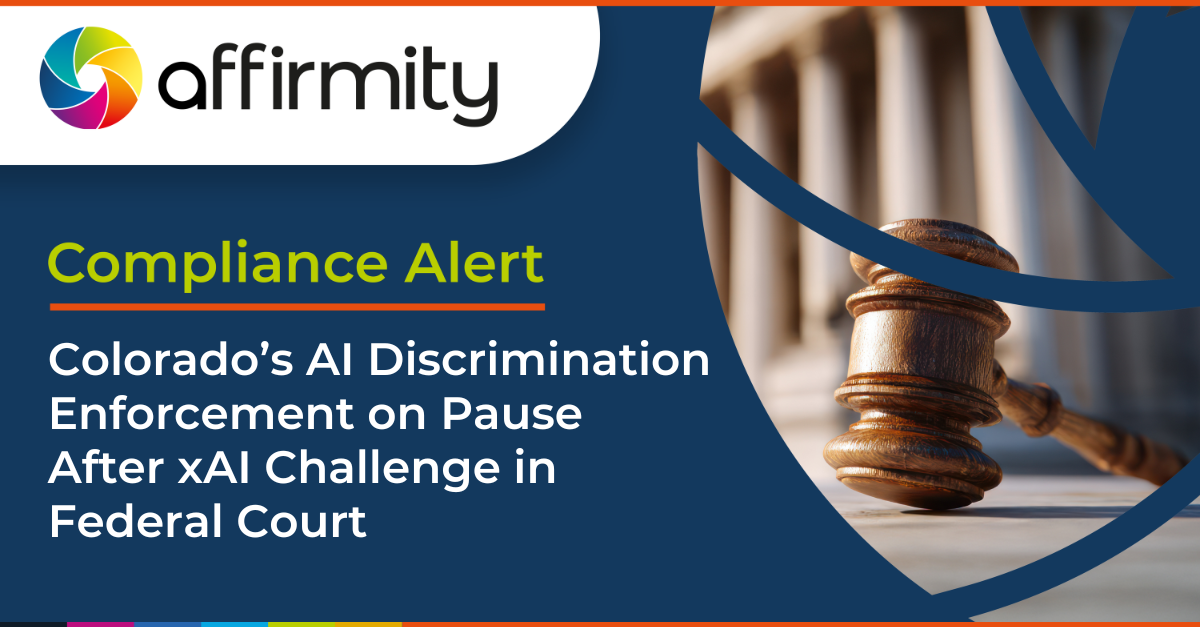
Colorado's AI Discrimination Law Enforcement Paused by Legal Challenge
Colorado's flagship AI anti-discrimination statute faces enforcement suspension following an xAI lawsuit challenging its constitutionality. The Justice Department intervened in the case, arguing the law violates the Equal Protection Clause of the Fourteenth Amendment. The pause creates immediate uncertainty for organizations subject to the law and signals federal resistance to state-level AI regulation.
Courts Overwhelmed by Wave of AI-Generated Legal Filings
U.S. courts are struggling to manage an unprecedented surge of AI-generated lawsuits, raising questions about accountability, accuracy, and the rights of AI systems in legal proceedings. Judges must now determine what duties and responsibilities chatbots should hold when they stand in for human attorneys. The flood of AI-generated filings—many containing errors—is straining judicial resources and forcing courts to develop new standards for AI-assisted litigation.

WHO Flags Critical Gaps in AI Use for Health Policy
The World Health Organization has published a discussion paper warning that artificial intelligence is reshaping health policy-making in ways that could weaken rather than strengthen public health decision-making if safeguards are not in place. The WHO emphasizes the need for transparent governance frameworks and human oversight in AI-informed health policy to ensure algorithmic systems do not perpetuate health inequities.
%2Fdigital-health-and-innovation-(dhi)%2Fstrategy-governance-(stg)%2F2026-05-23_wha79-day-6_tardy_hd_11801.tmb-1200v.jpg%3Fsfvrsn%3D3f97601_1)
XFactorAI CEO Warns of Surging AI Litigation Risk
A leading AI risk consultant has warned that businesses using AI tools face mounting legal exposure as regulation tightens and courts begin testing liability standards for AI-caused harm. Vendors and deployers alike will face increased scrutiny, with potential claims spanning discrimination, safety failures, and intellectual property violations. The warning signals a transition from theoretical risk to concrete legal jeopardy for unprepared organizations.

Regulation & Policy Tracker
-
United States (Colorado): AI anti-discrimination law enforcement paused after xAI legal challenge; Justice Department intervenes arguing law violates constitutional protections.
-
United States (Federal/Multi-State): Trump administration's December 2025 executive order directing federal pre-emption of state AI laws continues generating legal disputes and regulatory uncertainty across Colorado, California, Texas, and Illinois frameworks.
-
European Union: New prohibition on generative AI systems that create or manipulate realistic depictions of identifiable individuals takes effect December 2, 2026, as part of amended AI Act enforcement.
-
United Kingdom: Google announced development of website opt-out controls for its generative AI features to address competition regulator concerns about search dominance.
Bias & Accountability
-
Eightfold AI (Hiring): The AI hiring platform was named in a federal class action lawsuit in 2026 after 2020 interviews claimed it would eliminate bias in recruitment—highlighting persistent gaps between corporate promises and algorithmic reality in employment decisions.
-
General AI Workplace Use: CDF Labor Law reports emerging patterns of discrimination claims related to AI hiring tools, performance management systems, and workplace surveillance, signaling that bias litigation will accelerate as regulation enforcement mechanisms activate.
Analysis: What This Means
This week reveals a critical inflection point: AI regulation is shifting from policy design to courtroom enforcement, and the legal system is unprepared. Colorado's pause—driven by federal intervention—shows that state-level bias protections face existential constitutional challenges, even as AI hiring discrimination lawsuits proliferate. Simultaneously, the flood of AI-generated litigation in courts exposes a governance blind spot: we have no consensus on liability, accuracy standards, or AI system accountability in legal proceedings.
For companies building AI products, the pattern is clear. Bias risks are no longer hypothetical—Eightfold AI's lawsuit demonstrates that historical marketing claims will be scrutinized. The WHO's warning on health AI adds a sector-specific urgency: any AI system touching consequential human decisions (hiring, healthcare, policy) now faces heightened regulatory and legal exposure. Federal preemption efforts (Trump's December 2025 order) may ultimately fail to consolidate oversight, leaving companies navigating fragmented state rules and international requirements simultaneously.
What to Watch Next
-
Colorado AI Law Constitutional Decision: Ruling on whether Colorado's algorithmic discrimination prohibition can survive equal protection challenge; likely to set precedent for other state AI bias laws.
-
EU AI Act Deepfake Prohibition Enforcement (December 2, 2026): New rules banning synthetic media depicting real identifiable individuals take effect; enforcement by Member States and European AI Office will test compliance readiness.
-
Federal AI Regulation Legislation (Expected 2026-2027): Trump administration pushes Congress for uniform national AI framework to pre-empt state laws; outcome will determine whether fragmented or consolidated regulatory landscape emerges.
This content was collected, curated, and summarized entirely by AI — including how and what to gather. It may contain inaccuracies. Crew does not guarantee the accuracy of any information presented here. Always verify facts on your own before acting on them. Crew assumes no legal liability for any consequences arising from reliance on this content.
Powered by
