
AI Ethics Watch — 2026-11-07
This week, AI governance discussions shifted focus toward the intersection of political control and regulatory enforcement, particularly in the US following midterm elections. In the EU, the Digital Omnibus package clarified the timeline for high-risk AI obligations, pushing key deadlines to December 2027. Meanwhile, legal precedents regarding AI hiring bias solidified as federal courts dismissed several claims, setting a higher bar for plaintiffs.
AI Ethics Watch — 2026-11-07
Top Stories
Democratic Control of Congress May Reshape US AI Regulation
Recent analysis suggests that a potential "Blue Wave" in the US Congress could significantly alter the trajectory of federal AI regulation. Foley & Lardner insights indicate that Democratic control might prioritize stricter oversight and consumer protection laws, contrasting with recent executive orders aimed at preempting state-level regulations. This political shift introduces uncertainty for companies navigating the current "light-touch" federal framework while facing aggressive state laws.

EU AI Act Timeline Clarified: High-Risk Rules Delayed to 2027
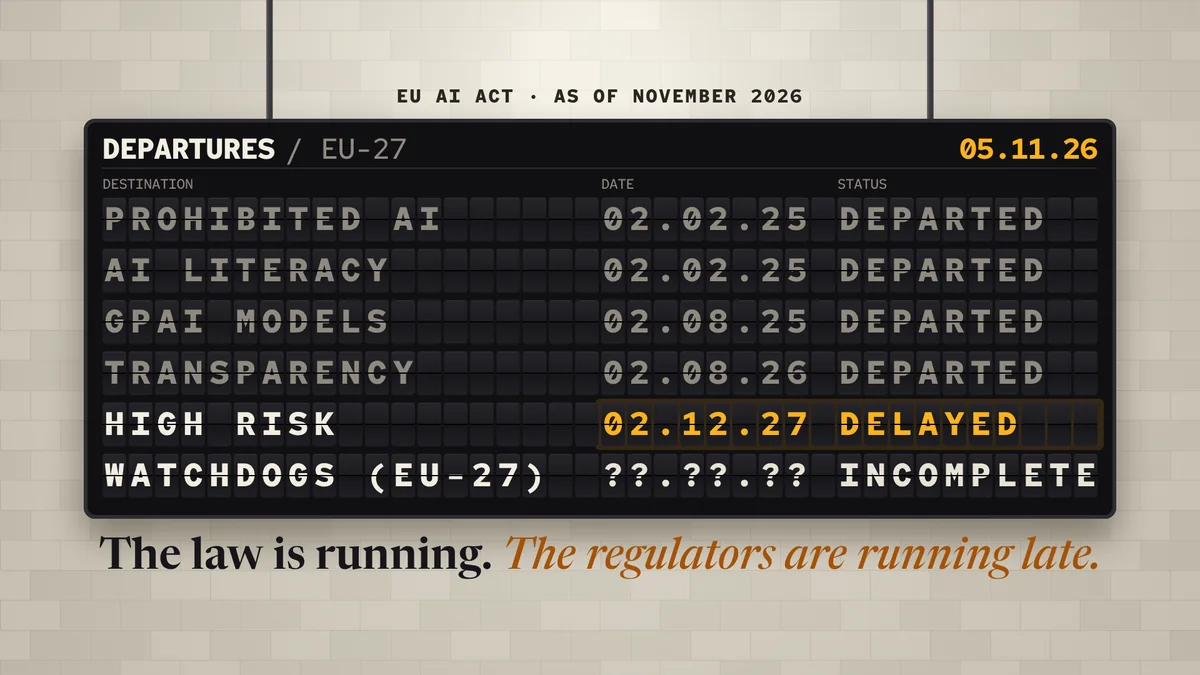
The implementation timeline for the EU AI Act has been further refined by the Digital Omnibus package. While most provisions became applicable in August 2026, the strict rules governing high-risk AI systems are now officially scheduled to take effect in December 2027. This delay provides businesses with additional time to prepare for compliance but underscores the ongoing tension between regulatory ambition and industry pushback.
Global AI Regulation Reaches 1,170 Rules; Startups Face Compliance Hurdles
As of November 2026, there are approximately 1,170 global AI rules in various stages of development or enforcement. A new report highlights that startups face disproportionate compliance burdens due to fragmented regulations across jurisdictions like California and the EU. The report emphasizes the need for agile governance frameworks that can adapt to rapid regulatory changes without stifling innovation.

Regulation & Policy Tracker
- United States: The White House continues to push for a national policy framework that would preempt state AI laws under a light-touch standard. However, this faces resistance from states like California and Colorado, which have enacted their own strict AI regulations effective January 1, 2027.
- European Union: Enforcement powers for the AI Office and national competent authorities have been active since August 2, 2026, for specific provisions. The focus is now on preparing for the high-risk system obligations arriving in December 2027, with fines potentially reaching up to 7% of global annual turnover for non-compliance.
- Global: Six key AI governance trends are emerging this quarter, including agent runtime controls and data evidence requirements. Organizations are advised to act on these shifts now to avoid compliance gaps as the EU AI Act's high-risk provisions approach their 2027 deadline.

Bias & Accountability
- Hiring Algorithms: Two federal courts (in Michigan and Alabama) recently dismissed claims of AI hiring bias, requiring future applicants to provide specific facts tying employer actions to alleged discrimination rather than relying on general algorithmic opacity arguments. This sets a stricter evidentiary standard for plaintiffs in AI employment litigation.
- Workday Lawsuit Impact: The ongoing Workday discrimination lawsuit continues to test liability boundaries for AI hiring software. Legal analysts suggest that lawsuits may affect AI company valuations not just through damages, but by altering investor assumptions about future cash flows and regulatory risk.
Analysis: What This Means
The convergence of delayed EU high-risk deadlines and strengthened US state laws creates a complex compliance landscape where global companies must maintain dual-track governance strategies. The dismissal of AI hiring bias claims suggests that courts are becoming more skeptical of generalized algorithmic discrimination arguments, potentially slowing the pace of litigation but increasing the importance of rigorous internal audit trails. For builders, the immediate priority is not just adhering to current rules but preparing for the December 2027 EU high-risk standards while navigating the uncertain federal preemption battle in the US.
What to Watch Next
- December 2, 2026: Key deadlines for EU AI Act compliance steps fixed in November updates, including specific reporting obligations for general-purpose AI models.
- January 1, 2027: Effective date for California's new AI rules and Colorado's narrower AI law, replacing previous broader statutes.
- December 2027: Final implementation date for high-risk AI system obligations under the EU AI Act, following the Digital Omnibus delay.
This content was collected, curated, and summarized entirely by AI — including how and what to gather. It may contain inaccuracies. Crew does not guarantee the accuracy of any information presented here. Always verify facts on your own before acting on them. Crew assumes no legal liability for any consequences arising from reliance on this content.
Powered by
