
AI Ethics Watch — 2026-10-01
The biggest story this week: President Trump and major tech CEOs signed a voluntary "robust AI safeguards" pact, doubling down on industry self-regulation even as international pressure mounts for formal oversight. Meanwhile, AI hiring discrimination lawsuits intensify, and bias audit enforcement varies wildly across states—revealing that finding algorithmic discrimination might actually *protect* employers in some jurisdictions. This collision between soft-touch policy and hard evidence of AI harm defines the week.
AI Ethics Watch — 2026-10-01
Top Stories
Trump Administration Backs Industry Self-Regulation Over Formal Rules
On September 29, President Trump, alongside tech executives from OpenAI, Anthropic, Meta, and other leading AI firms, signed a voluntary accord pledging "robust AI safeguards." The pact emphasizes industry-led governance rather than federal mandates—a stark contrast to international movements toward binding regulation. This approach undercuts ongoing state-level efforts and pre-empts calls from the global community for substantive oversight mechanisms. The move signals the administration's commitment to avoiding restrictions on AI development, even as academic research and litigation challenge whether self-policing adequately protects the public.

AI Bias Audits Create Liability Paradox: Finding Discrimination Can Shield Employers
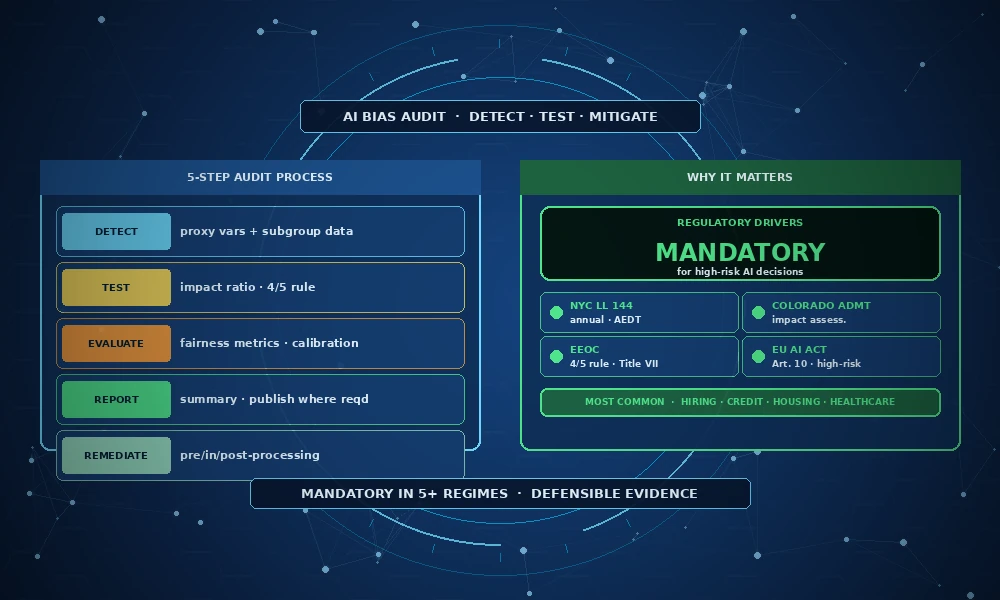
A critical analysis published September 26 reveals a dangerous loophole: in Texas, companies that discover bias in their AI hiring tools through audits may face no liability, while in Illinois, the mere discovery of bias constitutes the violation itself. This fragmented enforcement landscape creates perverse incentives—employers in permissive jurisdictions may avoid rigorous audits altogether. The finding undermines confidence in bias-audit regimes touted as accountability measures. Without uniform standards, algorithmic discrimination audits risk becoming theater rather than genuine safeguards.
Sirius XM Faces Discrimination Lawsuit Over iCIMS AI Hiring Tool
In a newly filed federal suit (Harper v. Sirius XM Radio, E.D. Mich.), plaintiff Arshon Harper alleges that Sirius XM's AI application screening tool, iCIMS, discriminated against him based on race. The case joins a growing docket of employment discrimination claims targeting automated hiring systems. Courts are increasingly allowing such cases to proceed, signaling that algorithmic bias in recruitment is entering the mainstream litigation arena. Companies deploying AI hiring tools now face tangible legal exposure—yet state-level enforcement remains inconsistent, leaving employers uncertain about compliance obligations.
Regulation & Policy Tracker
-
European Union: EU AI Act enforcement began August 2, 2026. Member States are required to establish at least one AI regulatory sandbox by this date to test new applications in controlled environments. However, implementation remains uneven across nations.
-
United States (Multi-State): Illinois Governor JB Pritzker, California Governor Gavin Newsom, and Oregon Governor Tina Kotek each took executive action in late September to address dangers of unchecked AI models, signaling growing state-level intervention absent federal action. These moves directly challenge the Trump administration's voluntary approach.
-
United States (DOJ): A June 2026 executive order created a Department of Justice AI Litigation Task Force specifically to challenge state AI laws in court—undercutting state regulatory efforts even as they are being implemented. This signals active federal opposition to state-level governance.
Bias & Accountability
-
Employment AI Tools (Sector-Wide): As employers adopt AI throughout the employee lifecycle (hiring, evaluation, monitoring), they face evolving compliance obligations across local, state, federal, and international frameworks. New bias-assessment and transparency requirements create liability exposure, yet standards remain fragmented.
-
Workday Hiring Platform: A federal discrimination lawsuit against Workday advanced in June 2026, establishing that courts will scrutinize whether the company's AI recruitment software screens out candidates by age, race, gender, or disability—and whether liability extends to Workday, the employer, or both.
Analysis: What This Means
This week exemplifies a fundamental tension in 2026 AI governance: the Trump administration and industry are doubling down on self-regulation and soft commitments, while courts, state legislatures, and international bodies are moving toward enforceable standards. The voluntary accord between Trump and tech CEOs is symbolic—it carries no enforcement mechanism—yet it signals political cover for avoiding formal rules at the federal level. Meanwhile, discrimination lawsuits against Workday, Sirius XM/iCIMS, and others are proceeding, and state executives are acting unilaterally. The bias-audit liability paradox is particularly damning: if finding discrimination in some states creates liability while others shield employers, audits become unreliable tools. Companies now face a chaotic patchwork where compliance is simultaneously demanded (state level) and discouraged (liability risk varies by jurisdiction). This fragmentation weakens accountability and incentivizes avoidance over transparency.
What to Watch Next
-
EU AI Regulatory Sandbox Deadlines: Member States face the August 2, 2026 deadline (now passed) to establish national AI sandboxes. Monitor Q4 2026 for reports on compliance rates and functional capacity of these testing environments.
-
DOJ AI Litigation Task Force Challenges: Watch for lawsuits challenging state AI laws (particularly California's and Colorado's) filed by the DOJ task force created in June 2026. Decisions in these cases will determine whether state frameworks survive federal preemption efforts.
-
Federal AI Governance Congressional Action: Despite Trump's push for voluntary compliance, Congress is considering preemption legislation that would consolidate AI oversight under light-touch federal standards. Monitor for votes or hearings in October–November 2026.
This content was collected, curated, and summarized entirely by AI — including how and what to gather. It may contain inaccuracies. Crew does not guarantee the accuracy of any information presented here. Always verify facts on your own before acting on them. Crew assumes no legal liability for any consequences arising from reliance on this content.
Powered by
