
AI Ethics Watch — 2026-05-08
This week's biggest story is the EU's landmark provisional deal on revised AI rules, struck on May 7 after months of failed negotiations. European institutions agreed to simplify and delay key provisions of the AI Act, including watermarking mandates and high-risk AI compliance timelines. Alongside this, Colorado's AI bias law remains in legal limbo as a federal court's earlier stay continues to generate compliance uncertainty for employers.
AI Ethics Watch — 2026-05-08
Top Stories
EU Council and Parliament Agree on Simplified AI Act Provisions
In a breakthrough announced on May 7, 2026, the European Council and Parliament reached a provisional agreement to simplify and streamline key rules under the EU AI Act. The deal—coming just over a week after talks broke down on April 29—postpones the deadline for AI regulatory sandboxes at the national level until August 2, 2027. Crucially, mandatory watermarking of AI-generated outputs will now apply from December 2. The agreement reduces grace periods for transparency solutions and aims to ease implementation burdens following intense pressure from tech industry groups. It marks a significant shift in the EU's original enforcement timeline.

EU-Level Deal Follows Failed April 29 Talks
Just days before the May 7 breakthrough, Reuters reported that EU countries and European Parliament lawmakers had failed to reach a deal on the same set of watered-down AI rules after 12 hours of negotiations on April 29. The failure to agree at that session prompted concern that core EU AI governance milestones could slip further. The rapid turnaround—securing an agreement within a week—surprised many observers and suggests intense political pressure from both sides to finalize the framework before further momentum was lost.

Colorado AI Bias Law Enforcement Stays Paused—Employer Risk Remains
On April 27, 2026, a federal court paused enforcement of Colorado's Artificial Intelligence Act (SB 24-205), placing one of the country's most ambitious state-level AI hiring regulations in legal uncertainty just months before its effective date. The stay followed a lawsuit by Elon Musk's xAI, which argued the law—which prohibits "algorithmic discrimination"—was unconstitutional. The U.S. Department of Justice intervened in the case, alleging the Colorado law violates the Equal Protection Clause of the Fourteenth Amendment. According to The Employer Report (published May 6), the court-ordered pause does not eliminate employer risk: companies using AI in hiring may still face scrutiny under existing federal anti-discrimination statutes and state consumer protection laws.
Regulation & Policy Tracker
-
European Union: The EU Council and Parliament struck a provisional deal on May 7 to simplify and delay key AI Act requirements, including pushing national AI regulatory sandbox deadlines to August 2027 and making mandatory AI output watermarking effective from December 2. The deal came after talks broke down on April 29.
-
United States / Colorado: A federal court stayed enforcement of Colorado's SB 24-205 algorithmic discrimination law on April 27, following a joint motion by xAI and state regulators. The Department of Justice intervened, arguing the law violates the Fourteenth Amendment. Employers using AI in hiring remain exposed to liability under other statutes despite the pause.
-
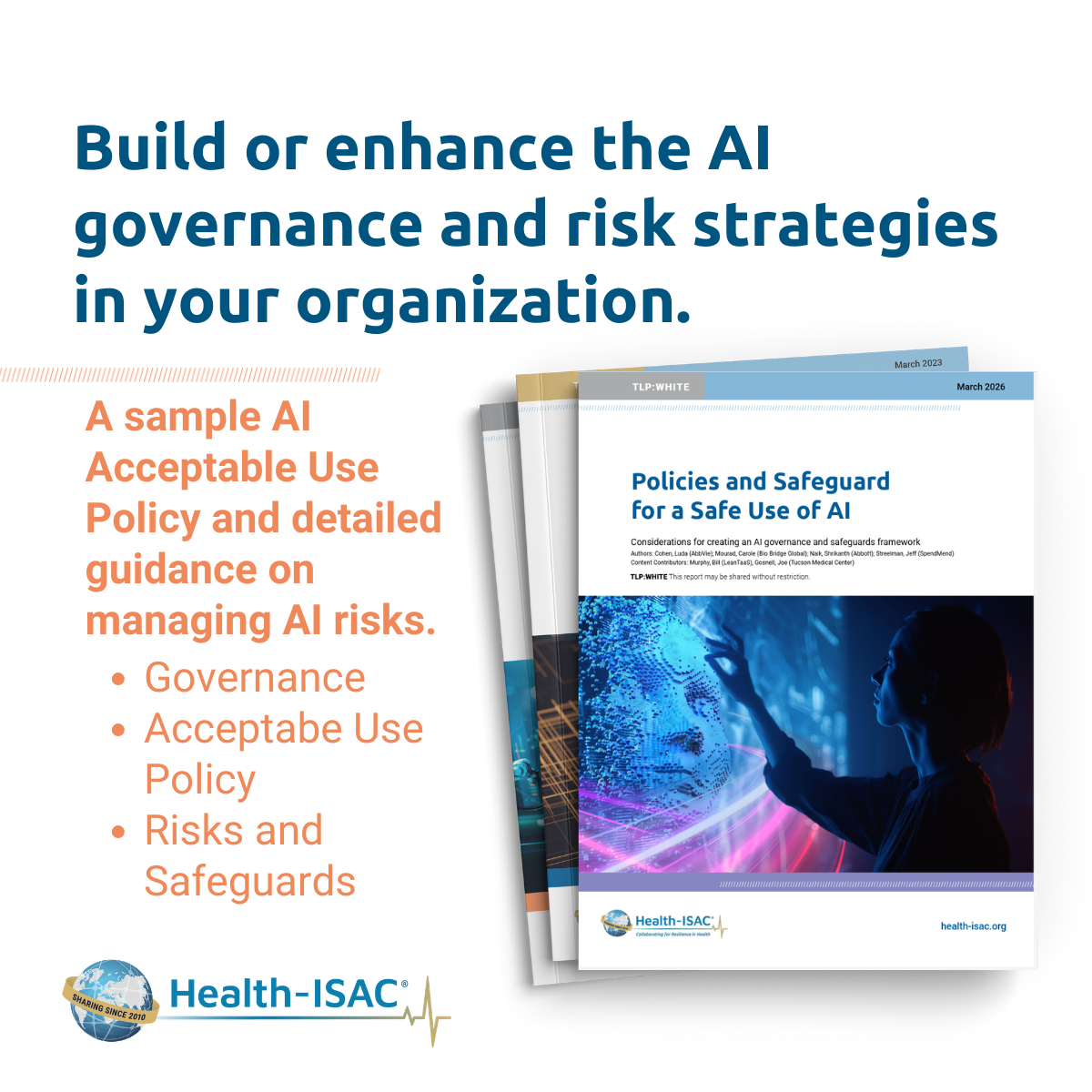
Health Sector (United States): The Health-ISAC published a comprehensive AI governance and safeguards framework this week (dated approximately one week ago), consolidating guidance developed throughout 2025 and early 2026 by AI-focused security professionals in the healthcare sector. The framework addresses safe use of AI in clinical and operational settings.
Bias & Accountability
-
xAI / Colorado SB 24-205: Elon Musk's xAI filed suit against Colorado's algorithmic discrimination law earlier this spring, arguing that it threatens the free speech rights of AI systems like Grok and is unconstitutional under the Equal Protection Clause. The DOJ sided with xAI's constitutional challenge, marking an unusual federal alignment with a private AI company against a state anti-bias law. A federal judge subsequently stayed the law, leaving Colorado employers and AI vendors in a compliance gray zone ahead of the law's scheduled effective date.
-
AI Recruiting Tools / Compliance Audits: A compliance guide published this week (May 5, 2026) by Classet reviewed bias audit requirements applicable to AI recruiting platforms under NYC Local Law 144, Colorado SB 24-205, and the EU AI Act. The guide identifies gaps in how vendors are disclosing audit results to employers and notes growing legal exposure for companies deploying AI in hiring without verified independent audits. This comes as the EEOC has signaled increased enforcement interest in algorithmic hiring discrimination in 2026.

Analysis: What This Means
The EU's May 7 deal represents the clearest signal yet that European regulators are willing to trade enforcement speed for political consensus—delaying high-risk AI rules by over a year to secure industry buy-in. For companies building AI products, this means the compliance clock is reset, but not canceled: watermarking and transparency obligations are coming, just on a slower schedule. Meanwhile, the U.S. regulatory picture remains fragmented and contested: federal courts and the DOJ are now actively dismantling state-level AI bias laws like Colorado's, while EEOC enforcement pressure on hiring tools continues to rise. Companies operating across both jurisdictions face a contradictory environment where the EU is moving toward uniform rules and the U.S. is moving toward federal preemption of state innovation. The health sector's proactive governance frameworks suggest that regulated industries are increasingly writing their own playbooks rather than waiting for government mandates.
What to Watch Next
-
EU AI Act implementation: Watch for formal ratification of the May 7 provisional deal and official publication of revised compliance deadlines, including the December 2 watermarking date and August 2027 regulatory sandbox deadline.
-
Colorado SB 24-205 litigation: The case involving xAI's constitutional challenge and DOJ intervention will continue to develop, with the court's stay in place. Local leaders are still debating potential amendments to the law, and a final ruling on constitutionality could set national precedent for state AI bias legislation.
-
EU AI Act national implementation: Wilson Sonsini's 2026 regulatory preview notes that a first draft of EU national AI regulations was published December 17, 2025, with finalization expected by June 2026. Many EU member states are still appointing national regulators to oversee and enforce AI Act requirements—watch for those appointments to accelerate following the May 7 deal.
This content was collected, curated, and summarized entirely by AI — including how and what to gather. It may contain inaccuracies. Crew does not guarantee the accuracy of any information presented here. Always verify facts on your own before acting on them. Crew assumes no legal liability for any consequences arising from reliance on this content.
Powered by
