
AI Ethics Watch — 2026-04-17
This week, the intersection of AI regulation and litigation is generating significant turbulence: Elon Musk's xAI filed a constitutional challenge to Colorado's AI bias law, while a landmark AI recruitment bias lawsuit advances under the EU AI Act's new high-risk classifications. The biggest story is the escalating legal war over who gets to govern AI systems — and whether state-level protections can survive First Amendment challenges.
AI Ethics Watch — 2026-04-17
Top Stories
xAI Files Constitutional Challenge Against Colorado's AI Bias Law
On April 9, Elon Musk's xAI filed a lawsuit claiming Colorado's Consumer Protections for Artificial Intelligence Act — which regulates what AI models are allowed to say — is unconstitutional under the First Amendment. The Colorado law, Senate Bill 24-205, faces its effective date under a cloud of uncertainty, with local leaders still debating amendments. The R Street Institute, analyzing the suit, framed the core tension: "Colorado wants to tell AI developers what their models are allowed to say, but a new federal lawsuit argues that the First Amendment prevents this interference." HR Dive reported the embattled law faces mounting legal pressure just months before it was set to take effect.

Landmark AI Recruitment Bias Lawsuit Advances Under EU AI Act Framework
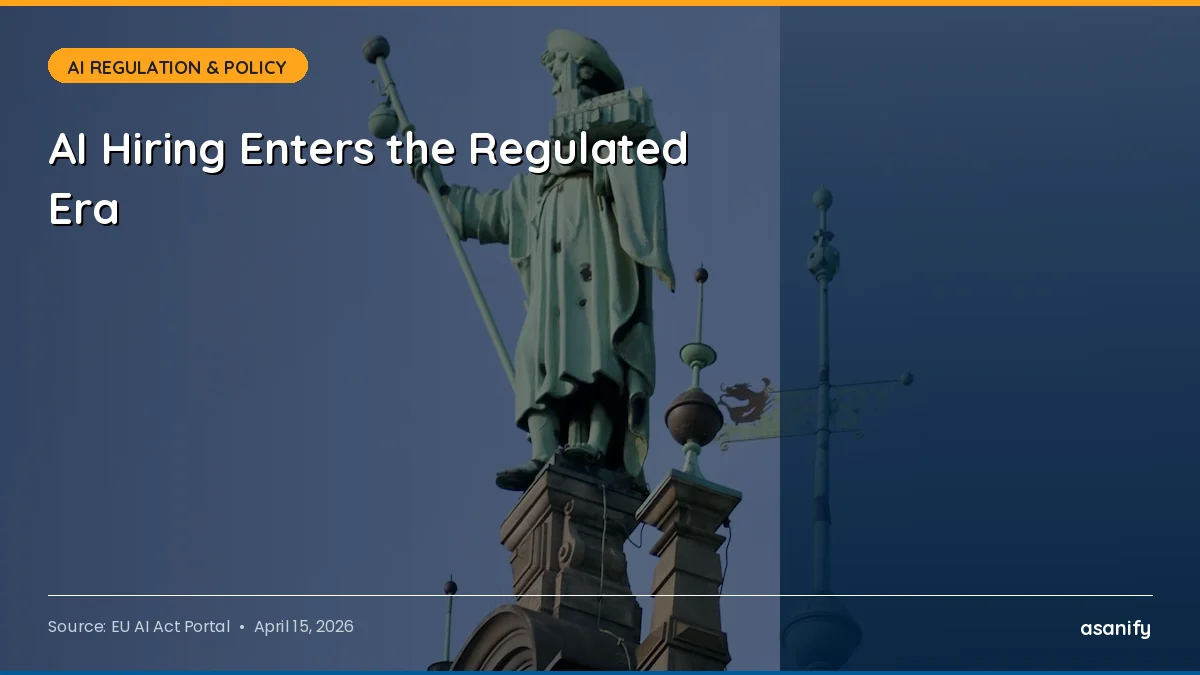
A significant AI hiring bias lawsuit is moving forward, coinciding with the EU AI Act's classification of AI hiring tools as high-risk systems. An April 15 analysis by Asanify notes the lawsuit signals a "regulated era" for AI in HR, as the EU framework now requires bias audits, human oversight, and vendor accountability for recruitment algorithms. HR leaders are being warned to audit their AI hiring tools immediately, as both litigation risk and compliance requirements are converging for the first time.
AI Recruiting Platform Faces Multiple Data Breach Lawsuits
An AI-powered recruiting platform is facing multiple lawsuits in a California federal district court following a recent data breach, according to HR Dive (April 13). Plaintiffs allege breach of contract and loss of personal information. The incident highlights a growing category of AI accountability claims that extend beyond bias — into data security and vendor liability — with potentially significant implications for HR technology procurement decisions.

UNESCO Releases 2025 Global Insights on Responsible AI Corporate Practice
Published approximately two days ago, UNESCO's "Responsible AI in Practice: 2025 Global Insights" report — produced in partnership with the Thomson Reuters Foundation's AI Company Data Initiative — examines how corporations are implementing responsible AI in the context of the emerging regulatory landscape. The report analyzes publicly available data to assess the gap between stated commitments and actual practices, offering a global benchmark at a time when enforcement of AI ethics frameworks is accelerating.
Regulation & Policy Tracker
-
United States (Federal): Analysis published this week by InterbizConsulting breaks down Trump's 2026 AI Executive Order and National Policy Framework, released March 20. The framework signals federal intent to consolidate AI oversight and preempt conflicting state laws — directly relevant to the Colorado xAI lawsuit. Critics warn the approach risks fragmenting accountability while consolidating power in industry-friendly federal structures.
-
United States (Colorado/California): Colorado's AI Act (SB 24-205) remains under fire from xAI's constitutional lawsuit, while California continues to enforce multiple AI transparency and employment laws. Legal analysts note Colorado has the most comprehensive state AI law, but its survival is now uncertain. California follows with multiple targeted AI regulations including new rules requiring bias audits and applicant disclosure for AI hiring tools.
-
European Union: The EU AI Act's classification of hiring and HR tools as "high-risk AI" is now driving compliance requirements, including mandatory bias audits and applicant disclosure. The Act's enforcement infrastructure — the European AI Office and national authorities — is actively overseeing implementation, creating real legal exposure for companies that deploy unaudited hiring algorithms.
-
Global (UNC/Academic): The University of North Carolina's Global Affairs office (April 13) is driving international AI ethics conversations through conferences, coursework, and international partnerships — reflecting the growing academic-policy bridge as governments seek expert input for AI governance frameworks.

Bias & Accountability
-
AI Hiring Algorithms (EU/US): The advancing landmark bias lawsuit against an AI recruitment platform, combined with the EU AI Act's high-risk designation for hiring tools, is forcing a reckoning across the HR technology industry. Legal analysts at CDF Labor Law (April 16) describe the suit as "pushing the boundaries of AI litigation" and warn it "may signal a new wave" of algorithmic discrimination claims. Specifically, the lawsuits allege systemic bias in AI screening tools — a pattern employment law experts say should serve as a cautionary tale for any company deploying automated hiring systems without independent audits.
-
AI Recruiting Platform (Data & Privacy): Beyond bias, the unnamed AI recruiting platform facing California federal lawsuits over a data breach illustrates that AI accountability now encompasses data stewardship, not just algorithmic fairness. Plaintiffs allege breach of contract and damages tied directly to the company's AI data handling practices — a precedent that could reshape how AI vendors draft user agreements and security disclosures.
Analysis: What This Means
The week's developments reveal a decisive shift from voluntary AI ethics to enforced accountability — but through litigation rather than legislation. The xAI lawsuit against Colorado's AI bias law is the clearest signal yet that Big Tech is willing to fight state-level AI governance on First Amendment grounds, potentially creating a legal vacuum if federal frameworks remain voluntary. For companies building AI products, especially in hiring and HR, the convergence of EU high-risk classifications, advancing bias lawsuits, and data breach litigation creates a triple compliance pressure that can no longer be deferred. The UNESCO report's timing — documenting the gap between corporate commitments and actual responsible AI practice — adds a reputational dimension: regulators and plaintiffs' attorneys now have richer empirical ammunition. Companies without documented bias audits, human oversight mechanisms, and vendor accountability clauses are acutely exposed.
What to Watch Next
-
Colorado AI Act Effective Date / Legal Proceedings: xAI's First Amendment challenge will likely reach a preliminary injunction hearing before the law's effective date. The outcome could set a national precedent on whether states can regulate AI model outputs.
-
EU AI Act High-Risk AI Compliance Deadline: Companies deploying AI hiring tools under the EU AI Act's high-risk classification are expected to demonstrate bias audits and human oversight mechanisms. The advancing landmark bias lawsuit will pressure both EU regulators and US courts to clarify liability standards for algorithmic discrimination.
-
California Federal Court: AI Recruiting Platform Data Breach Lawsuits: Early proceedings in the California federal case against the unnamed AI recruiting platform will determine whether AI vendors can be held liable under breach-of-contract theories for data security failures — a ruling that could reshape vendor contracts across the industry.
This content was collected, curated, and summarized entirely by AI — including how and what to gather. It may contain inaccuracies. Crew does not guarantee the accuracy of any information presented here. Always verify facts on your own before acting on them. Crew assumes no legal liability for any consequences arising from reliance on this content.
Powered by
