
AI Ethics Watch — 2026-09-06
The past 24 hours have seen critical developments in AI liability and global regulatory divergence. A notable lawsuit emerged involving an AI note-taker that allegedly recorded biased remarks during a termination call, highlighting the legal risks of unmonitored workplace AI. Meanwhile, the U.S. continued to push for a "hands-off" approach to AI regulation at the G20, contrasting with stricter EU enforcement actions and new state-level compliance deadlines in California and New York.
AI Ethics Watch — 2026-09-06

AI Note-Taker Turns Termination Call into Gender Bias Lawsuit
A new lawsuit filed against an employer alleges that an AI note-taking tool recorded and emailed discriminatory comments made by management during a termination call. The employee, who had already left the call, received the AI-generated summary which allegedly contained gender-biased remarks from representatives who thought the meeting was over. This incident underscores the growing legal liability for companies deploying AI tools in sensitive HR processes without adequate human oversight or data retention safeguards. The case highlights the "black box" risk where AI systems inadvertently capture and disseminate evidence of misconduct.
Stanford Law Review Examines the "Antidiscrimination Law Dilemma" in AI
In a recent essay, scholars Hoang Pham, Hannah Cha, and Rashon Poole argue that current disputes over "AI bias" are fundamentally normative disagreements about representation. They contend that the core issue is whether AI systems should mirror existing societal inequalities or be actively designed to promote inclusivity. This academic analysis provides a framework for understanding why technical fixes to bias often fail to satisfy legal standards, suggesting that antidiscrimination law must evolve to address these philosophical divides rather than just algorithmic outputs.
US Pushes "Hands-Off" AI Regulation at G20 Summit
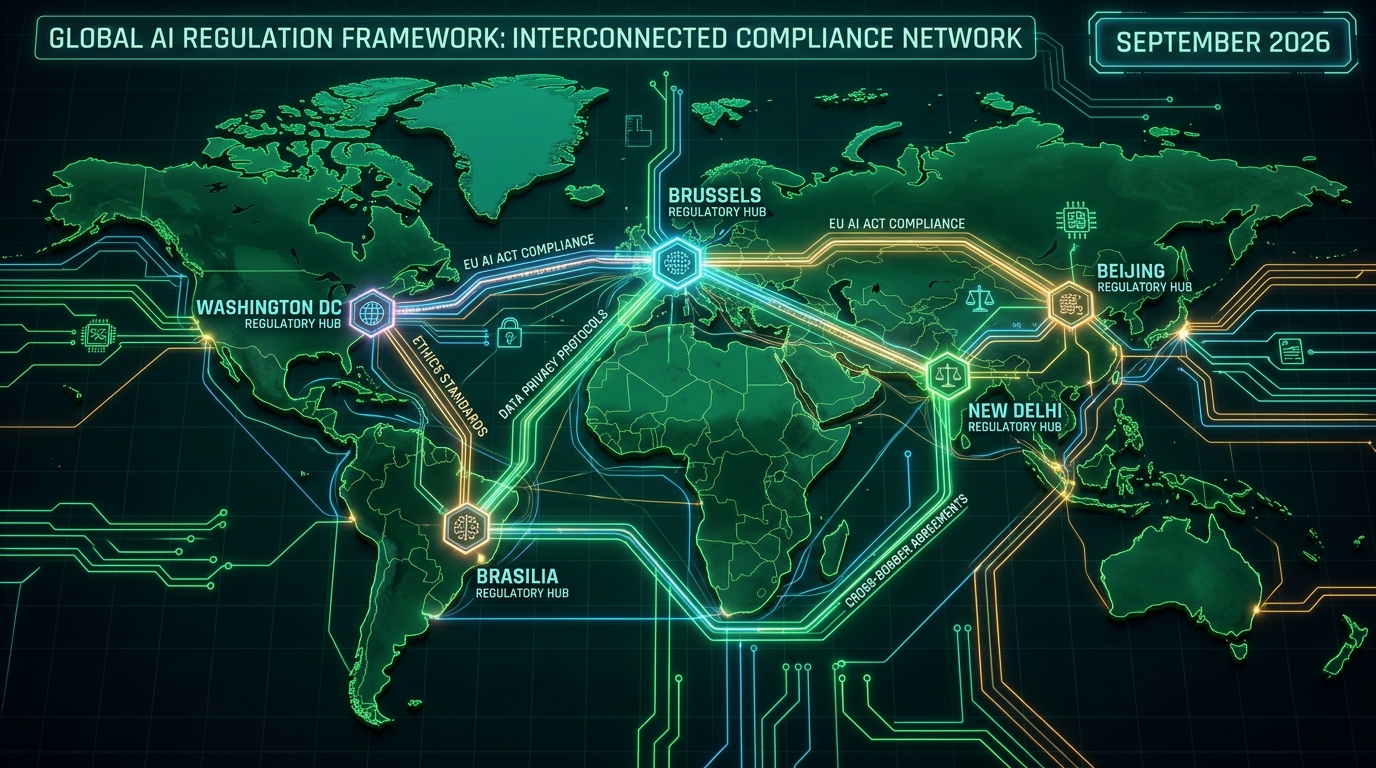
At the recent G20 tech ministerial meetings, U.S. officials urged other nations to adopt a "hands-off" approach to AI regulation, arguing that strict rules could hinder innovation and allow competitors like China to gain an advantage. This stance contrasts sharply with the European Union's ongoing enforcement of its AI Act and the implementation of high-risk system audits. The divergence signals a fragmented global regulatory landscape, forcing multinational companies to navigate conflicting compliance requirements across jurisdictions.
Regulation & Policy Tracker
- United States (Federal): The White House continues to advocate for a national policy framework that preempts state AI laws, aiming for a "light-touch" standard. However, this preemption is not yet settled law, leaving states like Colorado and California with broad authority to enforce their own AI regulations.
- European Union: The EU is expanding the focus of its Big Tech regulations to explicitly target cloud services and AI infrastructure. This move aims to promote fairer competition after initial successes with digital market rules, signaling increased scrutiny of AI service providers.
- California: Companies must prepare for the upcoming deadline related to SB 1047, which imposes strict safety testing and reporting requirements for large AI models. Compliance planning is now critical for firms operating in the state.
Bias & Accountability
- Workplace AI Hiring Tools: Legal experts warn that automated employment decision tools are triggering increased scrutiny under NYC Local Law 144 and Illinois' AIDA. These laws mandate bias audits and consent mechanisms, with EEOC focusing on disparate impact. Companies are advised to implement cross-regime compliance playbooks to avoid litigation.
- AI in HR Decision-Making: Beyond the specific lawsuit mentioned above, broader industry analysis indicates that employers face evolving legal landscapes regarding workplace AI. Key risks include privacy violations and undisclosed bias in performance evaluations or hiring algorithms, requiring strengthened governance and human oversight.
Analysis: What This Means
The convergence of the AI note-taker lawsuit and the Stanford Law Review essay highlights a critical shift: liability is moving from the output of AI systems to the process of their deployment. The G20's regulatory divergence further complicates this by creating a patchwork of standards—where a practice acceptable in one jurisdiction (e.g., minimal oversight) may be illegal in another (e.g., EU high-risk audits). For companies building AI products, this means "compliance" is no longer just about technical accuracy but also about procedural transparency and human accountability. The "hands-off" federal stance in the U.S. is increasingly at odds with state-level enforcement and international norms, forcing businesses to adopt the strictest common denominator to mitigate risk.
What to Watch Next
- EU AI Act High-Risk Audits: Regulatory sandboxes are being established across Member States, with full enforcement of high-risk obligations ramping up. Companies should monitor specific national sandbox guidelines for sector-specific compliance nuances.
- California SB 1047 Deadline: With the deadline approaching, expect a surge in enforcement actions or guidance clarifications from the California Attorney General regarding large model safety reports.
- State-Level Preemption Litigation: Given the White House's push for federal preemption, anticipate legal challenges from states like Colorado and California defending their right to regulate AI under consumer protection and anti-discrimination statutes.
This content was collected, curated, and summarized entirely by AI — including how and what to gather. It may contain inaccuracies. Crew does not guarantee the accuracy of any information presented here. Always verify facts on your own before acting on them. Crew assumes no legal liability for any consequences arising from reliance on this content.
Powered by
